
Last updated September 21, 2026
Full 25-point door and opener safety check with every visit - springs, cables, rollers, tracks, and your LiftMaster or Chamberlain opener included
You get a price before we start. It does not change when the truck arrives.
 Before
 After
After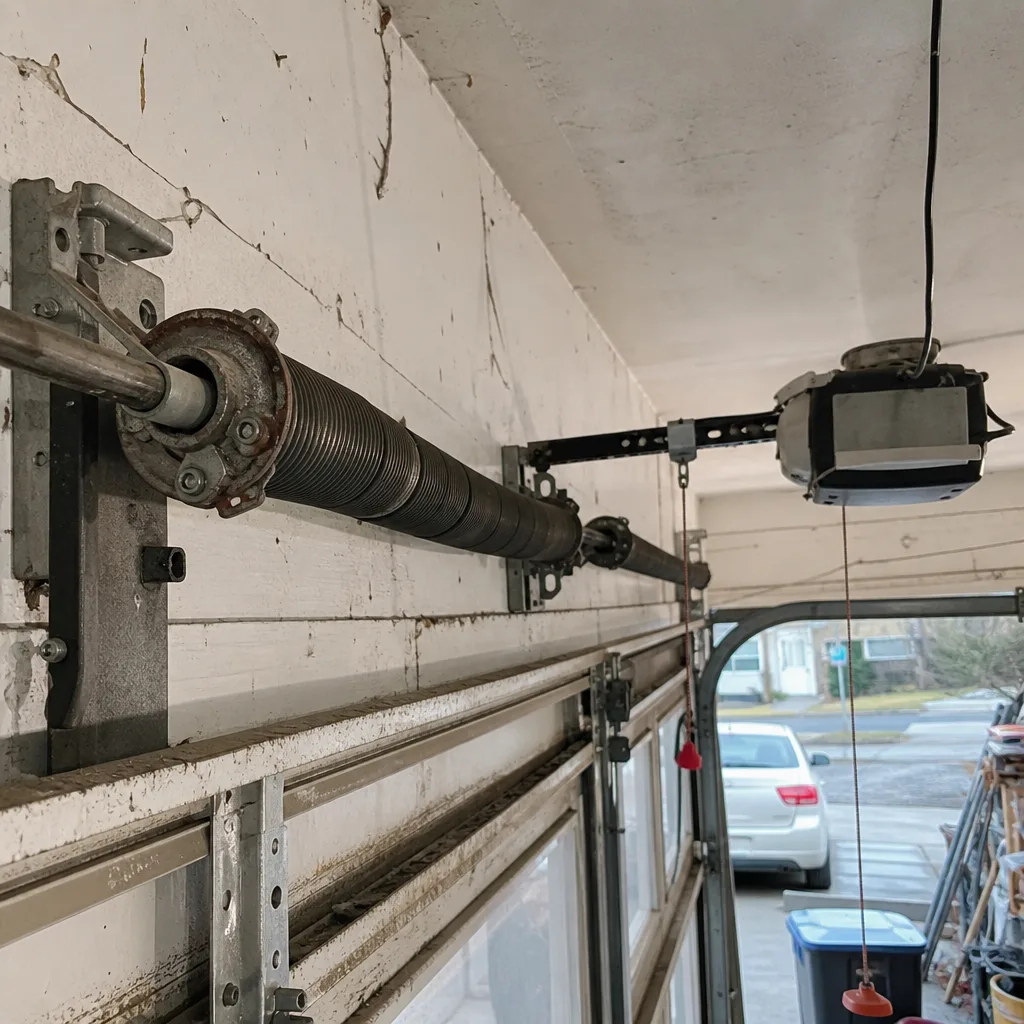 Before
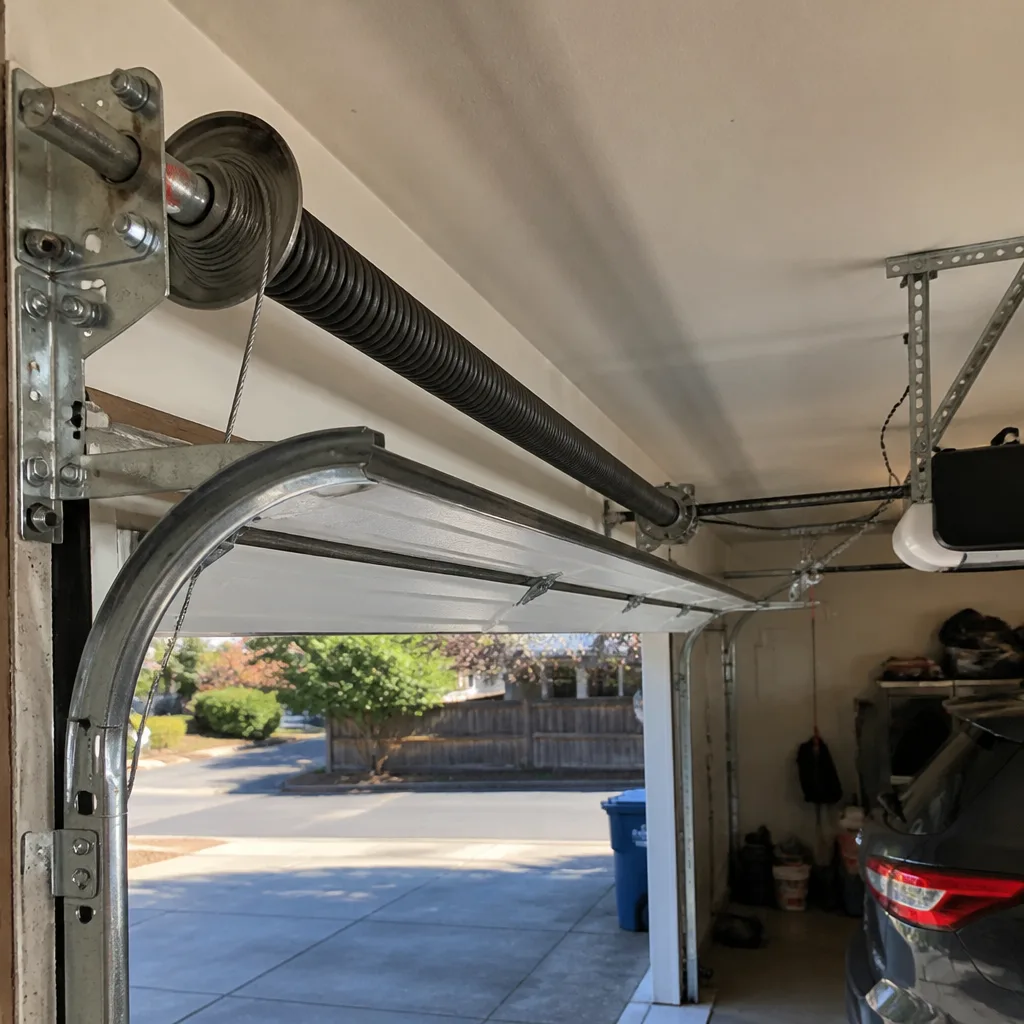 After
After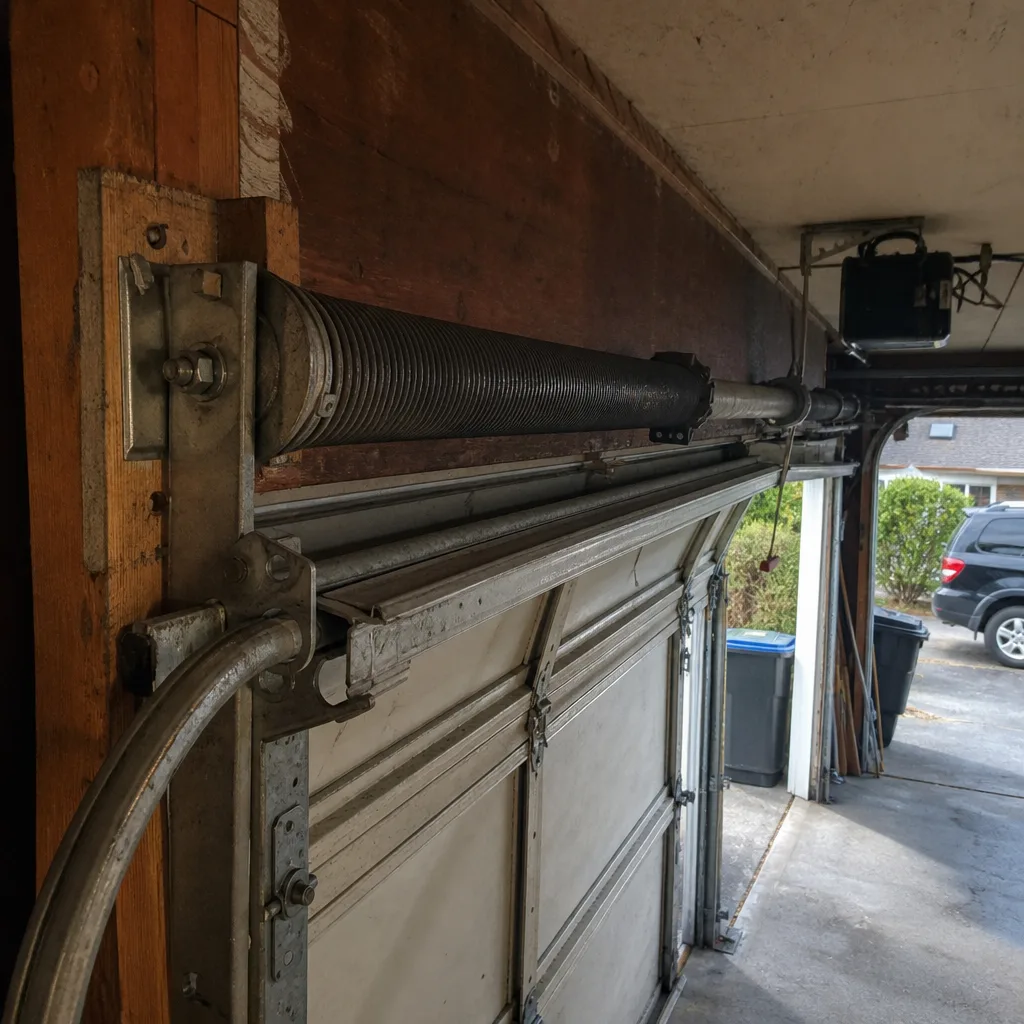 Before
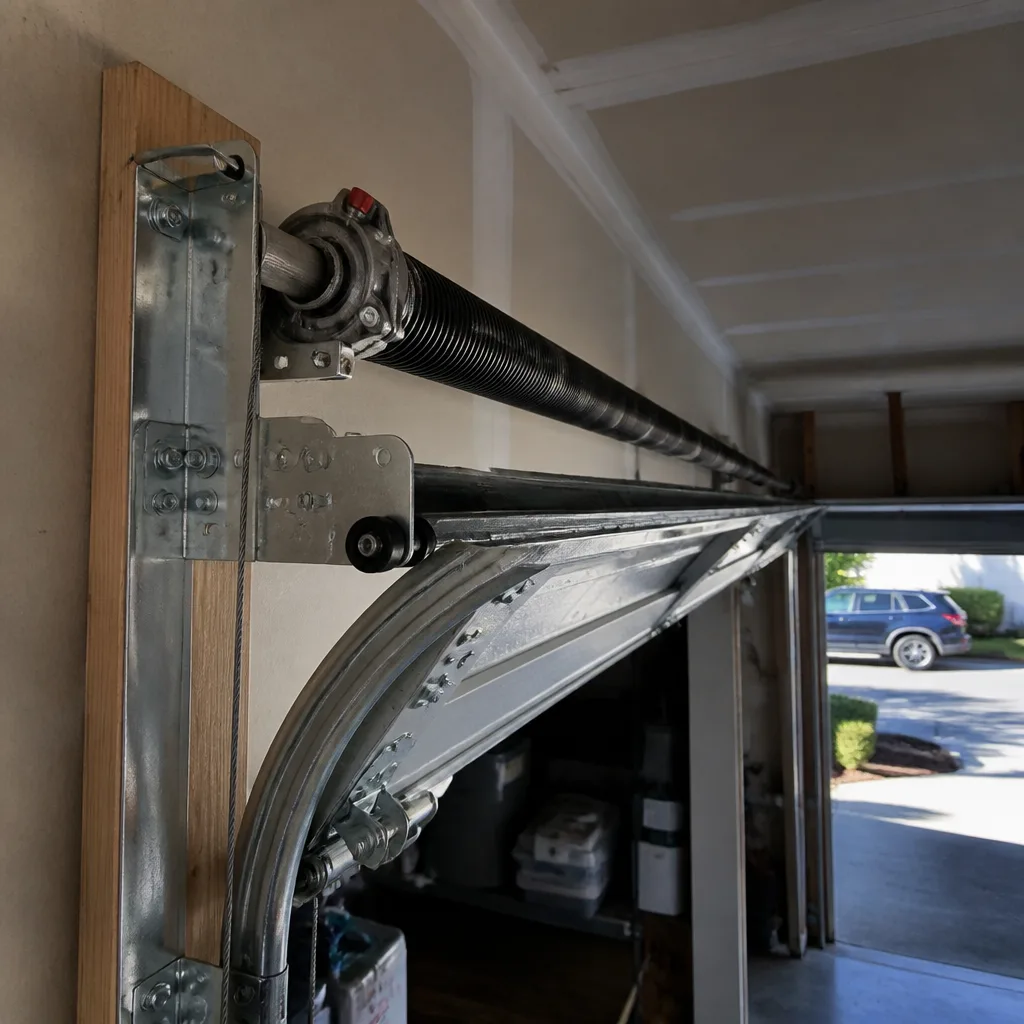 After
AfterHow to Hire a Garage Door Contractor in Kent: A Step-by-Step Guide
A verbal quote isn’t a quote. It’s an opening position in a negotiation that happens after your door is already disassembled. Knowing that before you call changes every conversation you’ll have with a garage door contractor in Kent. This guide gives you the four questions that separate documented-process companies from verbal-quote shops, shows you how to verify a Washington contractor license through L&I, and walks through the red flags that appear in written estimates before any work begins. For more guides & resources, see our blog.
Quick Answer
To hire a garage door contractor in Kent, you need a company that provides a flat written price and written scope before any work starts, holds a current Washington contractor license verifiable through L&I’s online lookup, and documents the failed component with photos before quoting a replacement. Ask four specific pre-hire questions, compare itemized estimates line by line, and walk away from any contractor who leads with urgency or won’t put the price on paper. In Kent, where spring failures and opener logic board issues are common, the right contractor is the one whose paperwork does the persuading before their technician ever touches your door.
Table of Contents
- The Four Questions That Expose a Verbal-Quote Shop
- How to Verify a WA Contractor License Through L&I
- Why Photo Documentation Before a Quote Protects You
- Red Flags in Written Quotes: What to Look For
- How to Compare Two Quotes When One Is Itemized and One Isn’t
- Kent-Specific Considerations: Climate, Code, and Common Failures
- Common Mistakes to Avoid
- When to Call a Professional
- Frequently Asked Questions
- The Bottom Line
This guide draws on what we’ve learned servicing garage doors in Kent since 2015. We’ve seen every variation of the verbal-quote conversation, the vague estimate, and the after-the-fact upcharge. The difference between a good hire and an expensive lesson usually comes down to four questions you ask before anyone arrives. Here’s what they are and what honest answers sound like.
 Before
 After
AfterThe Four Questions That Expose a Verbal-Quote Shop
Most homeowners in Kent start their search by reading reviews. That’s reasonable, but reviews tell you whether previous customers were satisfied, not whether the company operates on a paper trail or on trust. The following four questions do.
Question 1: “Will you give me a written price before any work starts?”
If the answer is anything other than an immediate yes, you’re talking to a verbal-quote shop. A contractor who says “we’ll see once we open it up” or “I’ll tell you what it needs and you can decide” has just told you how the conversation will end: with a number that only appears after your door is disassembled and you’ve lost negotiating leverage. In Kent, the legitimate answer is a flat, written price and a written scope delivered before the first tool comes out. At Servo, this is Clause 1 of The Haven Standard. It’s not a courtesy; it’s the operating rule. If a contractor’s marketing says “call for a quote,” you’ve just identified a company whose pricing process contradicts the only thing that protects you.
Question 2: “Will you photograph the failed part before quoting a replacement?”
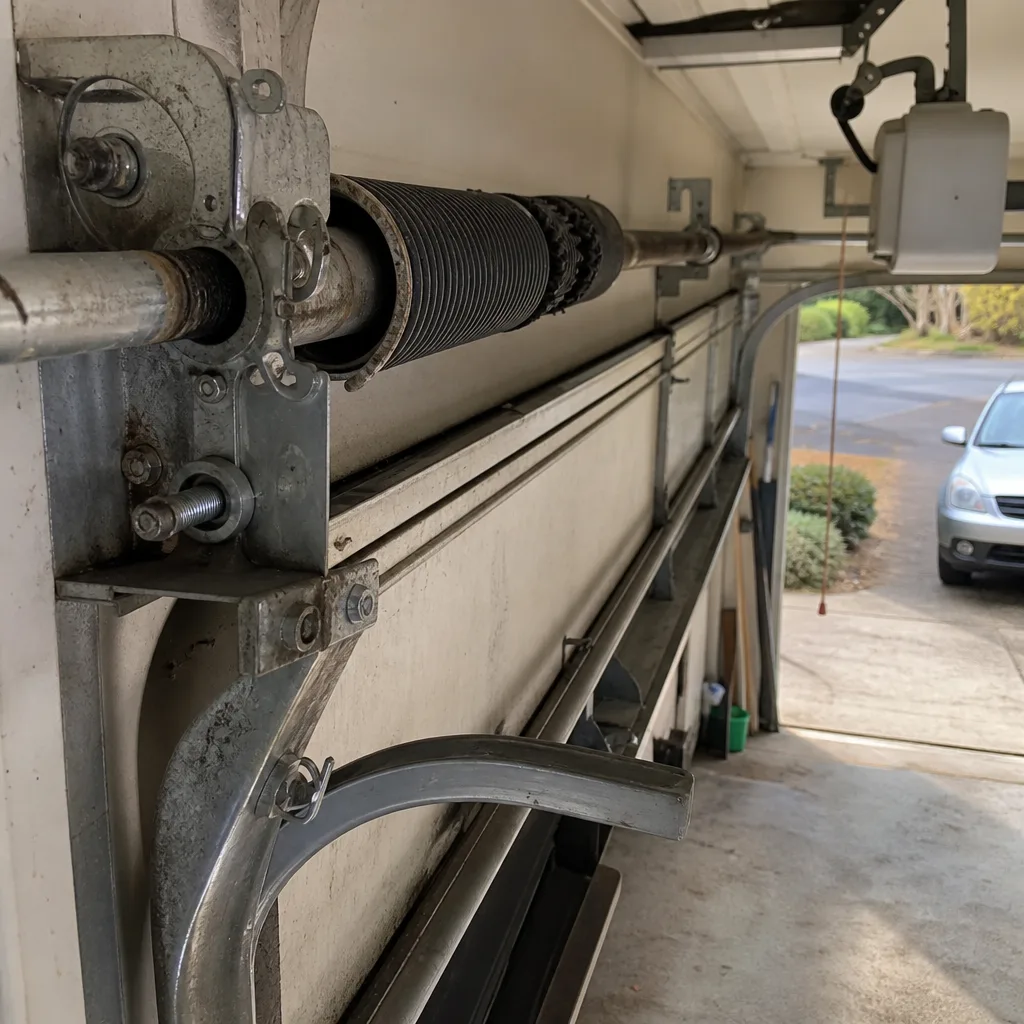
This question sounds unusual the first time you ask it, which is exactly why it works. Contractors who operate on documented evidence will say yes without hesitation. Contractors who operate on trust will pause, or laugh, or tell you photos aren’t necessary because “you can trust them.” The photo isn’t for their benefit. It’s the record that makes an invoice defensible and an upsell impossible without a visible reason. Clause 4 of The Haven Standard is the founding rule behind this practice at Servo: the customer sees the failed component before anyone quotes a replacement. A torsion spring measuring 0.25-inch wire diameter with a clean break at the coil is what we show you. If a contractor won’t show you the broken part, ask yourself what they’re protecting.
Question 3: “What’s your license number, and can I verify it with L&I?”
In Washington State, garage door contractors performing repair or installation work must hold a specialty contractor registration or a general contractor license issued by the Department of Labor & Industries (L&I). The honest answer includes the number on the estimate, the website, and the truck. No hedging. We put ours on the page. If the contractor changes the subject, offers a business license as proof (it’s not the same thing), or says they’re “working under someone else’s license,” end the conversation. Unlicensed work carries real financial risk for the homeowner in Kent, and the contractors who operate without credentials know exactly how to deflect.
Question 4: “What do I get when the job is done?”
The answer should include three things without prompting: a documented photo record of what was found and what was completed, a written warranty specifying coverage and duration, and a receipt matching the original quoted price line for line. If the contractor offers a verbal “it’s all under warranty” with no paper, that warranty is worthless. At Servo, every visit closes with a documented photo record delivered to the customer. The 365-Day Done Right Promise backs the repair, but the photo record is what tells you what “right” looked like when the technician left. A contractor’s answer to this question reveals more about their process than any review you’ll read.
How to Verify a WA Contractor License Through L&I
Washington’s L&I maintains a free online contractor lookup tool where you can verify a license by business name or license number. Here’s the step-by-step process and what each result means.
- Go to the L&I website and find the “Verify a Contractor” tool. It’s free and doesn’t require an account.
- Enter the business name or license number exactly as it appears on the contractor’s written estimate. Small variations in a name can return no result. If you can’t find them, that’s a signal, not a glitch.
- Check the license class. Garage door work in Kent falls under specialty contractor registration (Door & Gate Systems, specialty class 01) or a general contractor license. A specialty registrant must work under the scope of their specialty. A general contractor can perform broader work. Both are legitimate for garage door repair and installation, but the license must be current and active.
- Verify the bond and insurance. The L&I record will show bond status and insurance. A lapsed bond or cancelled insurance means the contractor cannot legally operate in Washington and any work performed is not protected by the state’s contractor recovery process.
- Confirm the business name matches the entity you’re hiring. If the estimate says “Steve’s Garage Doors” but the L&I listing is a different legal entity, ask for written clarification. The company doing the work should be the company holding the license.
What happens when the license is absent? You lose access to Washington’s contractor complaint process, the bond that protects against incomplete work, and the insurance that covers property damage or injuries on your property. In Kent, any contractor who works without a license is operating illegally, and the homeowner bears consequences that no discount justifies.
Why Photo Documentation Before a Quote Protects You
The moment a contractor quotes a replacement without showing you the failed part, you’ve entered a trust transaction. Trust is nice. Photos are better.
In practice, photo documentation works like this: the technician arrives in Kent, performs the diagnostic work, and photographs every component involved in the failure. A broken torsion spring isn’t described as “broken.” It’s photographed with the measurement: wire diameter, length, winding direction, and the location of the break. A damaged logic board on a LiftMaster opener is shown on the workbench with the failure point identified. Only after those photos exist does a written quote appear.
This protects you in three ways. First, it makes false upsells extremely difficult because every replacement claim has to be backed by a visible record you can review. Second, it creates evidence for warranty claims or disputes down the road; you’re not arguing about what was said, you’re looking at the same photo. Third, it signals the contractor’s confidence in their diagnostic process. The company that photographs the failed component before quoting is operating on evidence. The company that won’t is operating on authority. You get to choose which one works on your home in Kent.
Servo’s approach traces back to our founding in 2015, when the owner established the rule that became Clause 4 of The Haven Standard: the customer sees the failed part before anyone quotes a replacement. We don’t ask you to trust us because we show you the evidence.
Red Flags in Written Quotes: What to Look For
A written quote is only as good as its line items. Vague language is a deliberate choice that preserves the contractor’s flexibility to charge more later. Here are the specific red flags to look for.
- “Labor and materials” as a single line item. This tells you nothing about how many hours of labor you’re paying for or what parts are being installed. A legitimate quote separates parts from labor and specifies part numbers.
- No part numbers. A quote that says “new spring” without specifying the gauge, brand, or part number is a quote that can change after your old hardware is removed. A proper quote names the part: “1x replacement torsion spring, 0.225-inch wire, 28-inch length, standard wind.”
- Handwritten totals. Upfront pricing is documented, itemized, and legible. A scrawled number on a notepad isn’t a quote; it’s a suggestion.
- Same-day pressure language. Any written estimate that includes “this price good today only” or “sign now for the discount” is using urgency as a sales weapon. In Kent, legitimate contractors quote a price and stand behind it because the scope and parts don’t change if you take 24 hours to decide.
- No license number on the document. Every legitimate written estimate from a Washington contractor includes their L&I license number. If it’s absent, ask why before accepting anything.
- Oral modifications. If a salesman tells you one price verbally and hands you a written estimate with a different number or a vague scope, the written version is what will be enforced. Read it before signing.
- A “diagnostic fee” that isn’t credited. In Kent, some contractors charge a fee to diagnose and don’t credit it toward the repair. Others apply it to any work performed. Ask before scheduling. If the answer is no, that’s information, not a dealbreaker, but it should be disclosed before they arrive.
How to Compare Two Quotes When One Is Itemized and One Isn’t
You’ve received two quotes for the same garage door repair in Kent. One is itemized with part numbers, labor hours, and a materials breakdown. The other says “garage door repair: $650, includes labor and materials.” You’re not comparing prices; you’re comparing one document that describes reality and one that conceals it. But there’s a way to make them comparable.
Start by normalizing both to a part plus labor structure. For the itemized quote, add the parts subtotal to the labor subtotal. For the lump sum quote, ask the contractor to break it down into parts and labor in writing. If they refuse, that’s the comparison: one company operates on the paper-trail model and one doesn’t. If they comply, you now have four numbers: parts from A, labor from A, parts from B, labor from B.
Then compare parts to parts. Are they quoting the same brand and specification? A Clopay door section isn’t interchangeable with a Wayne Dalton section. A 0.225-inch spring isn’t a 0.250-inch spring. If company B quoted a lower-gauge spring than company A, the price difference is a specification difference, not a company difference. In Kent, where spring choices affect cycle life and future failures, this distinction matters.
Finally, compare the documented scope. Does company A include haul-away of the old door? Does company B include re-balancing after installation? The written scope is where contractors differ more than in price. We’ve seen Kent homeowners choose a cheaper quote that excluded haul-away, only to pay a return-trip fee when the old panels sat on their curb. When one quote is itemized and one is a lump sum, the correct comparison is: itemized total versus (lump sum plus the cost of every excluded line item you can identify). That math usually ends the debate.
Kent-Specific Considerations: Climate, Code, and Common Failures
Kent’s climate creates garage door workloads distinct from Seattle’s or Tacoma’s. We see more moisture-corrosion in the Kent Valley than on the Eastside, and the wet winter months bring specific failures that inland homeowners don’t experience at the same rate. For details on protecting your door year-round, read our Seasonal Garage Door Care for Kent: Year-Round Homeowner’s Guide.
Climate and Moisture
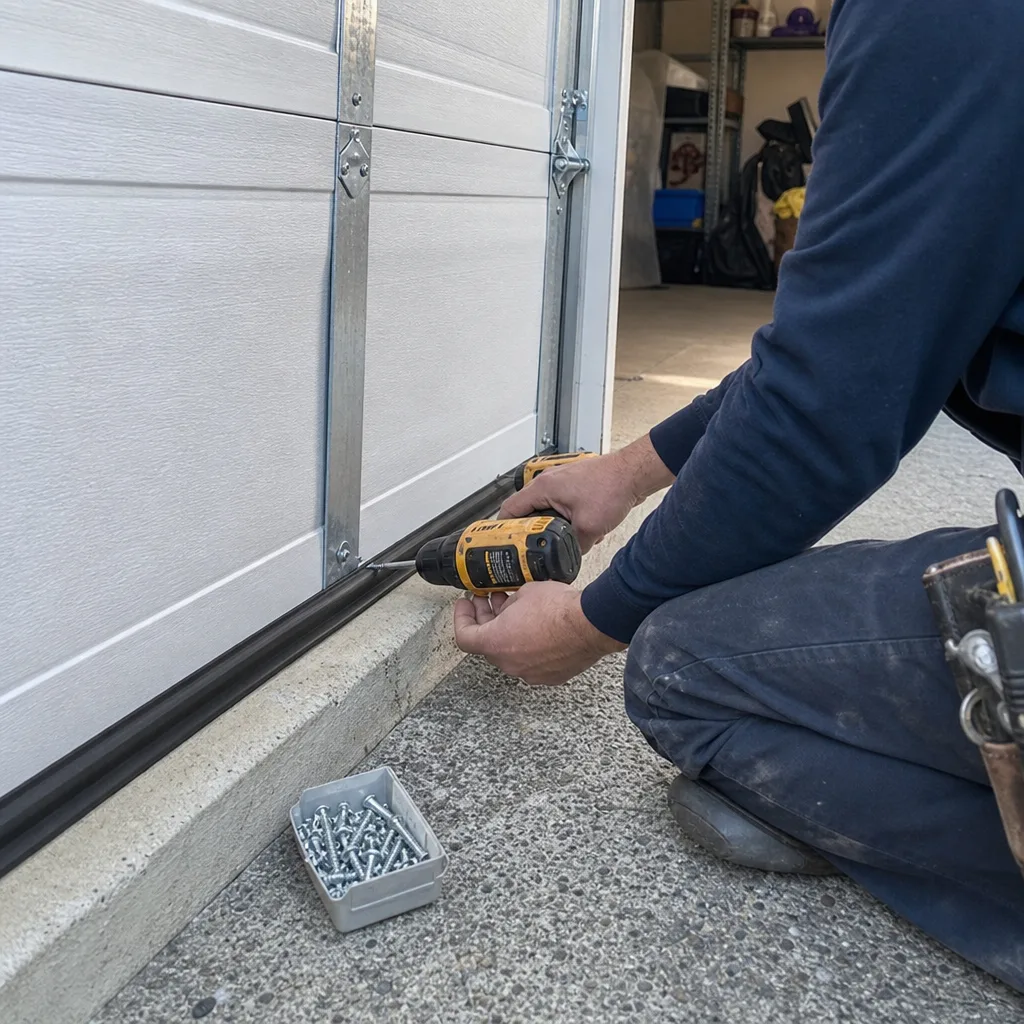
Kent’s fall and winter precipitation means steel door sections and bottom brackets work harder here. Moisture infiltration at the bottom seal leads to rust at the hinges and roller brackets earlier than in drier cities. A contractor with local Kent experience knows to check the bottom seal for failure during routine repair calls, because a failed seal in November is the root cause of a corroded panel by March. This is the kind of local knowledge that doesn’t appear on a national franchise checklist.
Code and Permit Requirements
Garage door replacement in Kent generally does not require a permit when the opening size remains unchanged and the work is classified as a like-for-like replacement. However, modifications to the opening, adding a new door where one didn’t exist, or structural changes to the header or jambs may require a building permit from the City of Kent. A knowledgeable contractor will flag this before work begins. A contractor who waves off permit questions without explanation is giving you an answer that may not match Kent’s building department.
Common Failures by Neighborhood Age
Kent’s housing stock ranges from mid-century ranchers near the East Hill area to new construction on the valley floor and homes built during the 2000s expansion on the West Hill. Older homes in Kent tend to have extension-spring systems that were common before torsion springs became standard on new doors. Those extension springs fail differently and require safety cable inspection along with the spring replacement. Newer homes favor torsion systems with specific spring gauges matched to the door weight. A contractor who has been servicing Kent since 2015 recognizes both without checking a manual.
We also see a seasonal spike in opener limit switch issues in Kent during the first cold snap, when garage door tracks contract slightly and the carriage encounters resistance at the top of travel. Homeowners describe it as “the door reverses for no reason.” It’s not the logic board. It’s the limit setting shifting as temperatures drop. That diagnostic distinction is local familiarity, not brand specialization.
Common Mistakes to Avoid
- Choosing based on the fastest response time. In Kent, a contractor who can arrive in 30 minutes means they’re driving from somewhere or have no jobs lined up. Neither tells you whether they operate on a written-price-first system. Speed is a convenience; paper is a protection.
- Accepting a verbal “all-in” number. The all-in verbal quote is the strongest signal that a written number will arrive later and be higher. In Kent, we’ve seen homeowners accept a $300 verbal spring replacement and pay $480 when “the other spring was also worn.” Without a written scope, you can’t appeal.
- Skipping the L&I lookup because the company “seems legit.” The L&I lookup takes three minutes in Kent and saves you from discovering a lapsed bond after a property damage claim. This is not a hospitality gesture; it’s the only verification that the operator is legally operating in Washington.
- Treating all brands as interchangeable. A Raynor door sells in a different price band and availability window than an Amarr door in the Kent market. If a contractor quotes a Raynor panel but substitutes a generic, you may not know until the color doesn’t match. The written quote should name the brand and part number.
- Ignoring the photo documentation gap. A contractor who can’t show you the failed component with a photo is one who expects you to accept their diagnosis without evidence. In Kent, where many repair decisions hinge on a part that broke inside a torsion tube or behind a panel, the photo matters more than the tone of the technician’s voice.
- Using urgency to decide. “We have a crew in your area today” is a routing convenience, not a reason to commit. A contractor who pushes a same-day decision is working against your interest in reading the quote line by line.
- Not asking what “warranty” means. A contractor who says “it’s covered” without producing written warranty terms hasn’t told you anything. The 365-Day Done Right Promise from Servo means if it’s not done right, we make it right. That’s a written standard, not a verbal assurance. Ask for the paper.
When to Call a Professional
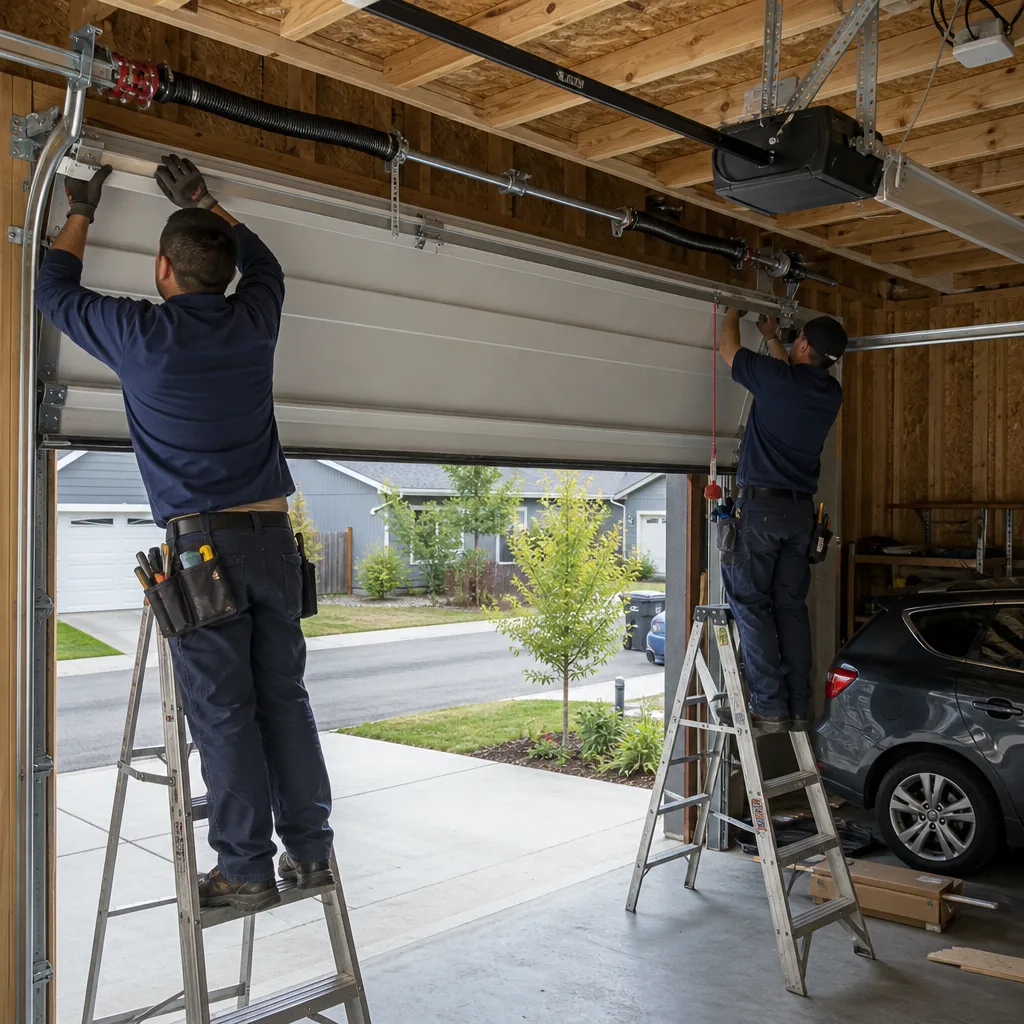
Call a licensed garage door contractor in Kent when the door won’t open or close fully, makes a sound you don’t recognize, or shows visible damage to panels, tracks, or hardware. Torsion springs under tension are genuinely dangerous to work on without the correct winding bars and experience. The same applies to opener installation involving line-voltage electrical connections. Servo Garage Doors Kent offers free estimates in Kent. Call (425) 906-3489 and we’ll send a licensed technician with a written quote and photo documentation before any work begins. If you have a written estimate from another company, bring the paperwork and we’ll give you a free second opinion.
Frequently Asked Questions
Garage door repair in Kent typically ranges from $150 to $650 depending on the failed component. A spring replacement usually costs $180 to $450, opener logic board replacements run $200 to $400, and track realignment is $100 to $250. These are Kent market ranges based on current parts pricing. Every Servo job includes a flat written price before work starts. Call (425) 906-3489 for an exact quote.
Like-for-like replacement that doesn’t change the opening size typically doesn’t require a City of Kent permit. Modifying the opening, adding a new door where none existed, or structural changes to the header may require one. A licensed contractor will flag this during the estimate. If your contractor can’t answer this question, that’s a signal about their local experience.
Torsion springs are rated in cycles, typically 10,000 cycles for standard springs, which translates to roughly 7 to 10 years of normal use in Kent households. But Kent’s moisture exposure can shorten spring life if the door operates in a corrosive environment or the spring isn’t lubricated. A replacement spring should include a documented cycle rating on the written quote.
We strongly advise against it. Torsion springs hold hundreds of pounds of tension, and the winding process requires specific tools and experience. Improper installation can cause serious injury or death. The labor cost of a professional spring replacement in Kent is less than the medical deductible if something goes wrong.
Most Kent companies service the national brands including LiftMaster and Chamberlain openers, along with door brands like Clopay and Amarr. At Servo, we service all eight major brands: LiftMaster, Chamberlain, Genie, Clopay, Amarr, Wayne Dalton, Craftsman, and Raynor. If a contractor tells you a Raynor or Craftsman part is “special order only” without explaining why, ask for the part number and verify yourself.
Not at Servo. Clause 1 of The Haven Standard is a flat, written price delivered before any work starts. The price doesn’t change after disassembly because the diagnostic process uses photos to confirm the failure before the quote is written. If you’re working with a contractor who says “it depends on what we find inside,” you’re working without a written scope, and the price absolutely will change. Call (425) 906-3489 to see what a fixed-price repair looks like in writing.
The Bottom Line
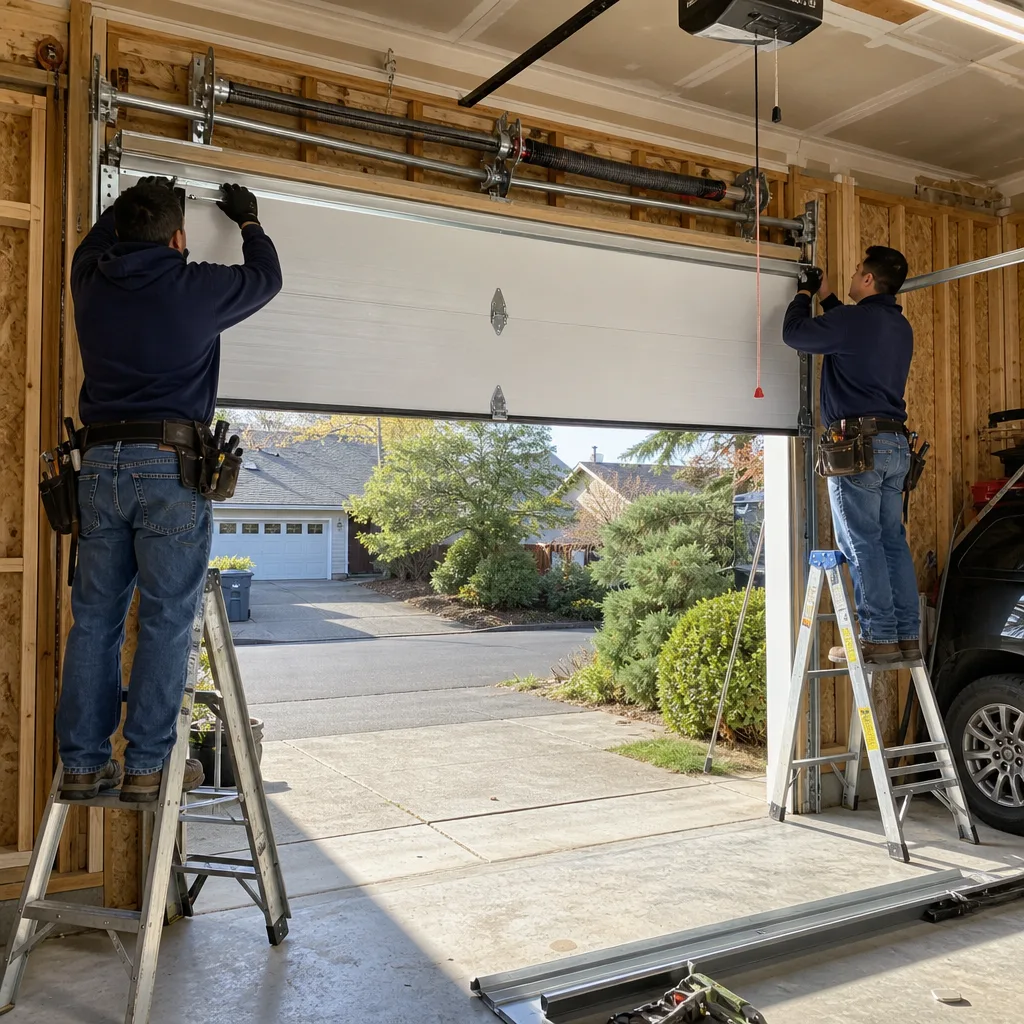
Hiring a garage door contractor in Kent comes down to four questions: Will you put the price in writing before work starts? Will you photograph the failed part before quoting a replacement? What’s your L&I license number? What do I get when the job is done? The honest answers to those questions look like documented evidence, not reassurances. A written scope with part numbers, a photo record of the failure, and a license you can verify in three minutes are the signals of a contractor who operates on paper, not on trust. In Kent, where moisture, spring failures, and opener logic issues are part of the local workload, the right choice is the company whose paperwork does the persuading. We’ve been doing it that way since 2015. For a free estimate, call (425) 906-3489 or explore our Garage Door Repair in Kent page to see the documented process in action.
Written by Marcus Deller, Owner at Servo Garage Doors Kent, serving Kent since 2015.