
Last updated September 21, 2026
Full 25-point door and opener safety check with every visit - springs, cables, rollers, tracks, and your LiftMaster or Chamberlain opener included
You get a price before we start. It does not change when the truck arrives.
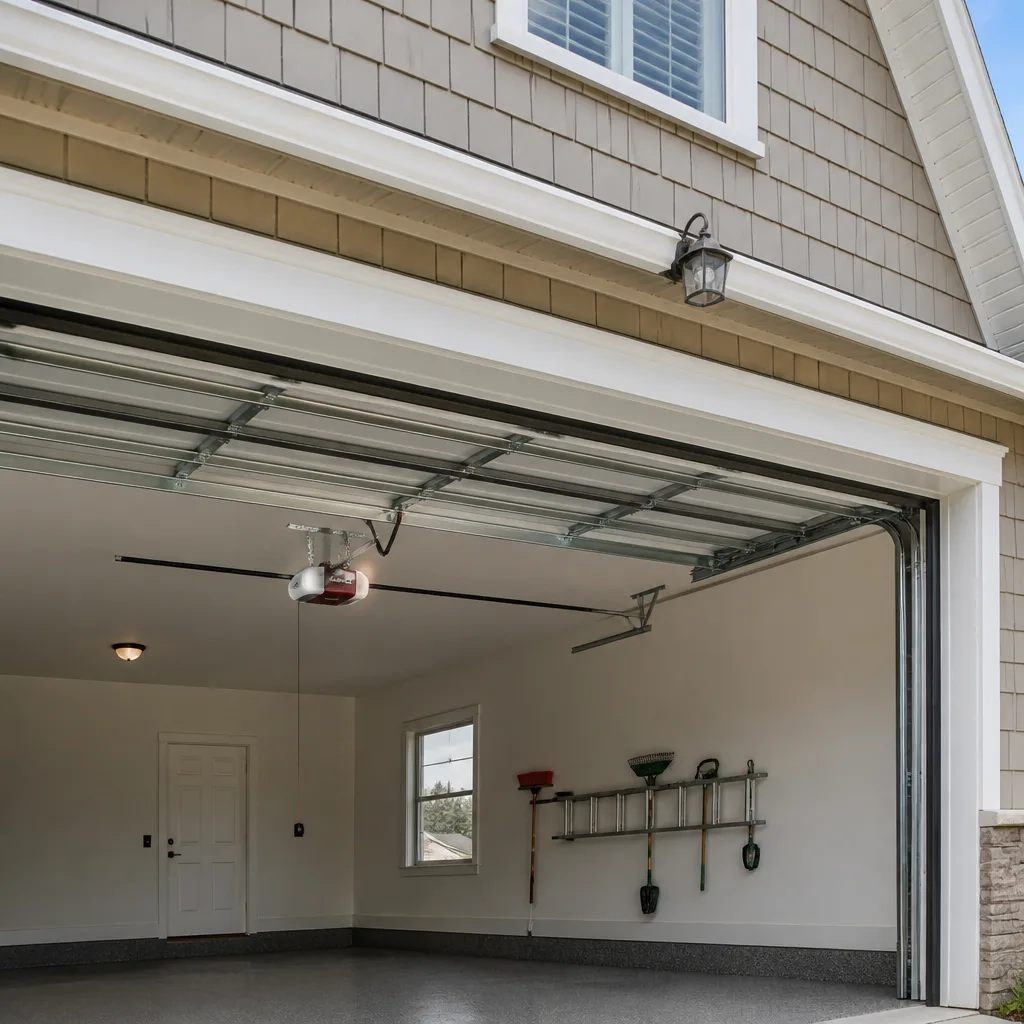
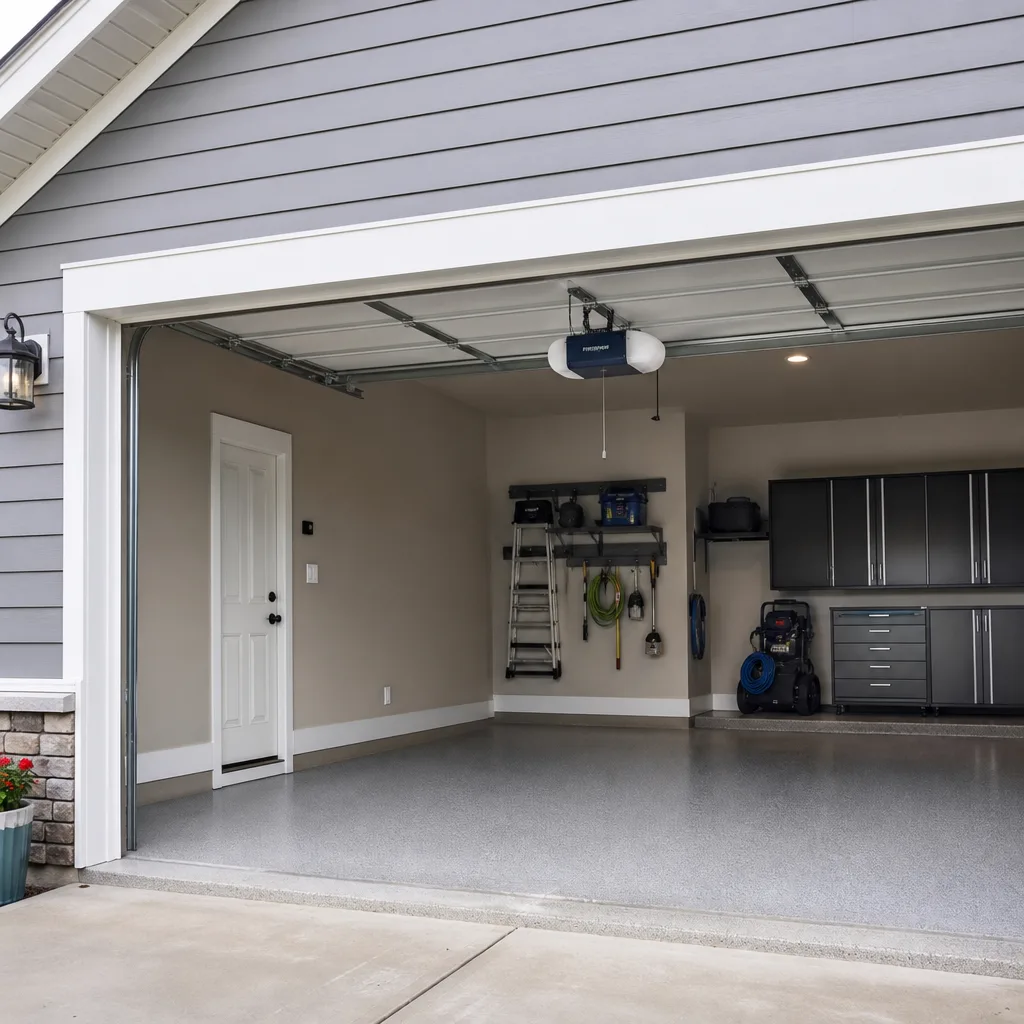
 Before
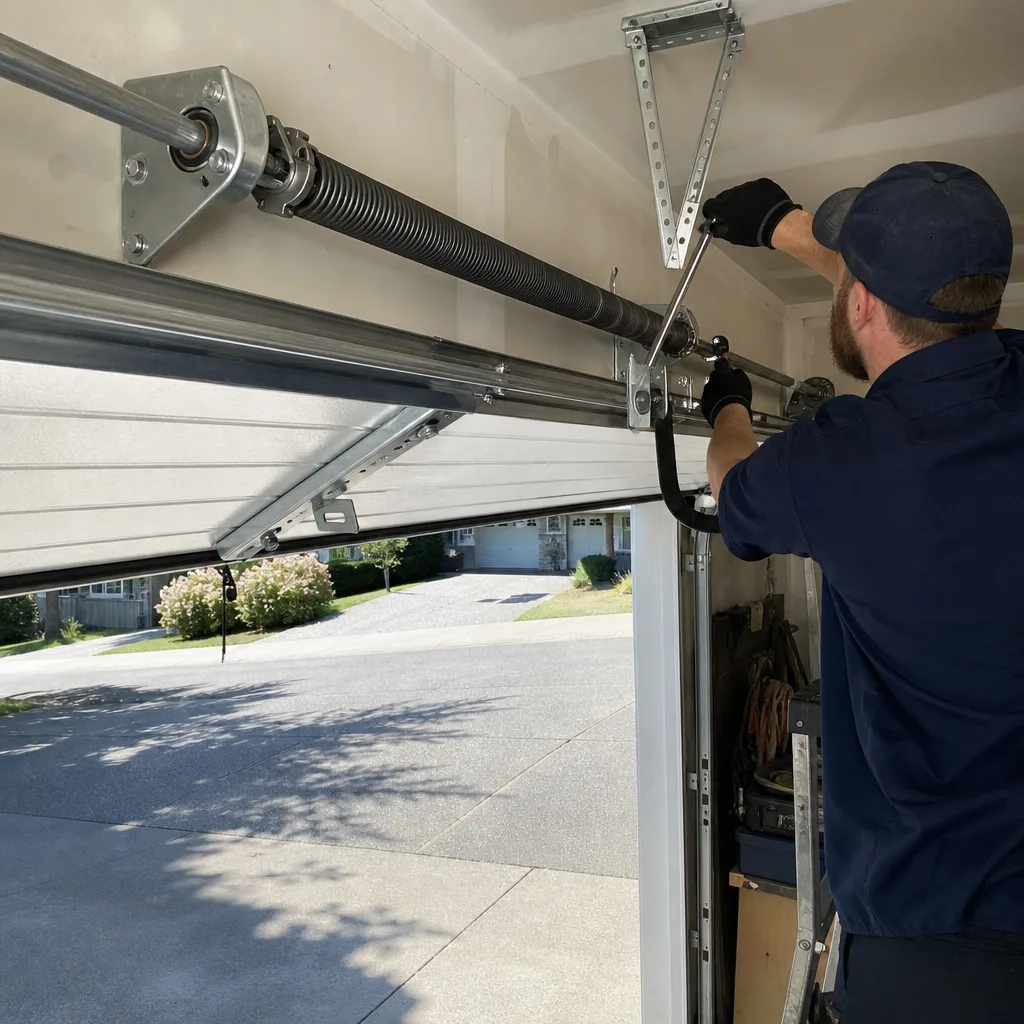 After
After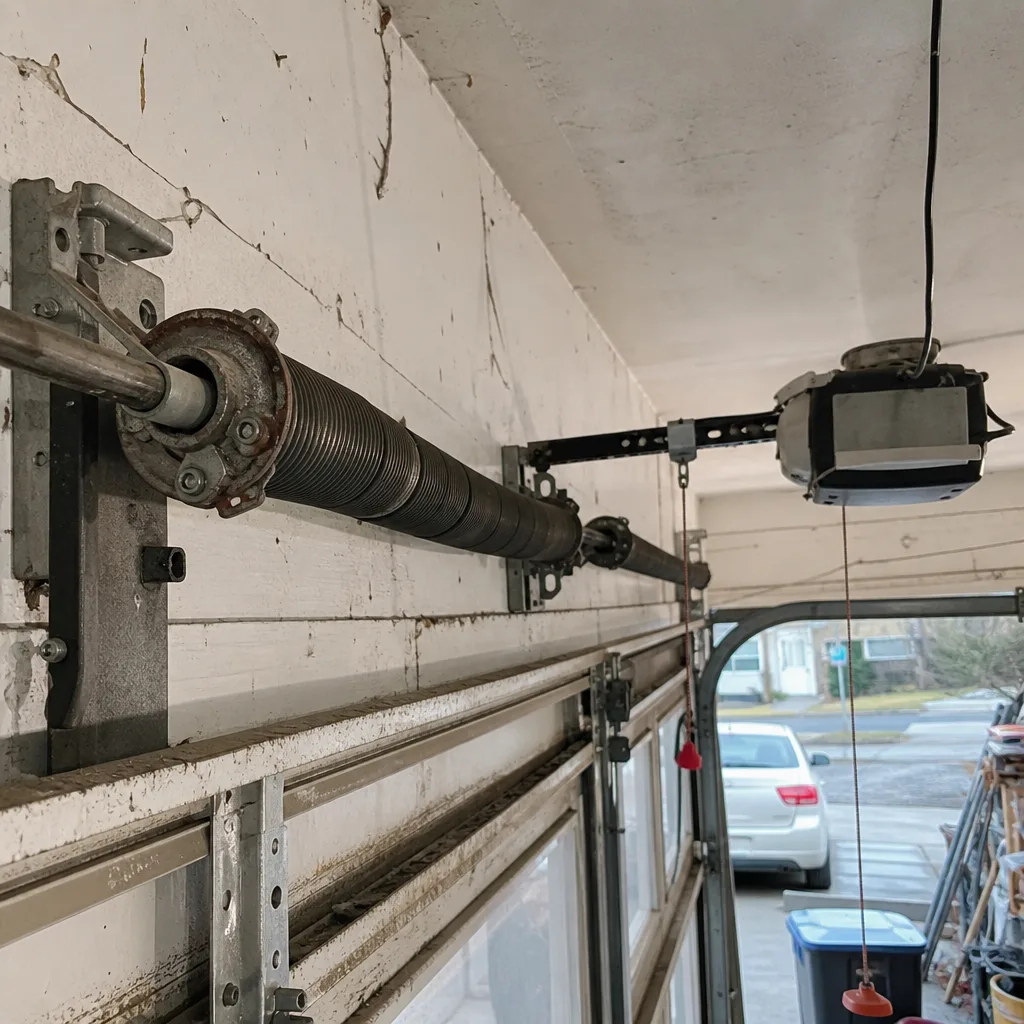 Before
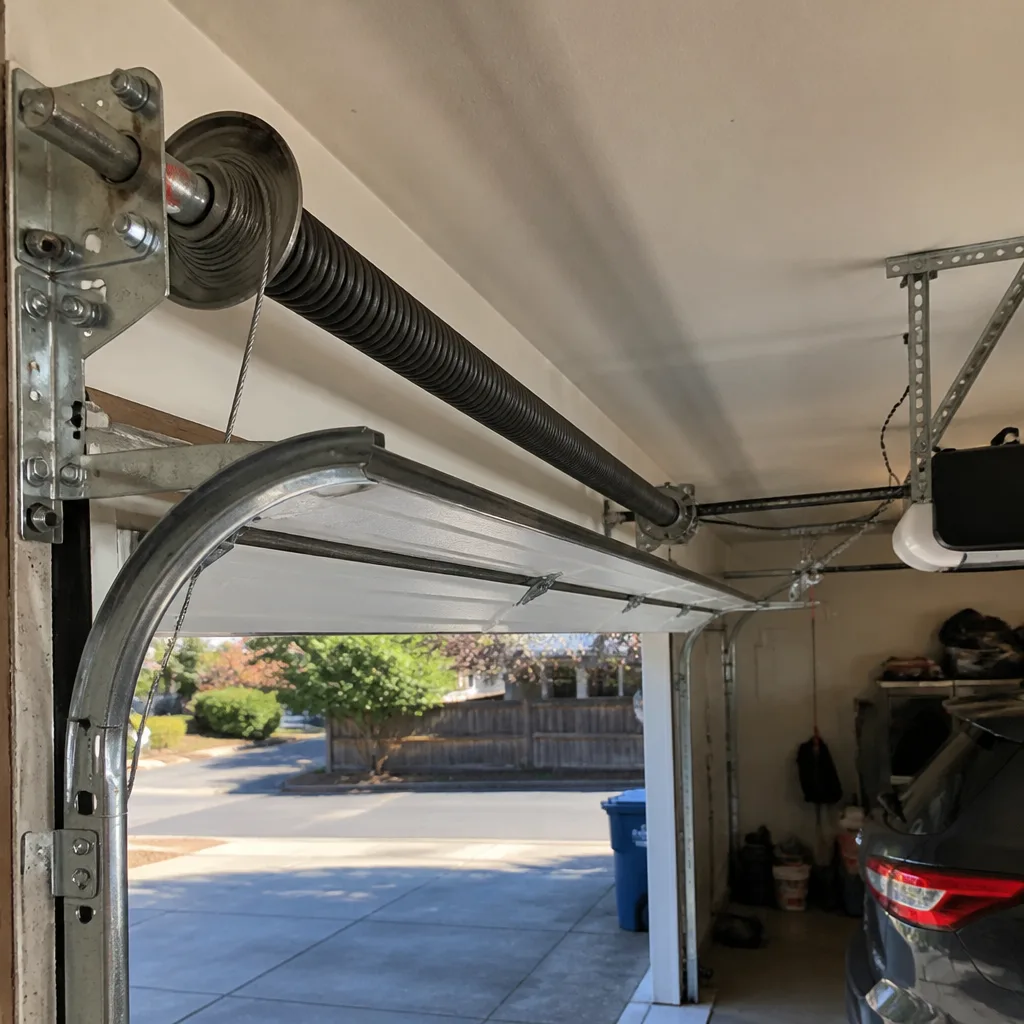 After
After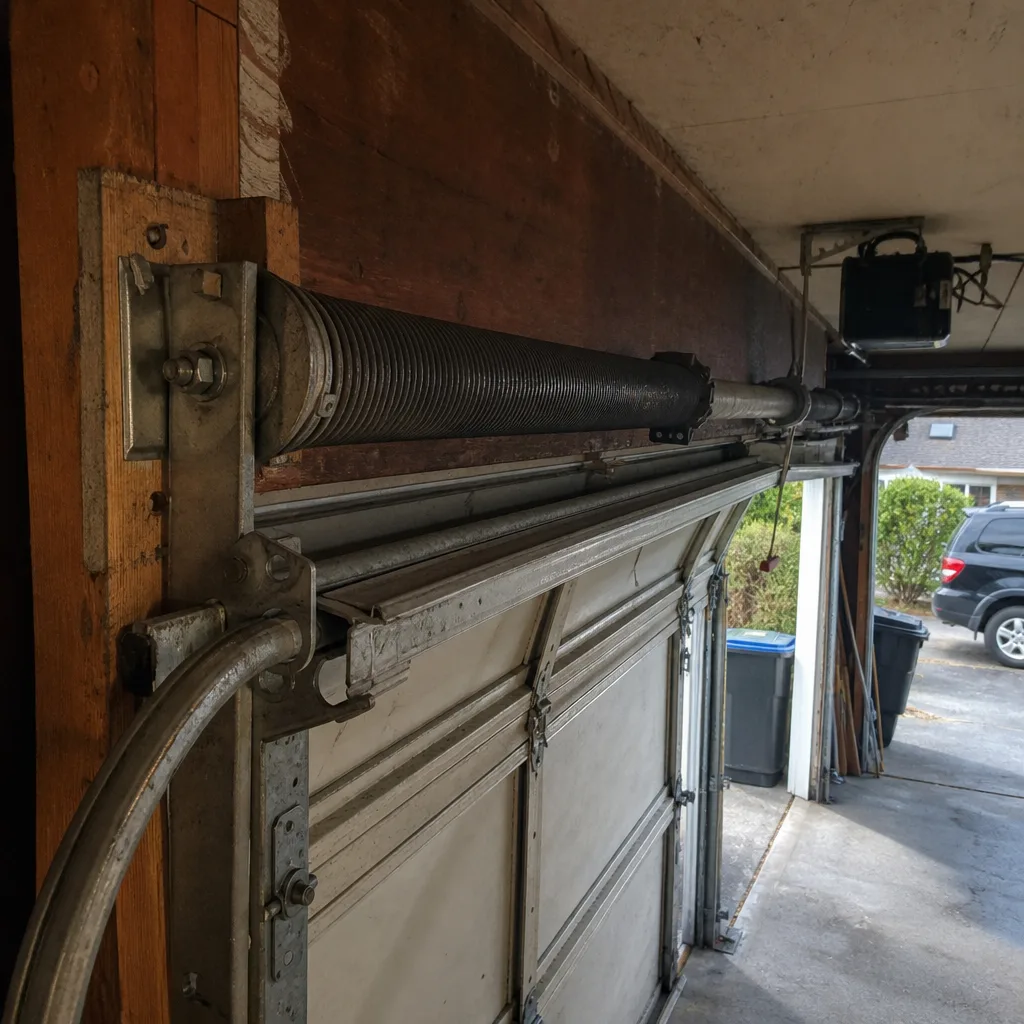 Before
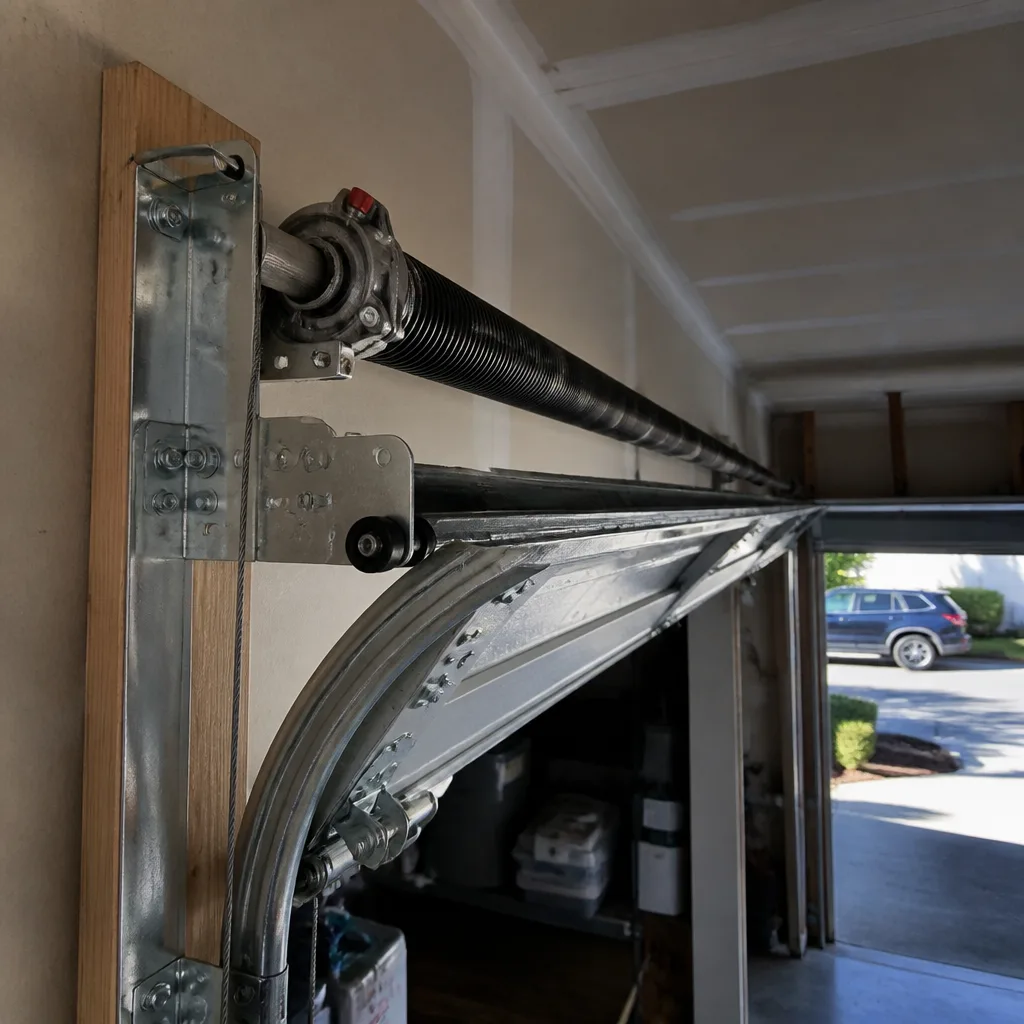 After
AfterThe Complete Guide to Garage Door in Kent
Here’s something most Kent homeowners don’t learn until they’ve paid for it twice: the average garage door in this city gets a new set of torsion springs before anyone catches the real problem. The springs broke because a drum on the cable assembly was misaligned, which put uneven load on the springs every time the door cycled. The drum job costs around $60. The spring replacement they did first cost around $300. This guide exists so you can learn the sequence before you spend the money, and you can find more guides & resources on our blog. We’ll walk you through how a Kent garage door actually works, how the Pacific Northwest climate breaks it down in a predictable order, what a real inspection looks like line by line, and how to read a quote so you know exactly what you’re paying for before anything starts.
Quick Answer
A garage door in Kent is a system of interdependent parts: panels, tracks, rollers, cables, springs, and an opener, each degrading at a different rate depending on the climate, the door’s age, and how often it cycles. The most common failure sequence in this area is bottom seal deterioration, then track hardware corrosion, then torsion spring fatigue, then cable or drum failure. The fastest way to avoid expensive surprises is a documented inspection that photographs each component and quotes a written price before any work begins.
Table of Contents
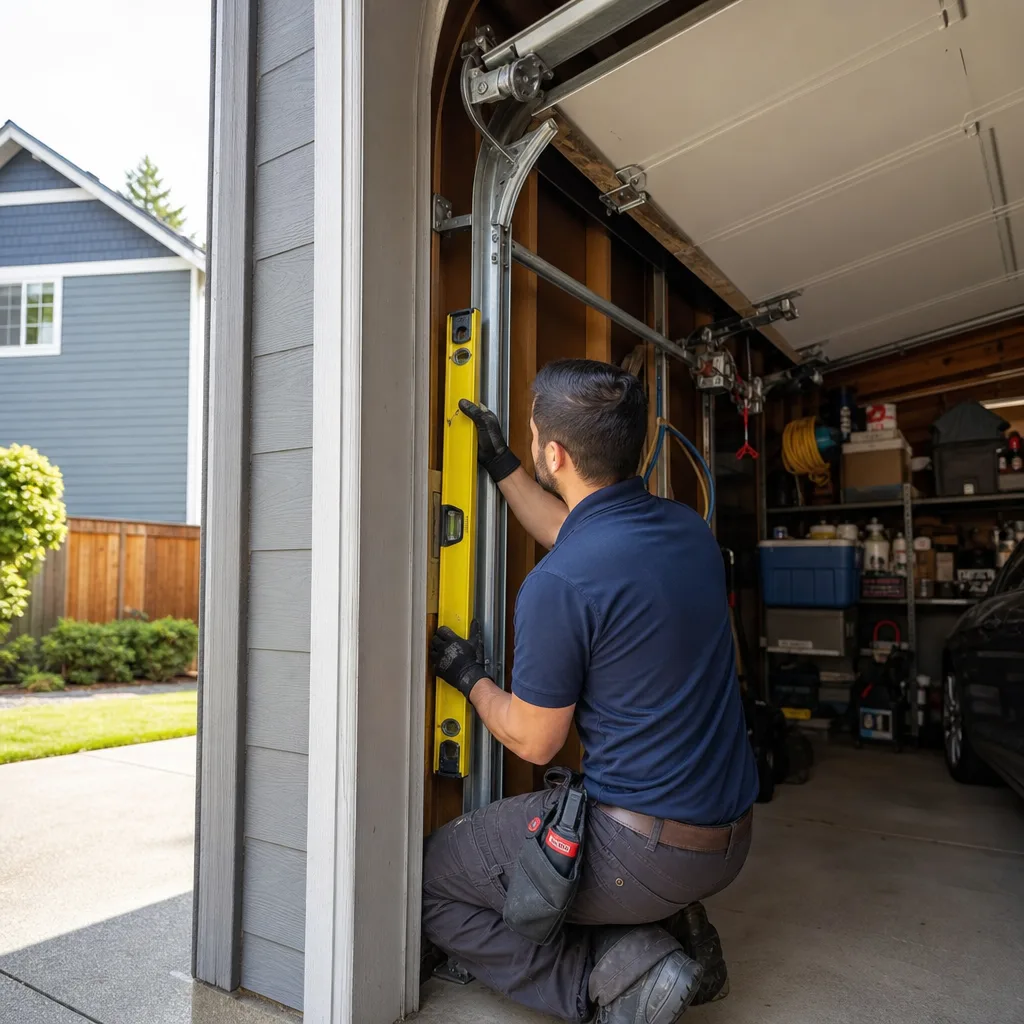
- The Anatomy of a Kent Garage Door System
- How the Kent Climate Degrades Your Door in a Specific Sequence
- Sectional, Tilt-Up, and Roll-Up Doors in Kent Homes
- Torsion Springs: The Part That Gets Replaced Twice
- What a Full System Inspection Actually Means, Line by Line
- How to Read a Garage Door Quote in Kent
- A Seasonal Maintenance Schedule for Kent Homeowners
- Garage Door Openers in Kent: What Fails and Why
 Before
 After
AfterThe Anatomy of a Kent Garage Door System
Before you can diagnose anything, you need the vocabulary. Trade terms get thrown around by contractors, and most homeowners nod along without knowing what they’re agreeing to. Here’s the complete system, part by part, explained in plain language.
The panels are the visible sections that form the door face. On a sectional door, which is what most Kent homes built after 1980 have, these are steel, aluminum, or wood sections hinged together. Each panel carries weatherstripping at its seams, and that stripping is often the first thing to fail in a wet climate. Panels themselves rarely break unless something hits them, but rust at the bottom edge of the lowest panel is common in Kent because that panel sits closest to ground moisture.
The tracks are the steel channels bolted to the walls and ceiling that guide the door up and back. On a standard sectional door, the vertical tracks run up the wall, curve into horizontal tracks, and run back into the garage. Track hardware corrodes in Kent because of ambient humidity and road salt tracked in on vehicles. Loose track brackets cause the door to bind, which puts strain on everything else.
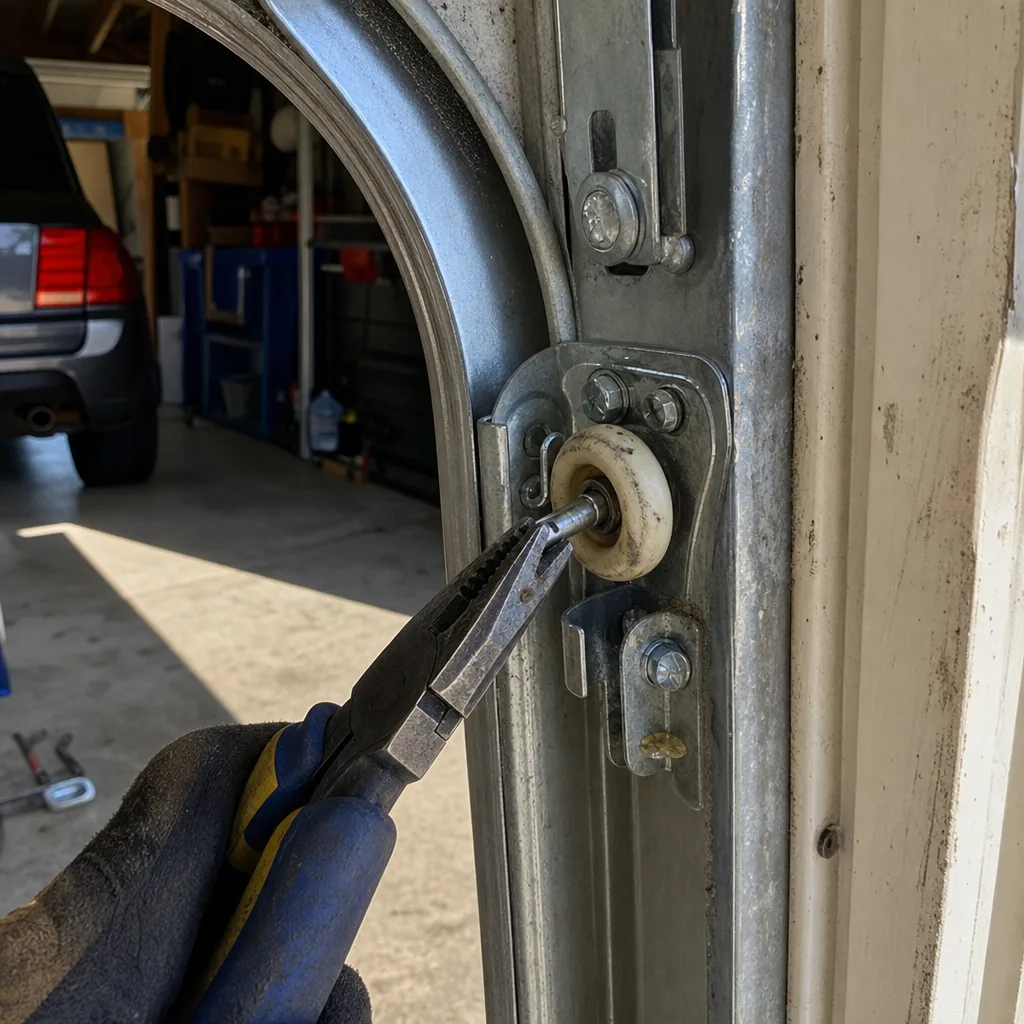
The rollers are the wheels that ride inside the tracks. Steel rollers are original equipment on most doors; nylon rollers are an upgrade that runs quieter. Rollers wear out. A worn roller develops flat spots or wobble, and that wobble transfers vibration into the track, the hinges, and the opener carriage. Replacing a set of rollers costs less than replacing a bent track.
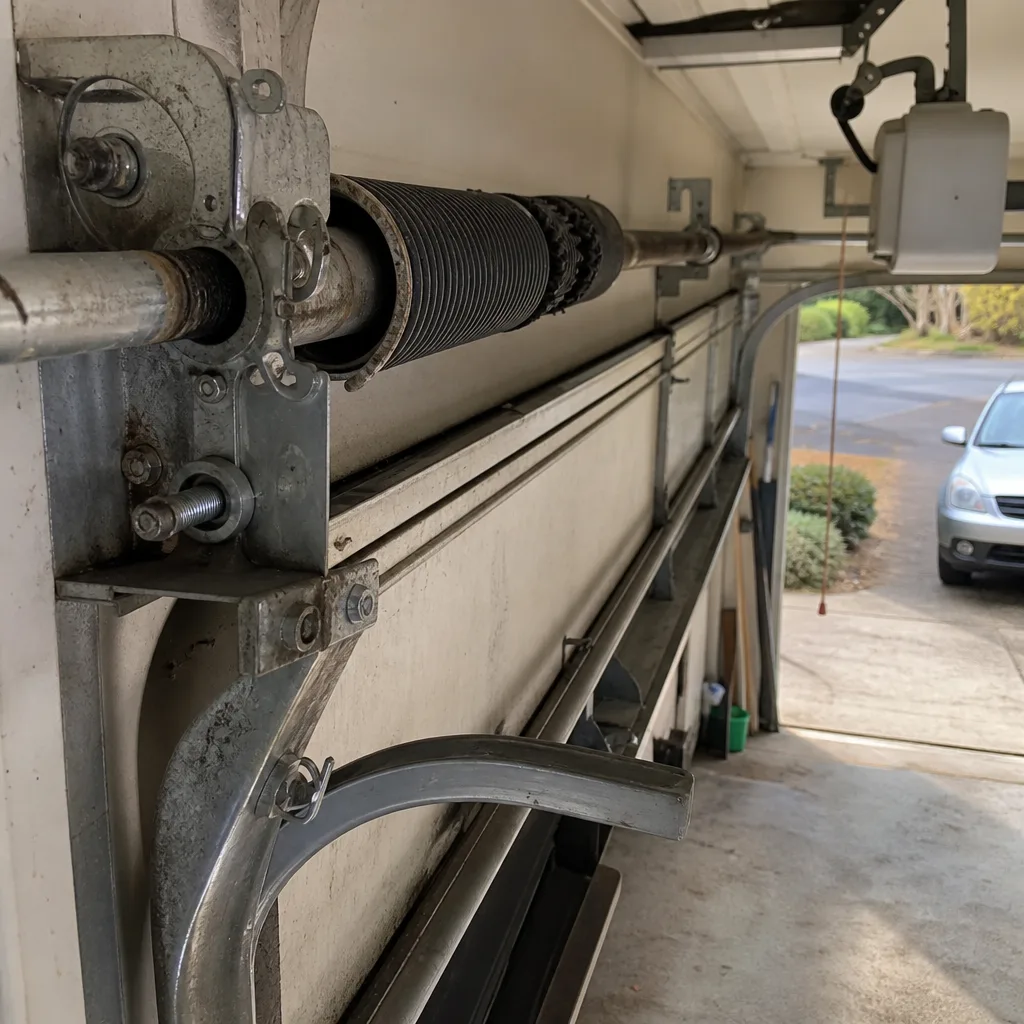
The springs do the heavy lifting. On a modern sectional door, there are two types: torsion springs, which mount on a steel tube above the door opening and twist to store energy, and extension springs, which stretch along the horizontal tracks. Kent homes built in the 1960s and earlier often still have extension springs. Torsion springs are rated by wire diameter, spring length, and inside diameter, and they are matched to the exact weight of the door. A spring that’s even one wire gauge off will cycle unevenly and fail early.
The cables connect the bottom corners of the door to the spring mechanism. On a torsion system, the cables wrap around drums at each end of the spring tube. When the door lifts, the cables wind onto the drums. When the door closes, they unwind. If a drum slips or a cable frays, the door lifts unevenly. That uneven lift is what breaks springs prematurely, which is the misdiagnosis problem we mentioned at the top.
The opener is the motor unit that pulls the door open and pushes it closed. It connects to the door via a trolley carriage on a rail. The opener has a logic board, limit switches that tell it where to stop, and safety sensors at the base of the door. Opener failures are frequently misdiagnosed as door failures and vice versa. We’ll cover that in its own section.
How the Kent Climate Degrades Your Door in a Specific Sequence
Kent gets about 38 inches of rain a year, mostly between October and May, and the temperature swings from around 28°F on cold winter nights to 90°F on summer days. That combination of moisture and thermal cycling affects your garage door in a predictable order. Understanding the sequence lets you budget ahead of failures instead of reacting to them.
Stage 1: The Bottom Seal Fails
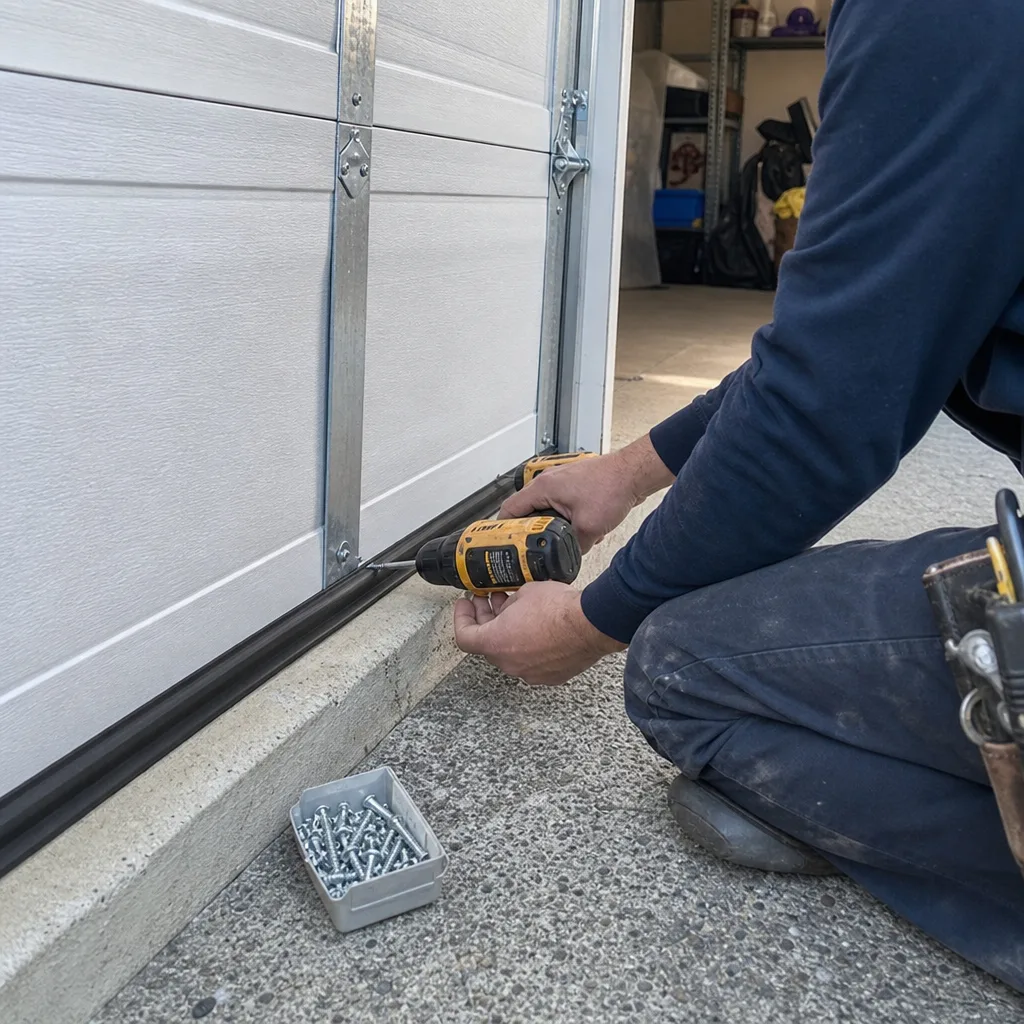
The rubber or vinyl strip along the bottom of the door is called the bottom seal or astragal. It’s the first casualty in Kent because it sits directly on a concrete slab that’s cold in winter and damp year-round. The seal compresses, cracks, and eventually tears. When it tears, water gets under the door, leaves and pine needles blow in, and rodents find a highway into the garage. A bottom seal replacement takes about 20 minutes and costs less than a service call minimum at most companies. The part itself is under $30 for most doors.
Stage 2: Track Hardware Corrodes
Next comes the hardware: track brackets, bolts, hinge screws, and the bottom corner brackets where the cables attach. These are plain zinc-plated steel on most doors, and zinc plating eventually surrenders to Kent’s damp winters. Corroded hardware doesn’t usually break suddenly. It loosens. A loose bracket lets the track flex, which changes the door’s geometry by a few millimeters, which adds friction, which makes the opener work harder and the springs cycle under load differently. We’ve pulled track bolts out of Kent garage walls with our fingers because the threads had rusted to nothing. That’s not an exaggeration.
Stage 3: Springs Fatigue
Torsion springs are rated for a certain number of cycles, typically 10,000 for standard springs. A cycle is one open and one close. The average family in Kent cycles their door three to four times a day, so a 10,000-cycle spring should last roughly seven to nine years. But Kent’s temperature swings accelerate metal fatigue. The steel in a torsion spring expands and contracts with every seasonal shift, and the high humidity during the wet months contributes to micro-corrosion at the molecular level. The practical result is that springs in Kent often fail at the six to seven year mark even with modest use. This is why the spring replacement is the repair every Kent homeowner will eventually face.
Stage 4: Cables and Drums Follow
Here’s the insight that saves money. When a torsion spring breaks, the sudden release of tension puts a shock load on the cables and the drums they wrap around. In many cases, the cable itself was already weakened from years of rubbing against a drum that was slightly out of alignment. The spring failure isn’t the root cause, it’s the symptom. This is why every proper spring replacement in Kent should include checking drum alignment and cable condition, and why the drum repair at $60 often prevents the second spring failure at $300. Clause 4 of The Haven Standard is our founding rule: the technician photographs the failed component before quoting a replacement, so the customer sees what actually failed rather than taking someone’s word for it.
Sectional, Tilt-Up, and Roll-Up Doors in Kent Homes
Kent’s housing stock breaks into three rough categories, and each tends to have a different type of garage door. Knowing which one you have tells you what parts to expect and what a replacement will involve.
Sectional Doors
The dominant type in Kent. Sectional doors have four to six horizontal panels hinged together, and they roll up on tracks into the garage ceiling. Homes built from the 1980s onward in neighborhoods like East Hill, Panther Lake, and the Kent Valley subdivisions almost all have sectional doors. Brands like Clopay, Amarr, and Wayne Dalton are common here. Sectional doors are the easiest to maintain because every component is accessible and replaceable. They’re also the safest type because they have no single heavy panel swinging outward.
One-Piece Tilt-Up Doors
Older Kent homes, particularly the craftsman-style and mid-century builds in the Scenic Hill area and the older neighborhoods near downtown, often still have one-piece tilt-up doors. These are a single solid panel that pivots on side hinges and swings outward as it opens. Tilt-up doors use extension springs along the sides, not torsion springs overhead. They’re mechanically simpler but harder to automate, and they’re more sensitive to track alignment because the entire weight of the door travels through two side pivots. If you live in an older Kent home with a tilt-up door, budget for a track tune-up as part of your maintenance, because these doors get louder and stiffer as hardware wears. For a broader comparison, see our DIY vs Professional Garage Door: The Kent Homeowner’s Decision Guide.
Roll-Up Doors
Roll-up doors are the commercial-style doors that coil into a tight drum above the opening. In Kent, you’ll find them on some detached workshops, on a few converted garages, and on properties where the garage has unusually low headroom. They use a different spring mechanism and a different cable system than residential sectional doors. Most residential service companies don’t stock roll-up parts. If you have one, ask specifically whether the technician carries roll-up door hardware on the truck before you schedule the visit.
Torsion Springs: The Part That Gets Replaced Twice
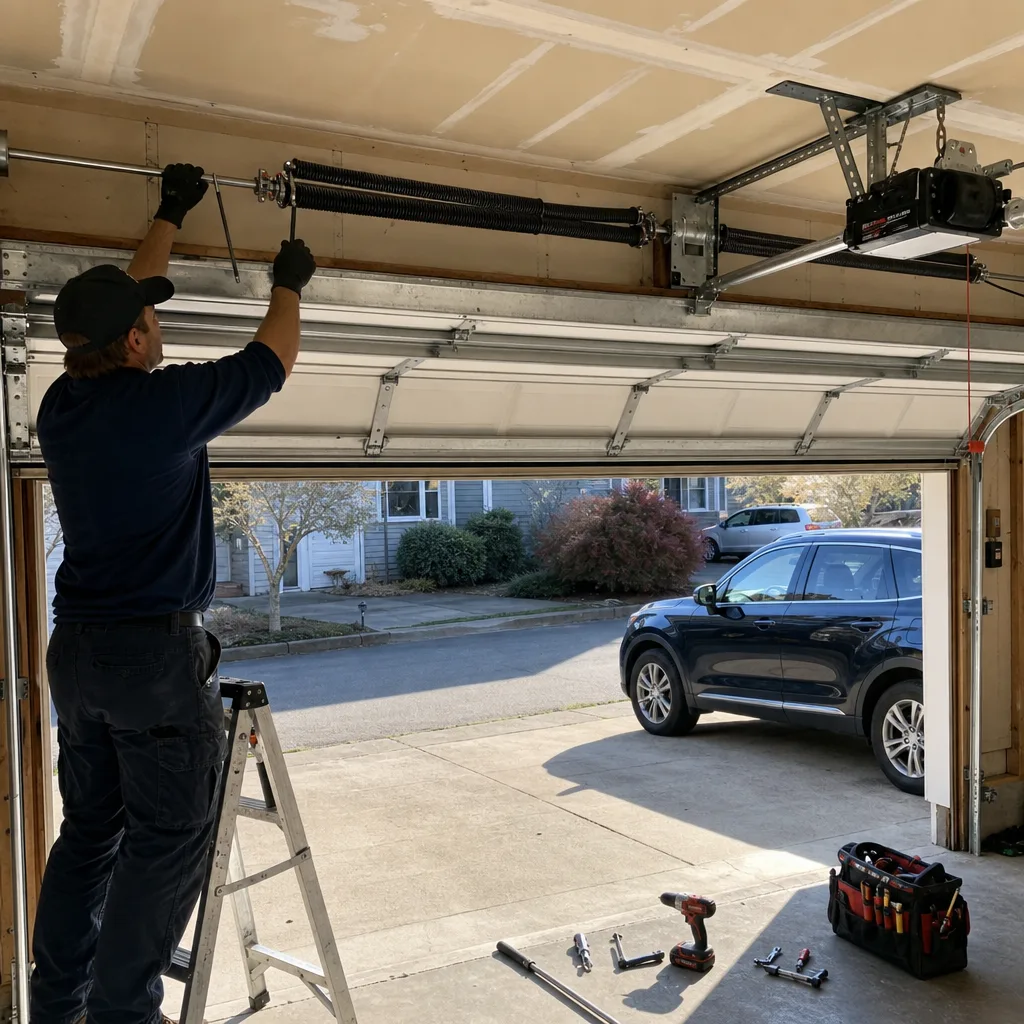
We opened this guide with the twice-replaced spring problem, so let’s explain it fully. This is the single most expensive recurring repair a Kent homeowner will face, and in our experience, the second replacement is often avoidable.
A torsion spring is a tightly wound steel coil mounted on a tube above the door opening. It stores the energy that lifts the door, so the opener only has to guide it. Most residential doors in Kent have either one spring or a pair. The spring is specified by three measurements: wire diameter, inside diameter, and length. Those three numbers determine how much weight the spring can lift and how many cycles it will last.
Here’s the failure sequence we see repeatedly in Kent. A spring breaks at the coil, which is normal for a spring that has reached the end of its cycle life. The technician comes out, replaces the spring, and leaves. But the spring broke early because the door was slightly out of balance, or a drum was misaligned, or a cable was fraying. The new spring is installed on a system that’s still out of alignment, so it cycles under uneven load, fatigues prematurely, and breaks again in three or four years instead of seven. The homeowner assumes springs just don’t last. The real problem was the drum or the balance.
This is why a proper spring replacement includes more than the spring. The technician should check drum alignment, cable condition, door balance, track geometry, and opener force settings. A door that’s correctly balanced will stay at waist height when you release it manually. A door that drifts up is under-sprung. One that drops is over-sprung. Both conditions shorten spring life. At Servo Garage Doors Kent, the technician documents all of this with photos, which is what The Haven Standard requires. You see the failed part, you see the surrounding components, and you see exactly what was adjusted. There’s a place for that conversation. Our garage door repair service in Kent covers this full diagnostic on every spring job.
What a Full System Inspection Actually Means, Line by Line
A “full system inspection” sounds impressive, but some companies use it as a checkbox while they look for an upsell. Here’s what a real inspection covers, what each line item should produce in the way of documentation, and what’s worth paying for versus what’s padding.
A Real Inspection Covers These Items
- Door balance test. The technician releases the door from the opener and rests it at waist height. If it stays, the springs are matched to the door weight. If it moves, the springs or the drum alignment are off. This takes two minutes and should happen on every visit.
- Spring measurement and visual inspection. Wire diameter, length, and inside diameter get measured. The technician looks for gaps in the coils, rust accumulation, and signs of the spring rubbing against itself. A spring with visible rust at the coil binding points is a spring on borrowed time.
- Cable and drum inspection. Cables should be smooth with no frayed strands. Drums should be the same distance from the bearing plates on both sides. A drum that’s shifted inboard or outboard by even an eighth of an inch changes the cable winding geometry.
- Roller and hinge inspection. Each roller gets checked for play in the wheel and wear in the stem. Each hinge gets checked for looseness at both the panel connection and the roller connection. Loose hinge screws are the most common cause of a noisy door that’s not actually failing.
- Track alignment and bracket torque. The vertical tracks should be parallel and equally spaced. The horizontal tracks should be level. Brackets should be tight against the wall. The technician should check bracket torque, not just visually glance at the track.
- Bottom seal condition. Looking for tears, gaps at the corners, and compression failure. A seal that’s torn at the corner lets water in even if the center looks fine.
- Opener force and limit settings. The opener should reverse when it meets resistance, and it should stop at the correct open and closed positions. Force settings that are too high wear the door. Settings that are too low cause false reversals.
- Safety sensor alignment. The photo eye sensors at the base of the door need to be aligned and clean. Kent garages get dust and spider webs in the sensor lenses, which causes intermittent reversal problems.
What Should Be Documented
Clause 4 of The Haven Standard exists because of a founding rule at Servo: the customer sees the failed part before anyone quotes a replacement. On a real inspection, you should receive photographs of the components that show wear, not a verbal summary. A photo of the corroded drum, the frayed cable, or the compressed seal tells you what you’re paying for. If a company won’t show you the part, you’re taking their word for it. We don’t think that’s how it should work, which is why the documented photo record is included on every visit.
What’s Padding
- “Lubrication service” as a standalone charge. Lubricating rollers, hinges, and springs is part of a proper tune-up, not an add-on line item. If it’s listed separately for more than a nominal amount, question it.
- “Balance adjustment” as a separate fee from a spring replacement. Balancing the door is part of the spring job. It’s not an additional service.
- “Recommended annual inspection plan” that requires prepayment. Annual inspections are useful, but paying in advance for a plan before you’ve seen the work isn’t. We’d tell any Kent homeowner to see the documentation from the first visit before committing to anything recurring.
How to Read a Garage Door Quote in Kent
The written price is where most homeowners get confused, and that confusion is expensive. Here’s how to read a garage door quote so you know what you’re looking at, what’s missing, and what a documented price-first estimate actually looks like. For detailed 2026 pricing, see our Garage Door Cost Breakdown: The Kent Homeowner’s Reference for 2026.
What a Legitimate Quote Contains
- Line items with specific descriptions, not categories. “Replace torsion spring, 0.225-inch wire, 26-inch length, single spring” is a real quote. “Spring replacement” is a mystery.
- Parts and labor separated or clearly described. You should be able to see what the part costs and what the installation costs. If everything is lumped into one number, you can’t evaluate it.
- The exact door model and the brand if a panel or door is being replaced. “Steel panel, 25-gauge, white, 16-foot width” tells you what you’re getting. “New panel” doesn’t.
- The scope of what’s included. Does the spring replacement include the balance check? Does the panel replacement include sealing and weatherstripping? Written scope prevents the “I thought that was included” dispute.
- The warranty terms in writing. What’s covered, for how long, and what voids it. A verbal warranty is worth what it’s printed on.
What a Verbal Ballpark Is
Any price given over the phone without seeing the door is a range, not a quote. It’s useful for budgeting but not for comparing. The real comparison happens when a technician looks at the door, measures the parts, and produces a written number. Clause 1 of The Haven Standard is explicit: a flat, written price and written scope before any work starts. That’s the only pricing model we operate under, and it’s why we don’t use the phrase “call for a quote.” You call, we come out, we quote in writing.
How to Compare Two Quotes
- Match the line items. If one quote lists a specific spring with wire gauge and length, and another just says “spring,” get the details before comparing.
- Look at what’s excluded. A lower price that excludes the balance check or the photo documentation isn’t actually lower if you need those things.
- Ask about the warranty. A spring with a 5-year warranty and a spring with a 2-year warranty are different products at different prices.
- Bring the paperwork to a second opinion. If you have a written estimate from another company, bring it in. Our Free Second Opinion offer covers any competing written estimate. We’ll go through it line by line and tell you if it’s fair or if you’re overpaying.
Kent homeowners who want to see what a documented, written-price-first estimate looks like can check out our garage door installation process in Kent, which walks through how we scope a full replacement.
A Seasonal Maintenance Schedule for Kent Homeowners
Garage door maintenance in Kent is tied to the weather. Here’s a schedule that matches the climate, not a generic national checklist.
October: Pre-Rain Inspection
- Check the bottom seal. Run your hand along it, looking for cracks, gaps, or flattening. If water can get under it, so can leaves and rodents.
- Inspect the weatherstripping between panels. The seams wear first. If the stripping is pulled away or brittle, replace it before the rain arrives.
- Clean and align the safety sensors. Kent’s autumn brings dust and cobwebs. Dirty sensors cause false reversals.
- Check drainage around the garage door. Kent’s fall rains will find any slope problem. Standing water at the door accelerates seal and track corrosion.
March: Post-Winter Hardware Check
- Inspect track brackets and bolts for rust. The wet winter leaves visible corrosion. Tighten anything loose and replace bolts that are heavily rusted.
- Check the door balance. Release the door from the opener and rest it at waist height. If it moves, call a technician to evaluate the springs and drums.
- Look at the cables. Frayed strands are the early warning sign of cable failure. This is not a DIY replacement. Garage door cables are under high tension and can cause serious injury if mishandled.
- Test the opener’s auto-reverse. Place a piece of scrap wood flat on the ground under the door and close it. The door should reverse when it contacts the wood. This is the safety system that prevents crush injuries, and it’s required by federal law.
June: Summer Lubrication
- Lubricate the rollers, hinges, and springs. Use white lithium grease on the rollers and hinges, and a spray lubricant designed for garage door springs. Not WD-40, which is a solvent and actually strips lubrication.
- Check for warped panels. Heat waves can warp steel panels, especially dark-colored doors facing south. Warping changes the door’s geometry and accelerates wear.
Garage Door Openers in Kent: What Fails and Why
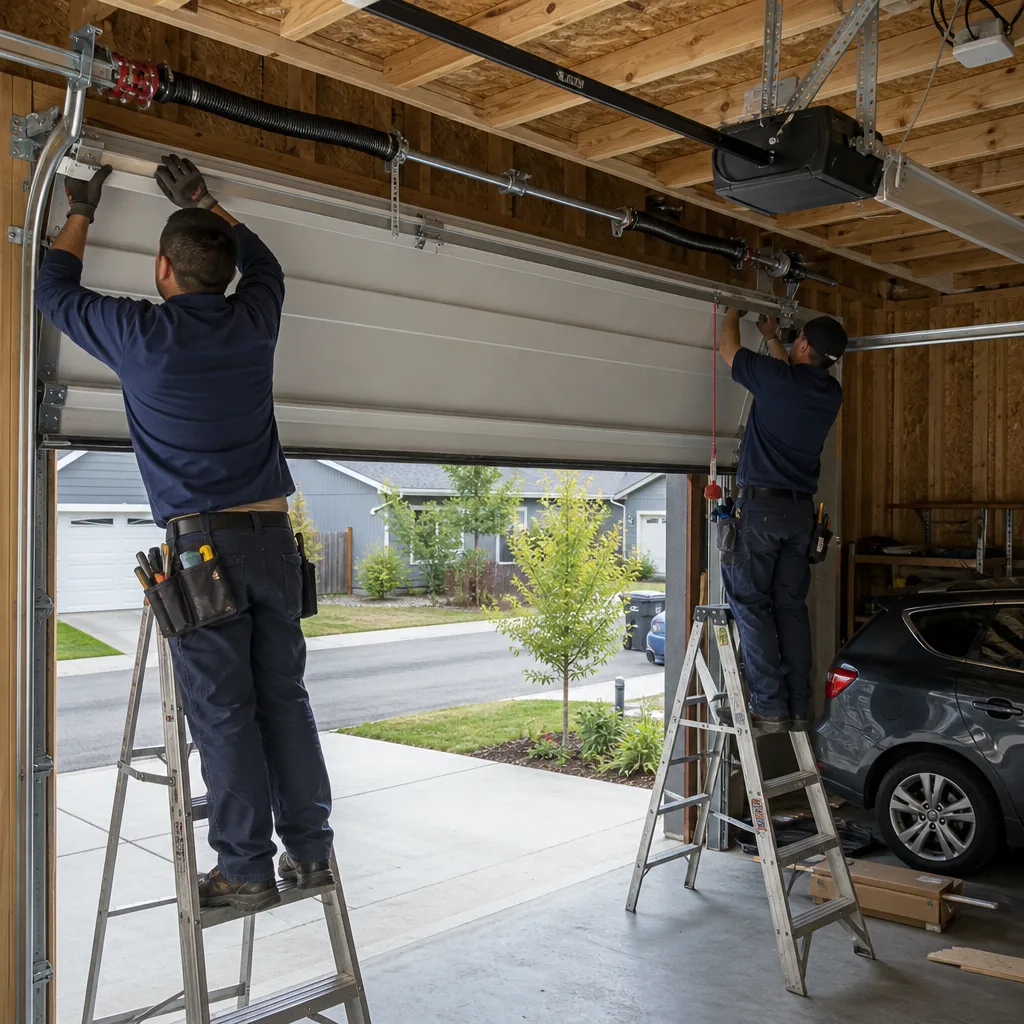
The opener is the motorized unit that automates the door, and it’s the most frequently misdiagnosed component in the system. When a door won’t open, the problem is often framed as an opener failure when it’s really a door problem: a broken spring, a bound track, or a loose cable. The opener is just the motor; it can’t lift a door that’s fighting it.
The Most Common Opener Failures in Kent
- Logic board failure. The logic board is the circuit board inside the opener motor housing. Power surges from Kent’s winter storms and autumn wind events can fry the board. The symptom is usually a completely dead opener with power to the outlet but no response from the wall button or remote.
- Limit switch failure. The limit switches tell the opener where the door is in its travel. When they fail, the door stops at the wrong position or reverses immediately after closing. This is the failure that makes people think their door is “possessed.”
- Gear and sprocket wear. Older chain-drive openers use a plastic gear that eventually strips, especially if the door has been out of balance for a long time and the opener has been doing the lifting. The symptom is a grinding noise with no movement.
- Trolley carriage wear. The trolley carriage rides along the rail and connects the door to the drive mechanism. When it wears, the door moves unevenly or the trolley disengages.
In Kent, moisture is also a factor for opener longevity. Garages that aren’t heated see condensation cycles during the wet season, and that moisture works its way into the opener’s electronics over time. Openers in heated garages last measurably longer.
If the opener fails, you have two options: repair or replace. Repair makes sense for mechanical components like gears, trolleys, and limit switches. For logic board failures on older units, replacement is usually the better financial choice because a new board on a 12-year-old opener is money into a motor that’s already past its service life. A modern opener also adds better security features and quieter operation. For details on opener repair and replacement, our garage door opener repair and installation page for Kent covers the specifics.
Common Mistakes to Avoid
- Replacing the springs without checking the drums. This is the twice-replaced spring problem from the top of this guide. A misaligned drum kills a new spring in half its expected life. At Servo, the drum inspection is part of every spring job because the founding rule, now Clause 4, requires photographing the failed component and its surrounding hardware before quoting anything.
- Ignoring the bottom seal until water damage appears. The seal is the cheapest component in the system and the first to fail in Kent’s climate. Replacing it early protects everything else from moisture and pests.
- Lubricating with WD-40. WD-40 is a water displacement product and a degreaser. It strips the existing lubrication and accelerates wear. Use white lithium grease or a dedicated garage door lubricant.
- Assuming the opener is dead when the door won’t move. A broken torsion spring is the most common cause of a door that won’t open, not an opener failure. If the opener hums but the door doesn’t move, check the spring first.
- Accepting a verbal quote. A price that isn’t written isn’t a quote. Written scope and written price protect you from scope creep and surprise line items. Clause 1 of The Haven Standard is exactly this: a flat, written price and written scope before any work starts.
- DIY-ing spring replacement. Torsion springs hold enough stored energy to cause serious injury or death if they release suddenly. This is not a job for a YouTube tutorial. Hire a trained professional with the right tools and experience. Honestly, a real technician will tell you the same thing.
- Choosing the cheapest quote without comparing line items. A spring quote that’s $80 cheaper is often a different spring, not a better price. Compare the wire gauge, length, and warranty before deciding.
When to Call a Professional
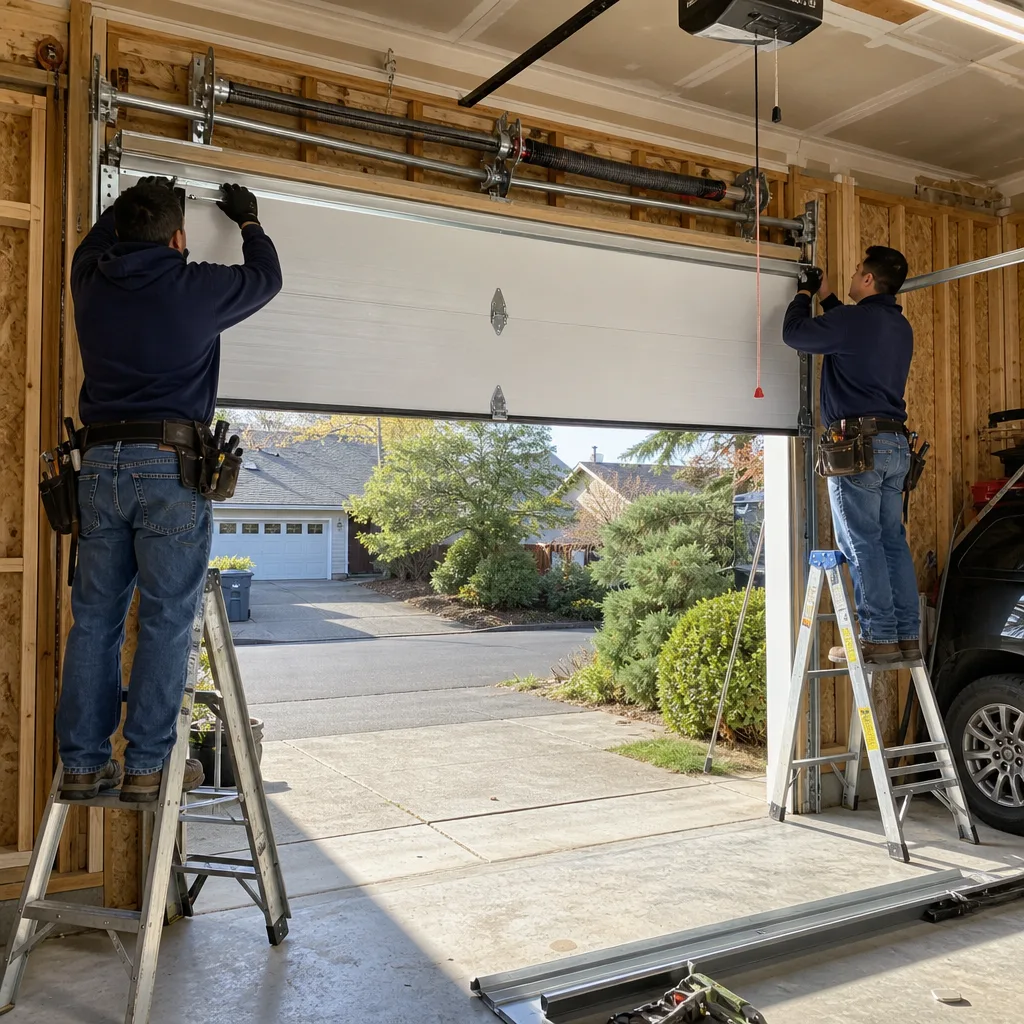
Kent homeowners should call a professional immediately when a torsion spring breaks, because the door won’t lift and the stored energy in the system makes DIY work dangerous. Cables that show frayed strands are also urgent, as a snapped cable releases stored tension and can whip through the garage. If your door shakes, shudders, or moves unevenly during opening or closing, the system is binding somewhere, and continuing to run it will accelerate wear on the opener and the springs. If the door won’t stay at waist height when released manually, the springs are out of spec and need professional attention. And if the opener reverses immediately every time, the safety sensors or the limit switches are failing in a way that needs diagnostic equipment and replacement parts. Servo Garage Doors Kent offers free estimates throughout the Kent area. Call (425) 906-3489 and we’ll send a technician with the documentation system that shows you what’s wrong before anyone asks for a check.
Frequently Asked Questions
A torsion spring replacement in Kent typically costs between $180 and $340 for a single spring, depending on the wire gauge and length, with most jobs landing around $250. The price includes the spring, the installation, and the door balance check. The quote is written and agreed before any work starts, and the final number matches the quote. Call (425) 906-3489 for an exact quote based on your door’s measurements and spring specs.
In most cases, the second spring failure happens because the first replacement didn’t address the underlying problem. A misaligned drum, a frayed cable, or a door that’s out of balance puts uneven load on the new spring, which shortens its life. The fix is a spring replacement that includes drum inspection, cable inspection, and a balance test. At Servo Garage Doors Kent, the technician documents each of these components before quoting the work.
A well-maintained steel sectional door in Kent lasts 20 to 30 years, but its components have shorter lives: bottom seals last 3 to 5 years, torsion springs 7 to 10 years, rollers 10 to 12 years, and openers 12 to 15 years. The door panels themselves rarely fail structurally. What fails are the wearing parts, and Kent’s wet winters accelerate the timeline for everything metal.
For most repairs, yes. Spring replacements, cable replacements, roller replacements, and seal replacements are stock items that our technicians carry on the truck. Same-day service is available for emergency repairs, and someone answers the phone 24/7 at (425) 906-3489. For full door replacements and custom orders, we schedule a free measure and provide a written price before ordering, which takes longer than a same-day repair.
The most common causes are dirty or misaligned safety sensors at the base of the door, a limit switch that’s out of adjustment, or a track obstruction. Clean the sensor lenses first and check for anything blocking the photo eye. If the problem persists, the limit switch or the logic board may be failing. The answer depends on which component is actually at fault, which is what a diagnostic visit determines.
Winter noise in Kent garages is usually cold metal contracting: the panels, hinges, and tracks shrink slightly in cold weather and rub against each other. If the noise is a sharp bang or a snap, it’s likely a spring or cable issue. A persistent grinding or scraping means a roller or hinge is binding. If it’s loud enough to hear inside the house, call (425) 906-3489 for a free diagnostic. The technician will identify the exact source and quote a written price for any needed repair.
The Bottom Line
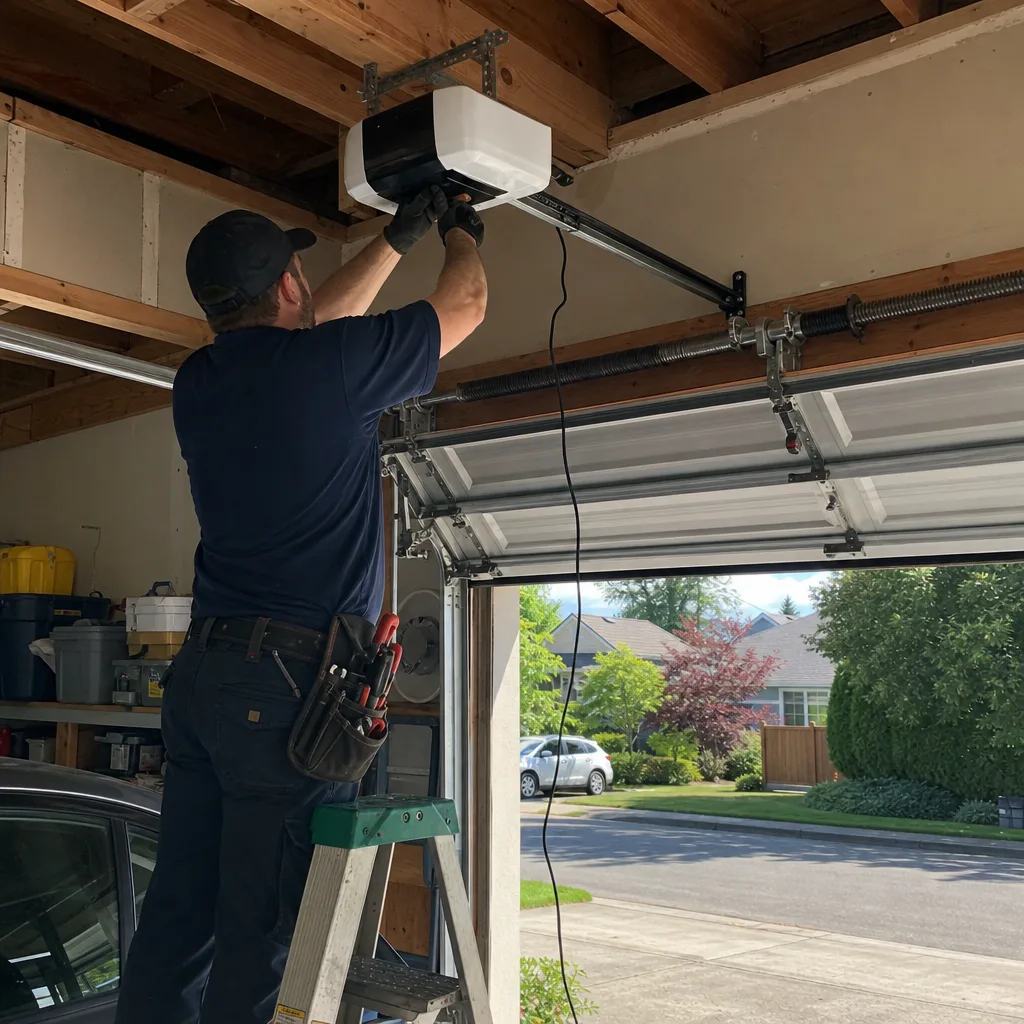
A garage door in Kent is a system, and it fails in a sequence. The bottom seal goes first, then the track hardware corrodes, then the springs fatigue, and then the cables and drums follow. Knowing that order lets you budget for the $30 seal before it becomes a $300 spring. The most important skill is reading your quote: line items, specific part descriptions, written scope, and written warranty. The most important question before any repair is whether the technician will show you the failed part. At Servo Garage Doors Kent, the answer is always yes. The documentation system exists because a written price and a photo record make “trust us” unnecessary. That’s the entire point of Servo Garage Doors Kent home, and it’s why the brand was built this way from the start.
Written by Marcus Deller, Owner at Servo Garage Doors Kent, serving Kent since 2015.