
Last updated September 20, 2026
Full 25-point door and opener safety check with every visit - springs, cables, rollers, tracks, and your LiftMaster or Chamberlain opener included
You get a price before we start. It does not change when the truck arrives.
 Before
 After
After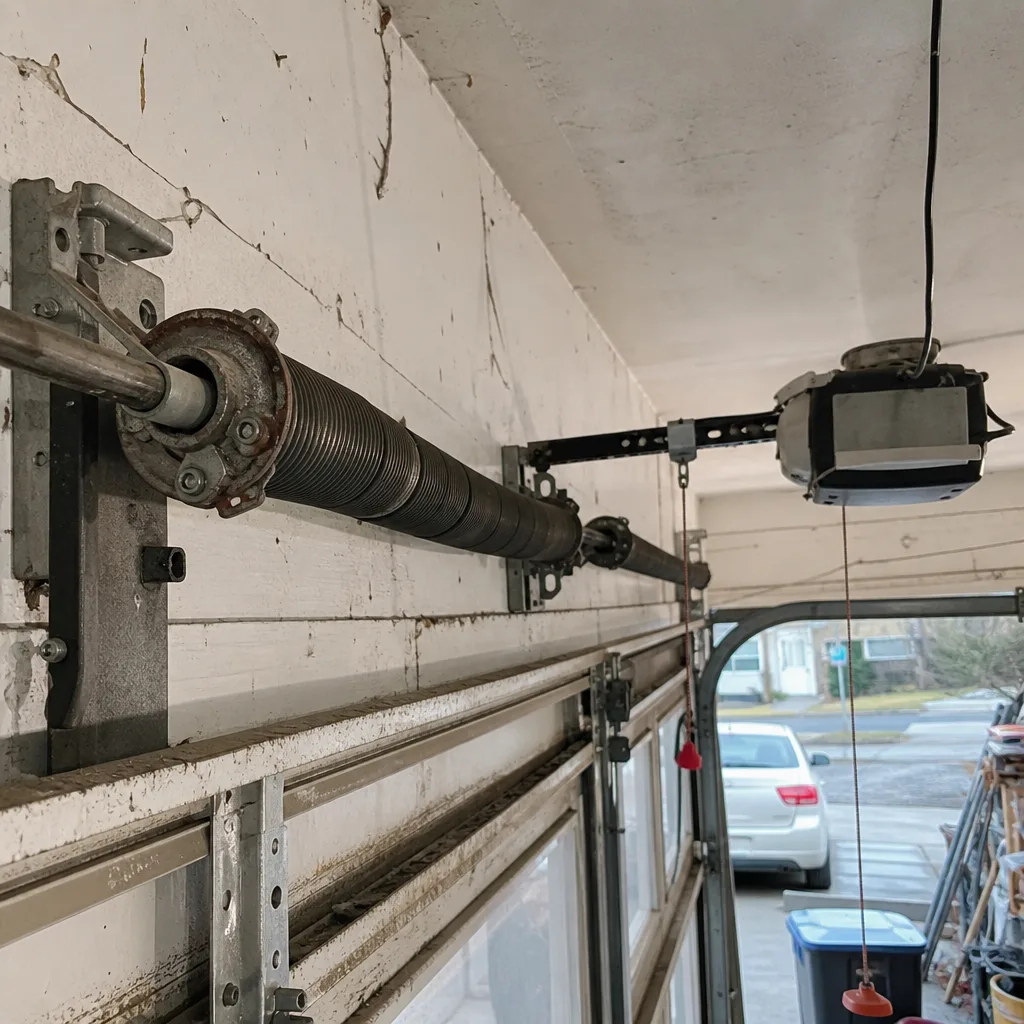 Before
 After
After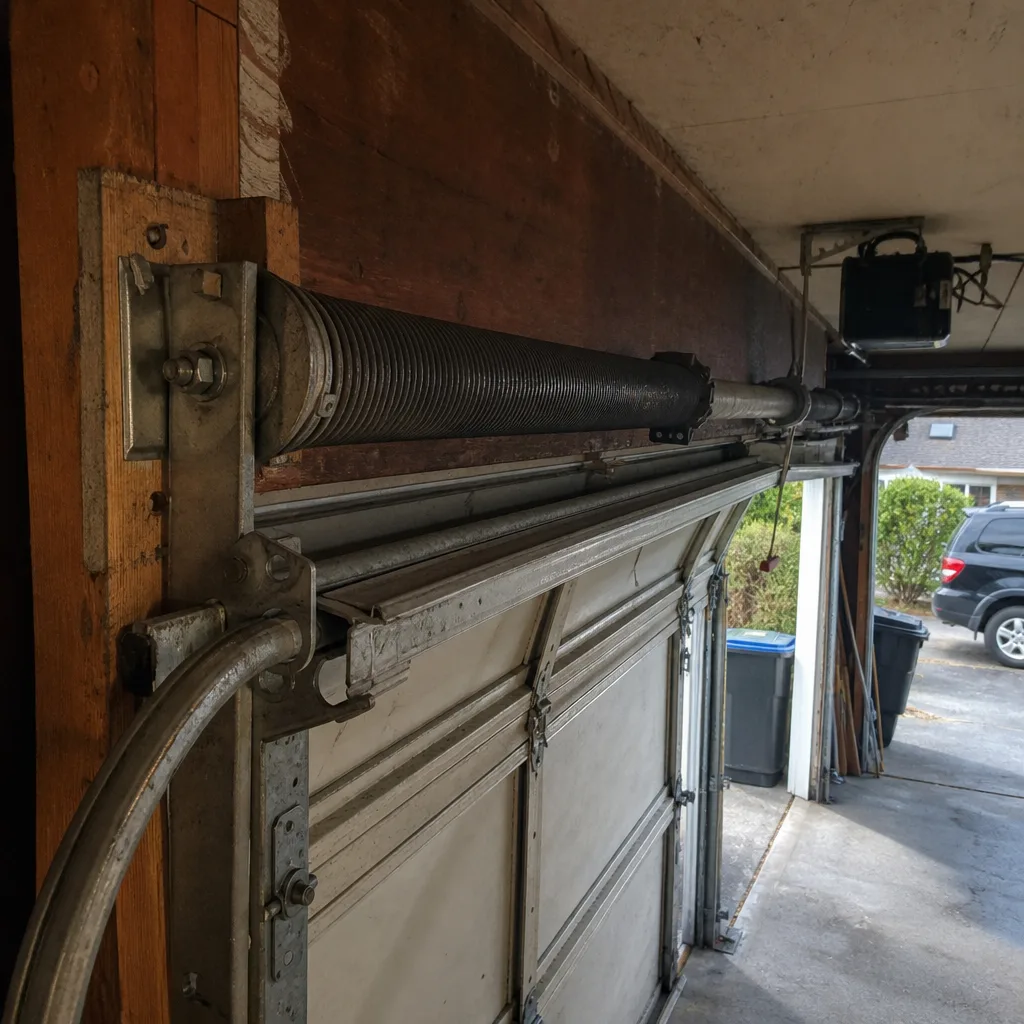 Before
 After
AfterSeasonal Garage Door Care for Kent: Year-Round Homeowner’s Guide
Torsion spring failures in Kent spike in November, not because springs wear out in fall, but because cold contraction raises tension past the threshold that marginal springs can handle. The spring that “suddenly snapped” in November was already at 80% wear in August. That’s the core problem with generic garage door maintenance advice: it treats every season equally, when Kent’s climate actually concentrates damage into two narrow windows. This guide explains exactly when those windows open, what to inspect, what to measure, and what to leave alone.
Quick Answer
Seasonal garage door maintenance in Kent, WA comes down to two critical windows: a five-item pre-winter checklist in October before the first freeze, and a track-expansion check in late July when aluminum binds from summer heat. Everything else is secondary. Between those windows, the highest-value tasks are bottom seal inspection during the wet season and a torsion spring visual check in early fall. A thorough seasonal routine takes under two hours total per year, and most of it requires only a flashlight and a tape measure.
Table of Contents
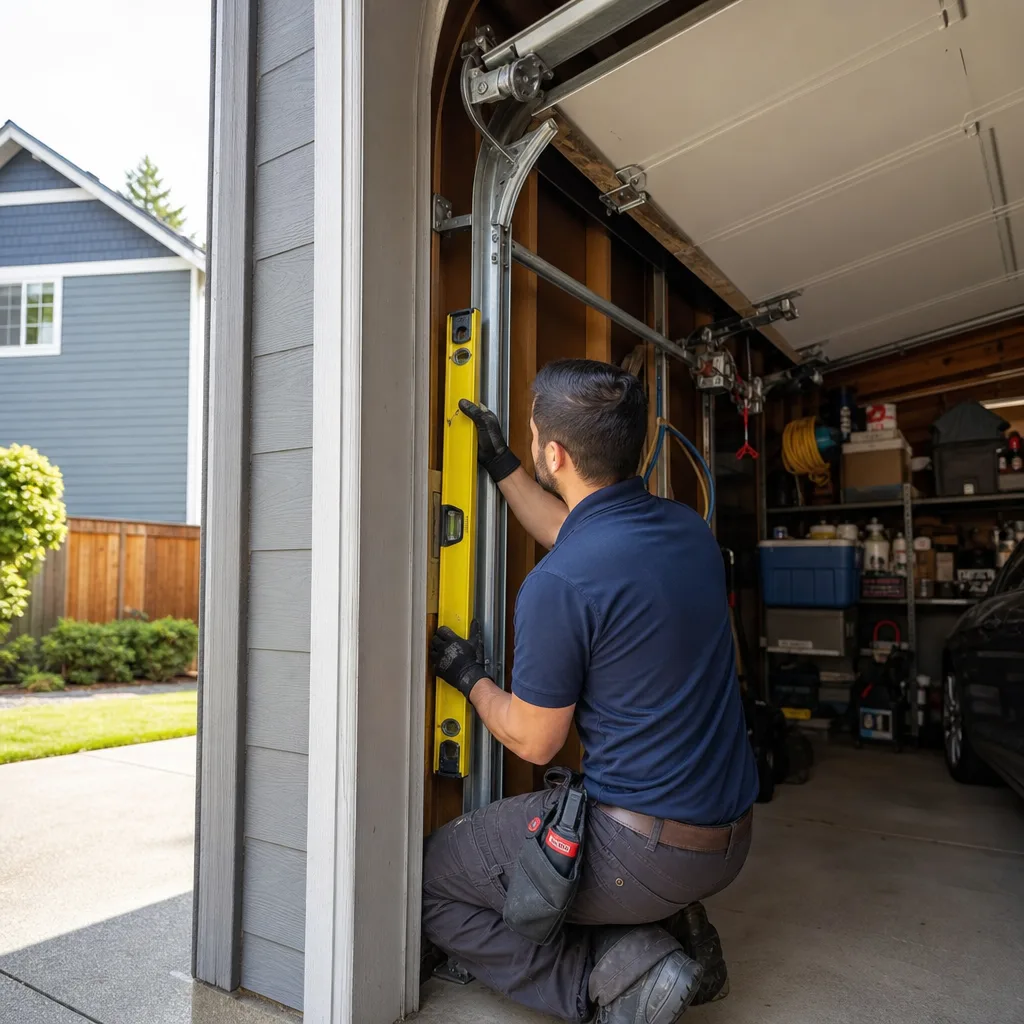
- Why Kent’s Climate Punishes Garage Doors Differently
- The October Pre-Winter Checklist: Five Items Before the First Freeze
- Cold Contraction and Torsion Springs: What November Failures Actually Look Like
- Summer Heat and Aluminum Track Expansion: Why July Binding Isn’t a Broken Door
- Wet Season Bottom Seal Inspection: Measuring Compression Correctly
- Month-by-Month Task Calendar for Kent Homeowners
- Lubrication: What to Use, What to Avoid, and When It Actually Matters
- Auto-Reverse Sensitivity Testing: The One Safety Check You Can’t Skip
 Before
 After
AfterWhy Kent’s Climate Punishes Garage Doors Differently
Kent sits in a climate pocket that Seattle and Tacoma don’t share. We get colder overnight lows in the Green River Valley, where cold air settles and pools. We also get more pronounced summer heat spikes in July when the valley floor traps warm air. That temperature swing, sometimes 60-plus degrees between January mornings and July afternoons, is the primary driver of garage door component wear in Kent. Metal expands and contracts. Rubber seals compress and stiffen. Lubricant thins in summer and thickens in winter.
What makes Kent unusual is the wet season’s length. From mid-October through early June, the bottom seal on a garage door is sitting against a damp floor for months at a time. That sustained moisture exposure is different from the occasional rainstorm. It means seal deterioration happens gradually, then suddenly, and the first sign is usually water staining on the garage floor near the door’s leading edge, not an obvious gap. Homeowners in Kent’s East Hill and Panther Lake neighborhoods see this pattern more often because of how water drains toward garage slabs on sloped lots. For a broader look at common repair issues across Kent, we’ve documented what typically fails first by neighborhood and door type.
The other Kent-specific variable is road salt. Kent’s public works department applies de-icer through the winter, and vehicles track that salt into attached garages. It migrates into bottom seals, track brackets, and roller fittings, accelerating corrosion. A garage door in Kent will typically show salt-related hardware corrosion within five to six years if the bottom seal isn’t doing its job.
The October Pre-Winter Checklist: Five Items Before the First Freeze
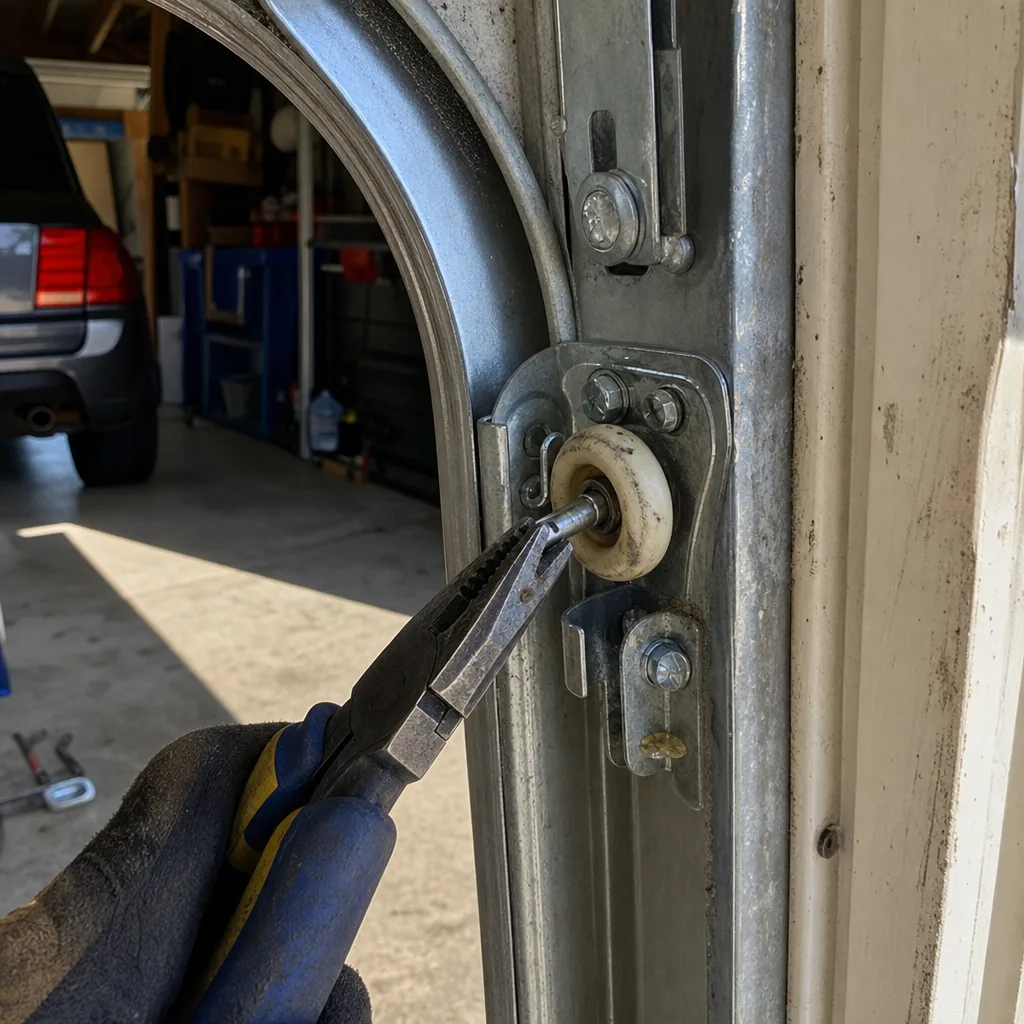
The first freeze in Kent typically arrives in late October or early November. Whatever you’re going to do for your garage door before winter, do it before that freeze, because cold-weather garage work is slower, more frustrating, and harder on the materials. Here’s the five-item checklist, in order of importance.
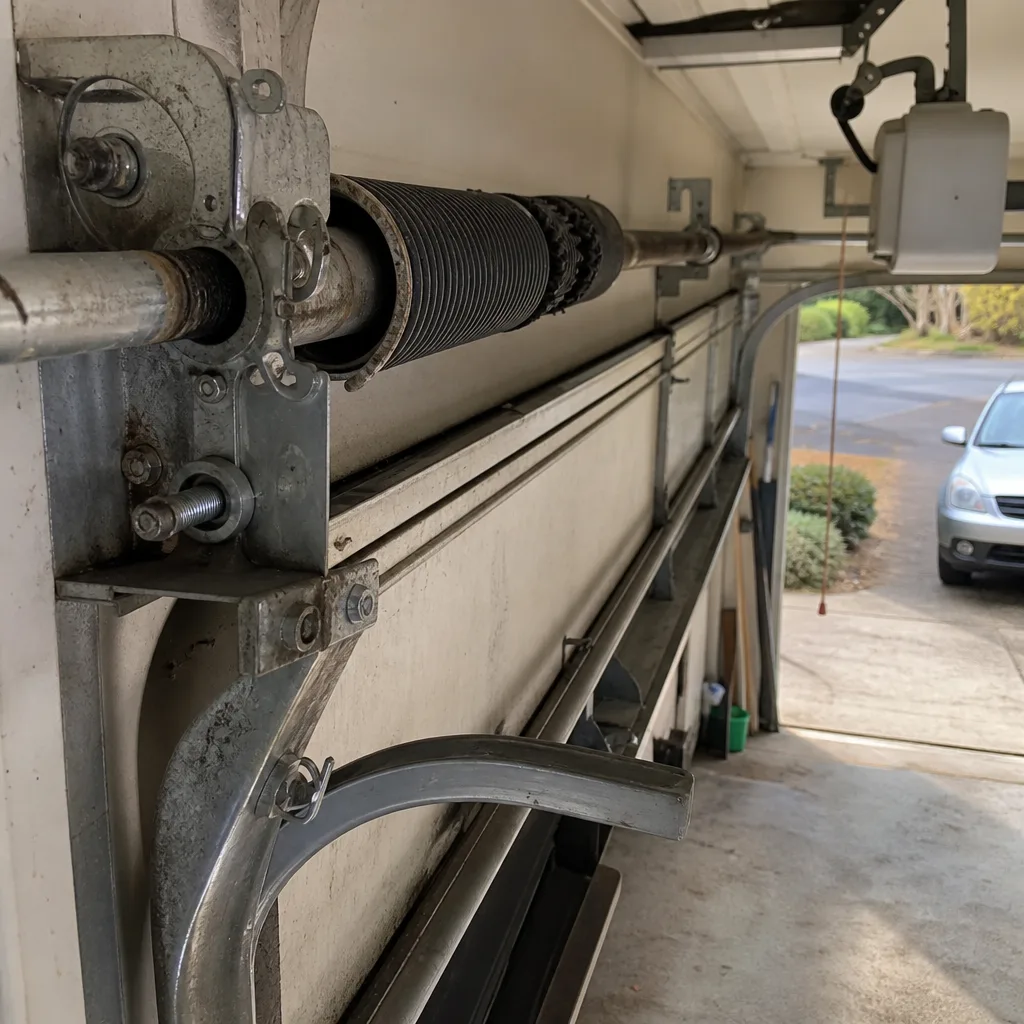
- Inspect the torsion spring visually. This is the single highest-value task. Look for any gap in the coil, any rust-colored dust on the spring or the wall above it, and any visible separation in the spring’s coils. A torsion spring with visible rust dust is already shedding metal. If you see it, the spring is approaching failure even if it’s still lifting the door. See the section below on what November failures look like before they happen.
- Measure bottom seal compression. Close the door fully and run a credit card along the seal where it meets the concrete. If the card slides freely under the seal in more than one spot, or if you can see daylight under the seal when standing inside the garage, the seal is no longer compressing. That’s water intrusion waiting to happen. The wet season section below explains what gap measurement triggers replacement.
- Lubricate rollers, hinges, and springs with a garage-door-specific lubricant. Do not use WD-40. It displaces moisture but doesn’t lubricate moving parts under load. Use a silicone-based or lithium-based garage door lubricant. Spray the roller bearings, hinge pins, and the torsion spring coils. Wipe excess with a rag. Do this once in October and you’re covered until March.
- Test the auto-reverse function. Place a 2×4 flat on the floor under the door’s path. Close the door. If the door doesn’t reverse within two seconds of contacting the board, the force setting needs adjustment or the sensors need cleaning. This is a safety system, not a convenience feature. The section below covers the full procedure.
- Check for ice-buildup points around the door’s perimeter. Look at the area where the concrete apron meets the door. Any low spot where water pools in fall will become an ice patch in January. If water pools against the seal, it will freeze the seal to the concrete, and the next time the operator tries to lift the door, the seal tears. Fix the drainage or add a threshold seal now, not in January.
If you’d rather have a second set of eyes on any of these five items, a professional seasonal inspection in Kent costs less than most emergency spring replacements, and Servo Garage Doors Kent includes a documented photo record with every visit. Our Kent garage door service area covers the full valley from the West Hill through Panther Lake to the downtown corridor.
Cold Contraction and Torsion Springs: What November Failures Actually Look Like
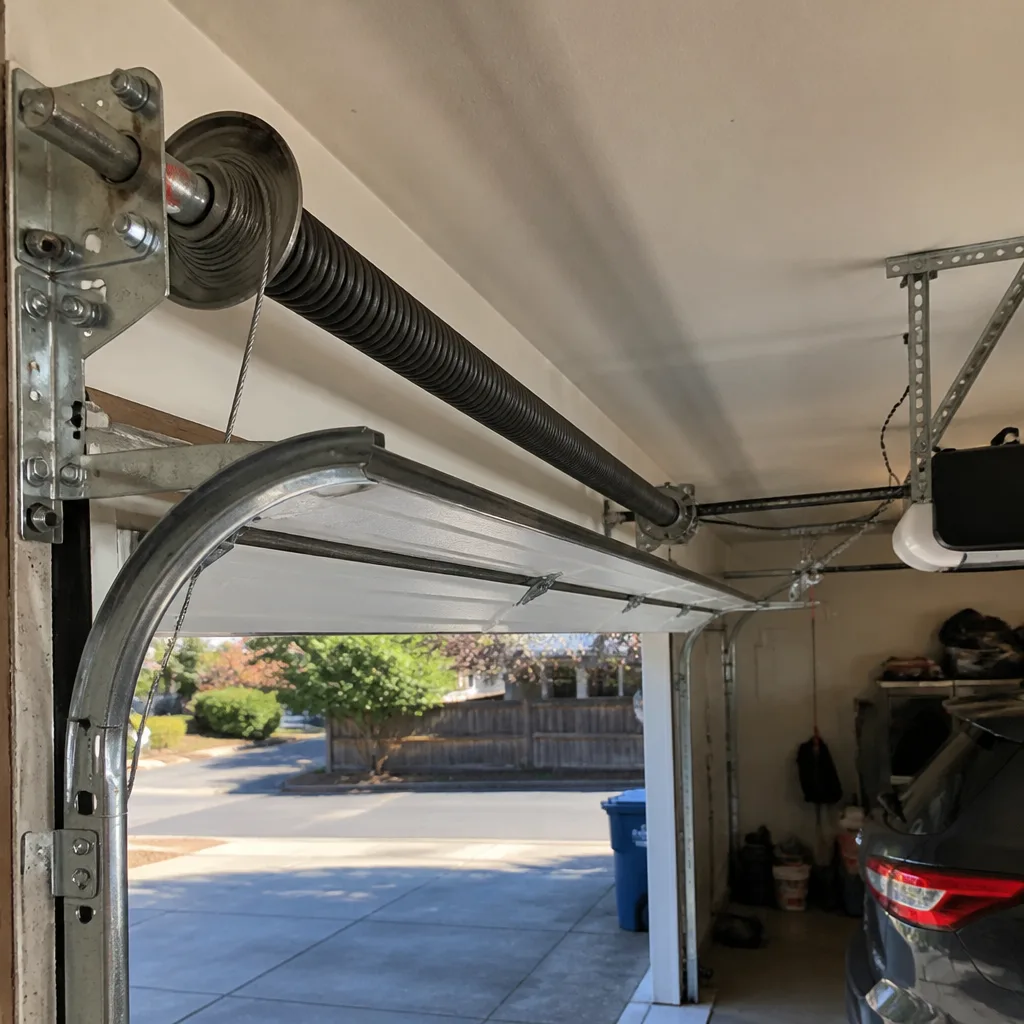
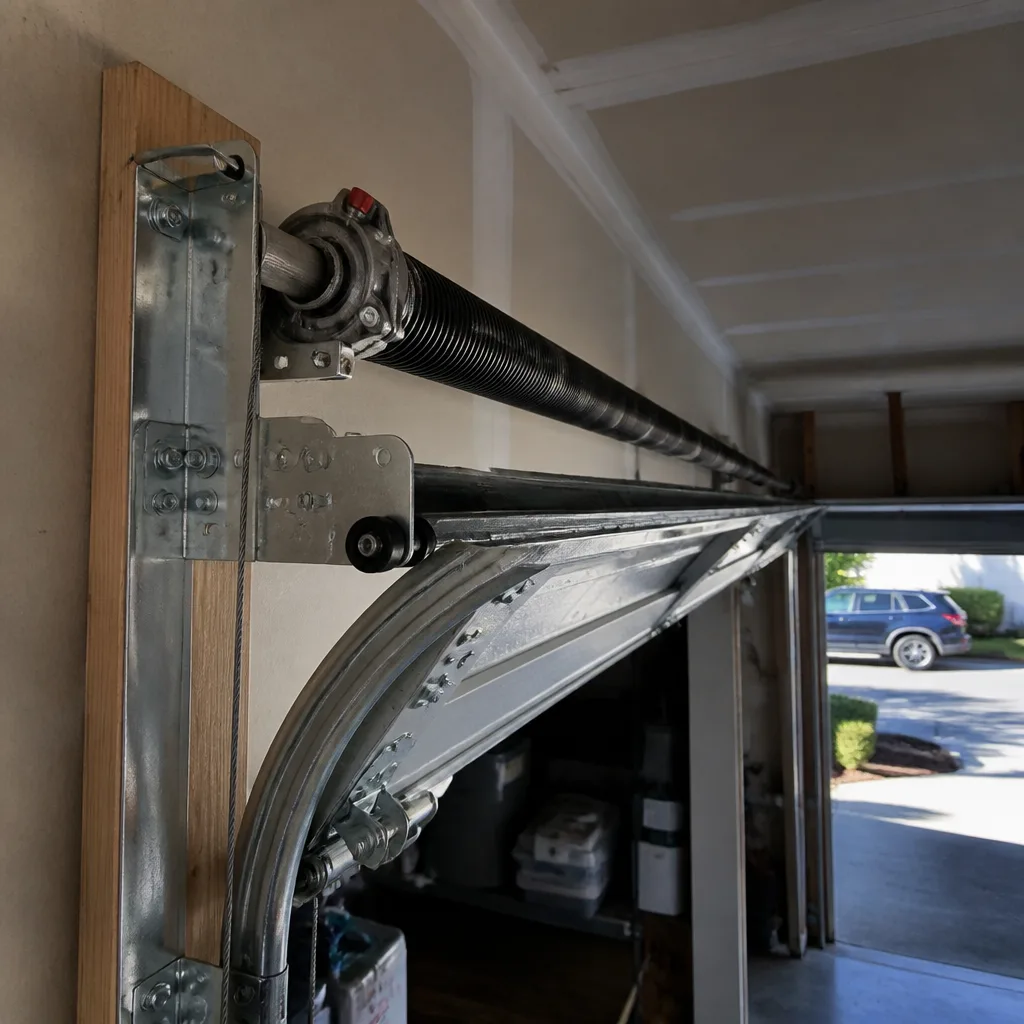
A torsion spring is a coil of hardened steel wire that stores mechanical energy by twisting. The spring’s lifting force comes from that twist. In cold weather, the steel wire contracts. Contraction means the wire gets slightly shorter and slightly thicker, which increases the internal stress on every coil. A spring that was at 85% of its fatigue life in August can cross the failure threshold in November without any additional use. That’s why we see torsion spring failure calls in Kent cluster in November, while the actual wear happened over the previous seven to eight years.
The useful visual signal is rust dust. Torsion springs are powder-coated to resist surface rust, but once the coating cracks, the underlying steel starts oxidizing. That oxidation is visible as fine reddish-brown dust around the spring coils or on the wall above the spring. If you see rust dust on a torsion spring in Kent in October, the spring has been compromised. It might last another month. It might fail tonight. The fatigue point is nowhere near predictable from the outside.
Here’s what we tell our own customers: if the spring is visibly rusted, you’re already on borrowed time. If it’s rusted and the door is making a creaking or groaning sound specific to the spring area, it’s actively failing. If it’s rusted and the door feels heavier than it did last year when you lift it manually, the spring has already lost meaningful tension. Any of those three conditions in October means the November failure window is likely to catch you. The replacement is not a maintenance task, it’s a repair, and it’s time to consider whether a full door replacement in Kent makes more sense than swapping a spring on a door that’s already 15 years old. A new Wayne Dalton or Clopay door with a fresh spring assembly often costs less than repeated component repairs over two to three years.
Summer Heat and Aluminum Track Expansion: Why July Binding Isn’t a Broken Door
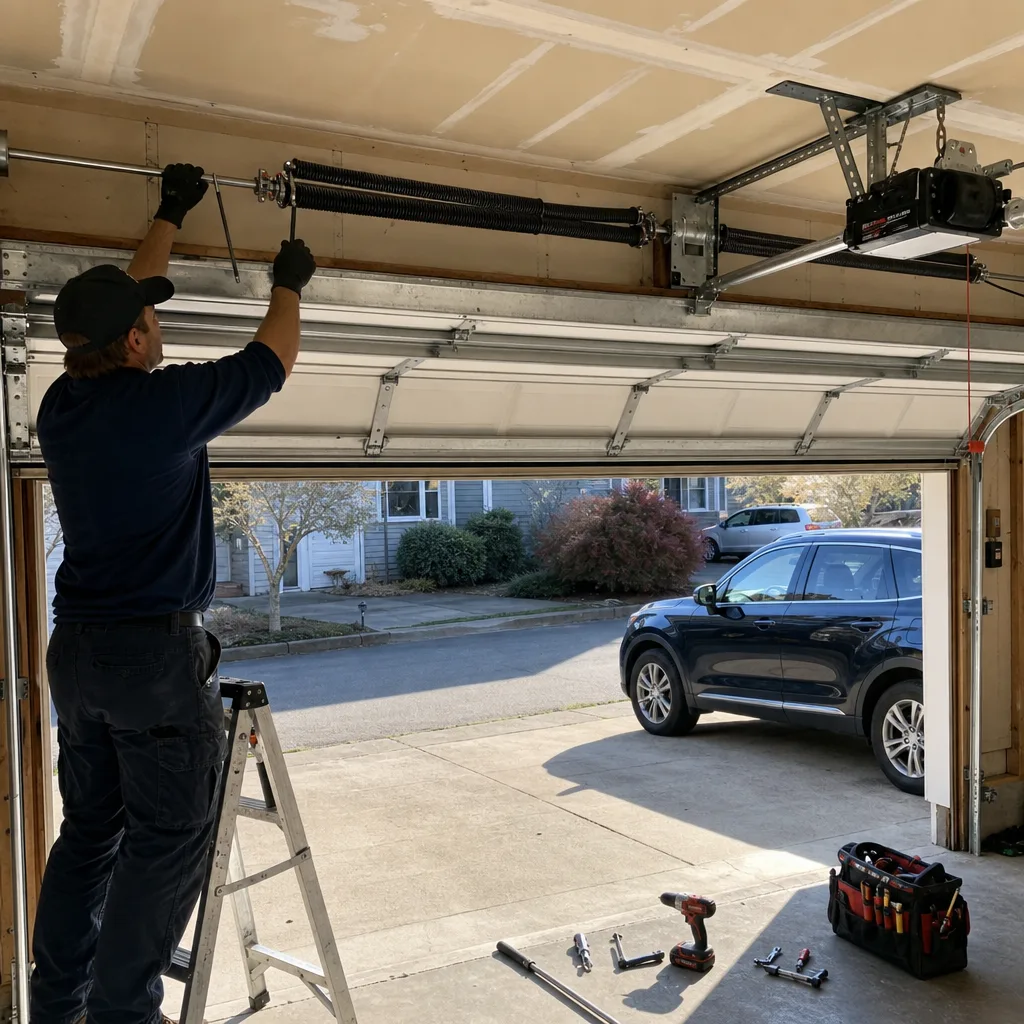
Late July in Kent brings a specific phone call pattern. The temperature sits above 90 for a few days, and suddenly doors that were completely functional in June are binding, sticking, or reversing mid-travel. The homeowner assumes something broke. What actually happened is thermal expansion of the aluminum tracks.
Aluminum expands at roughly 13 micrometers per meter per degree Celsius. A standard residential garage door track is about 8 to 10 feet of aluminum per side. Over a temperature swing from a 55-degree morning to a 95-degree afternoon, that’s enough expansion to reduce the track’s internal clearance by a millimeter or more in the wrong circumstances. Doors with tight track tolerances, typically after a recent installation or adjustment done in cooler weather, will bind when the track expands. The door isn’t broken. The track just needs a one-time clearance adjustment for summer temperatures.
The fix is straightforward: the vertical track bolts are loosened, the track is shimmed or repositioned to restore proper clearance, and the bolts are re-tightened. It’s a 20-minute adjustment. The reason we flag it as a known Kent pattern is that so many homeowners call a garage door opener service company in Kent convinced their opener motor is failing, when the motor is fine and the track clearance is the actual issue. The motor is straining because the door is binding, not because the motor is weak. If you hear the motor laboring in July heat but the door works fine in the morning, check the track clearance before spending money on opener repairs. A LiftMaster or Genie opener that’s binding repeatedly will eventually burn out its travel module, but that’s a downstream failure, not the root cause.
Wet Season Bottom Seal Inspection: Measuring Compression Correctly
The bottom seal on a garage door is a length of rubber or vinyl extrusion attached to the door’s bottom edge. Its job is to compress against the concrete floor when the door closes, creating a barrier against water, air, and pests. Seals don’t fail all at once. They lose compression capacity as the rubber stiffens and deforms. In Kent’s wet season, which runs from October through May, a seal that’s lost compression means water sitting against the concrete seam, wicking under the door, and pooling on the garage floor.
Measuring seal compression is not complicated, but it’s also not the casual glance most homeowners give it. Here’s the procedure.
- Close the door completely. Let it settle under its own weight.
- Stand inside the garage with the overhead light off. Look along the bottom edge of the door for any visible light penetration. The concrete may be uneven, small gaps often appear at the outer corners.
- Take a credit card or similar thin rigid object. Run it along the bottom seal where it meets the concrete. Ideally, you should feel resistance everywhere. If the card slides freely under the seal in any spot, the seal isn’t compressing in that spot.
- Mark the gaps with a piece of tape. If the total gap length is more than 2 inches in any single location, or if you have multiple separate gaps anywhere along the door’s width, the seal needs replacement.
- As a secondary check on the outside, look at the concrete where the seal sits when closed. A dark moisture line or algae staining directly under the seal line indicates standing water is getting past the seal’s edge.
Replacement seals are inexpensive in material terms. A typical residential bottom seal kit runs $15 to $45 depending on the door width and seal profile. The labor to replace it properly, with the door bottom channel cleaned and the seal cut to exact width, is roughly 30 to 45 minutes for a technician. What makes the difference in Kent is not the cost of the part, it’s that a seal failure goes unnoticed for weeks because the evidence is on the floor at the back of the garage where nobody looks. By the time water stains are visible on stored items, the seal has been failing for most of the wet season.
Month-by-Month Task Calendar for Kent Homeowners
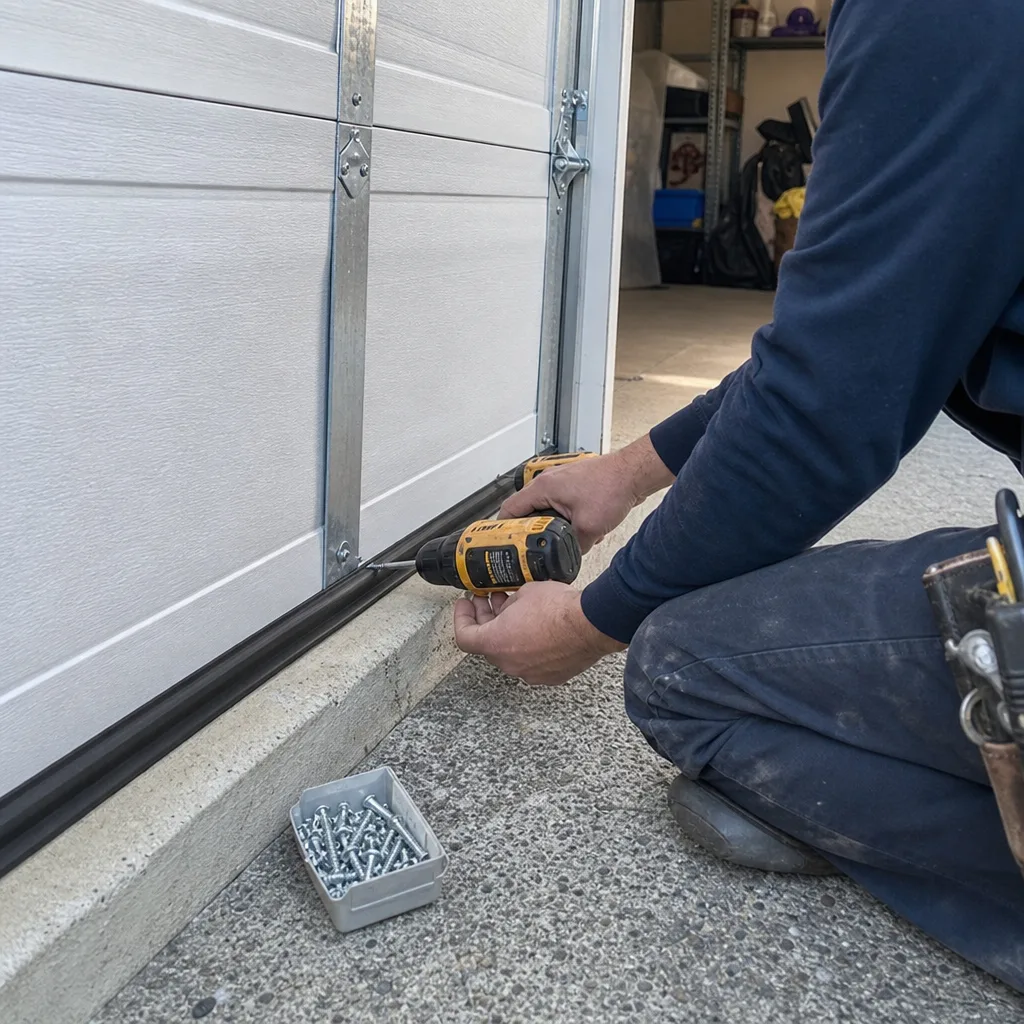
Here’s the full year, mapped to Kent’s specific weather patterns. Total annual time commitment for a homeowner doing their own checks: roughly two hours, concentrated in October and July.
- January: No routine tasks. If the door operates, leave it alone. The only exception is after a snow or ice event: if the seal froze to the concrete and tore, you’ll hear the tear the first time the door opens. Inspect and schedule replacement if needed.
- February: Perform a visual check of the bottom seal for water staining after January rains. Look for salt corrosion on track brackets and rollers. Note any grinding sound when the door moves.
- March: Test auto-reverse sensitivity. Winter temperature cycles can drift the force settings. A door that reverses properly in January may not reverse properly in March when the tracks have been through multiple freeze-thaw cycles.
- April: Check for rust bloom on torsion springs. The end of the wet season is when salt residue and moisture have had maximum time to work on spring coatings. Rust dust in April means the spring failure clock is running.
- May: Lubricate rollers, hinges, and springs. May is the last low-temperature month before the summer heat begins, and the lubricant will distribute more evenly before the July expansion period.
- June: No routine tasks. This is the calm month. If anything was borderline during April and May, schedule the repair now rather than waiting for July when the heat adds track binding to the existing problem.
- July: Watch for heat binding. If the door sticks or the motor strains during hot afternoons, don’t replace the opener. The tracks need a summer clearance adjustment. One-time fix for most Kent doors.
- August: Inspect the torsion spring again. This is the baseline inspection for fall. If the spring shows rust dust or coil separation in August, budget for replacement before November. The spring’s condition in August predicts its behavior in November with roughly 90% reliability in our experience.
- September: Check the bottom seal compression using the credit card method. You want the seal at full compression capacity before the wet season, not discovering a gap when water starts pooling in October.
- October: Complete the five-item pre-winter checklist detailed above. This is the month that determines whether your garage door survives the winter without an emergency call.
- November: Be alert for torsion spring failure. The peak failure month in Kent, not because springs wear out in November, but because the cold contraction pushes marginal springs past their limit. If you hear a loud bang from the garage that sounds like a car backfiring, that’s a torsion spring. The door will not open manually or with the operator. Call same day.
- December: No routine tasks. Cold weather operation checks only. If the door operated properly through November, it will almost certainly make it through December without intervention.
Lubrication: What to Use, What to Avoid, and When It Actually Matters
Garage door lubrication is surrounded by more bad advice than any other maintenance topic. The most common error we see in Kent garages is WD-40 applied to everything with a moving part. WD-40 is a water displacement formula. It’s not a lubricant, and it does nothing for a torsion spring or hinge pin under load. The second most common error is using spray lubricant that’s too thick, which attracts dirt and creates a grinding paste in the track.
What you want is a garage-door-specific lubricant. These products come in spray cans labeled specifically for garage doors. They are typically silicone-based or lithium-based. The application is simple: spray the bearing points on each roller, the hinge pins where the door sections connect, and the torsion spring coils. Two to three seconds of spray per point is plenty. Then wipe away any excess with a clean rag. More is not better, excess lubricant attracts grit, which accelerates wear.
Frequency matters less than a lot of maintenance guides would have you believe. Most Kent garage doors need lubrication twice per year: once in October before the cold season, and once in May before the summer heat. That’s it. Doors that are exposed to more salt spray from a specific setup, like a garage that opens onto a busy Kent street where de-icer splashes directly onto the door face, may need a third lubrication cycle in January or February. But for most homeowners in the Kent valley, two cycles per year is enough.
Do not lubricate the track rails themselves. This is counterintuitive but important. Track rails are not a load-bearing surface, and lubricant on the rails does nothing except collect dirt and interfere with roller travel. If a technician ever lubricates your track rails as part of a service, ask them to wipe it off. Rollers ride on their internal bearings, not on the track surface. A Craftsman or Raynor door with properly lubricated roller bearings should roll smoothly with zero track lubricant.
Auto-Reverse Sensitivity Testing: The One Safety Check You Can’t Skip
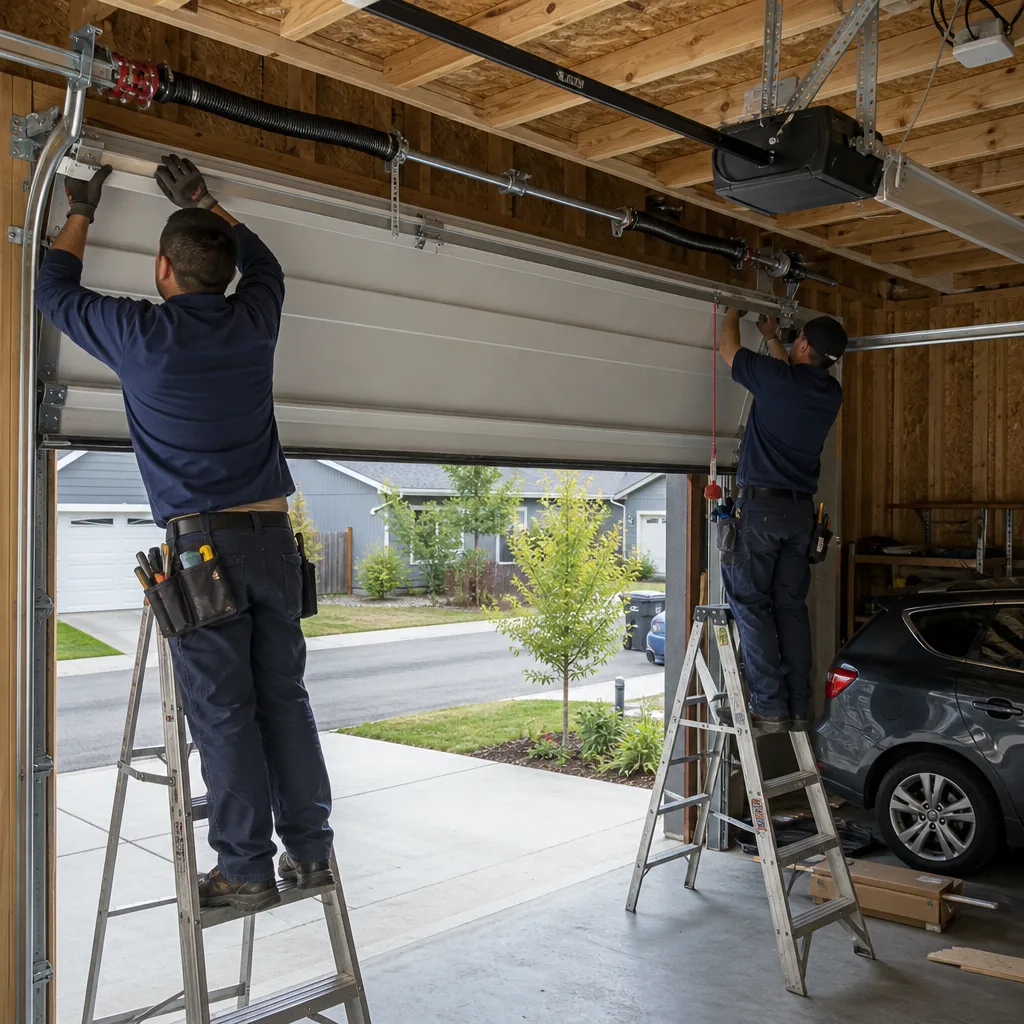
Every garage door opener manufactured since 1993 is required by federal regulation to include an auto-reverse mechanism, either a force-sensor system or a photoelectric eye system, or both. The system’s purpose is simple: if the door encounters resistance while closing, it reverses direction instead of continuing downward. This is the system that prevents garage doors from crushing people and pets. It’s also the system most likely to drift out of adjustment over time without anyone noticing.
Testing the auto-reverse function takes under a minute. Place a 2×4 board flat on the floor directly under the door’s closing path. Use the opener to close the door. The door should contact the board and reverse within two seconds. If it doesn’t, or if it hesitates for several seconds before reversing, the force sensitivity is set too high. That means the door is closing with more force than it should, and the safety function is compromised.
There are two separate systems to check. The first is the mechanical force reversal, which is what the 2×4 test measures. The second is the photoelectric eye system, the two small sensor units mounted near the floor on either side of the door opening. To test the eyes, start the door closing and wave your hand through the sensor beam at floor level. The door should immediately reverse. If it doesn’t, the sensors are either misaligned or obstructed, and the system isn’t functioning.
We recommend testing both systems in March and again in October. The reason for those two specific months is that the force settings drift with temperature and use. A door that’s been through a cold Kent winter with repeated freeze-thaw cycles will have different force requirements than the same door in July. Testing in March catches cold-season drift. Testing in October catches summer-season drift before it carries into winter.
Do not attempt to adjust force settings yourself. The adjustment procedure varies by opener model, involves electrical components, and setting the force too low causes nuisance reversals while setting it too high defeats the safety purpose. This is a safety system on a heavy moving object. If your auto-reverse test fails, call a professional. The adjustment is quick, typically under 20 minutes for an experienced technician with the right tools.
Common Mistakes to Avoid
- Lubricating the track rails. Track rails don’t need lubrication. Lubricating them just attracts Kent’s winter road grit and turns it into grinding paste. Lubricate the roller bearings, hinge pins, and spring coils only.
- Ignoring rust dust on the torsion spring. The reddish-brown dust near the spring is the single most reliable visual indicator of impending failure. If you see it in Kent in August, you’re probably looking at a November failure. Replacement is cheaper than emergency service plus the damage a sudden spring failure can cause to other components.
- Testing the auto-reverse with your hand instead of a 2×4. A hand is not the same as a child’s body weight. The 2×4 provides consistent resistance and a clear pass-fail result. Hands are too soft and too variable.
- Waiting until the door fails to think about seasonal maintenance. By the time a torsion spring snaps or a seal tears, the seasonal window for prevention has closed. The maintenance task that would have caught the problem was scheduled in October, not in the emergency call in January.
- Using the wrong spray lubricant. WD-40 is the classic offender, but any penetrating oil not designed for garage door loads will perform similarly. Garage-door-specific lubricants are labeled as such and cost between $8 and $15. They last through two maintenance cycles.
- Assuming a binding July door means the opener is dying. In Kent, summer heat binding usually means the aluminum track expanded and the clearance tightened. Replacing the opener doesn’t fix the track clearance. The track adjustment does.
- Checking the bottom seal from the outside only. The seal’s compression is what matters, and that’s measured from the inside with the door closed. An outside visual check tells you whether the seal is present, but not whether it’s actually sealing.
When to Call a Professional
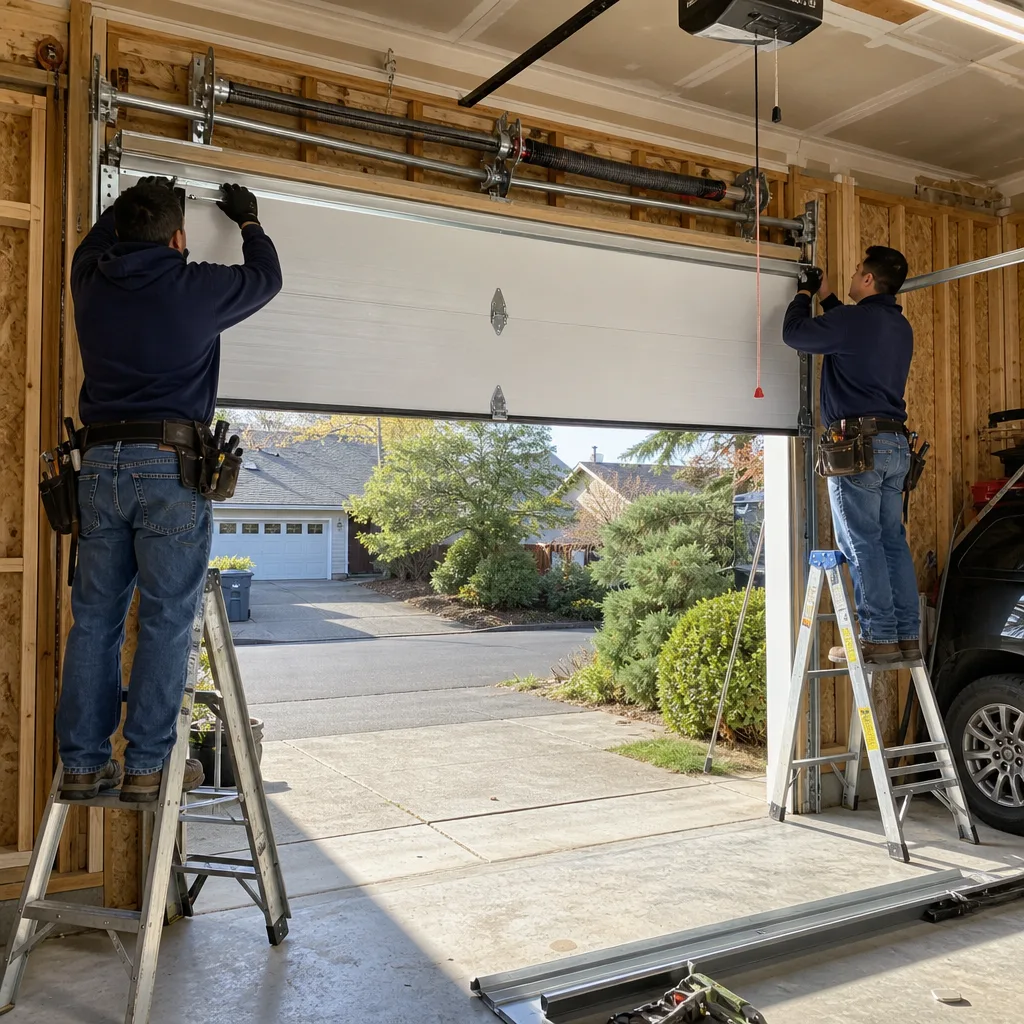
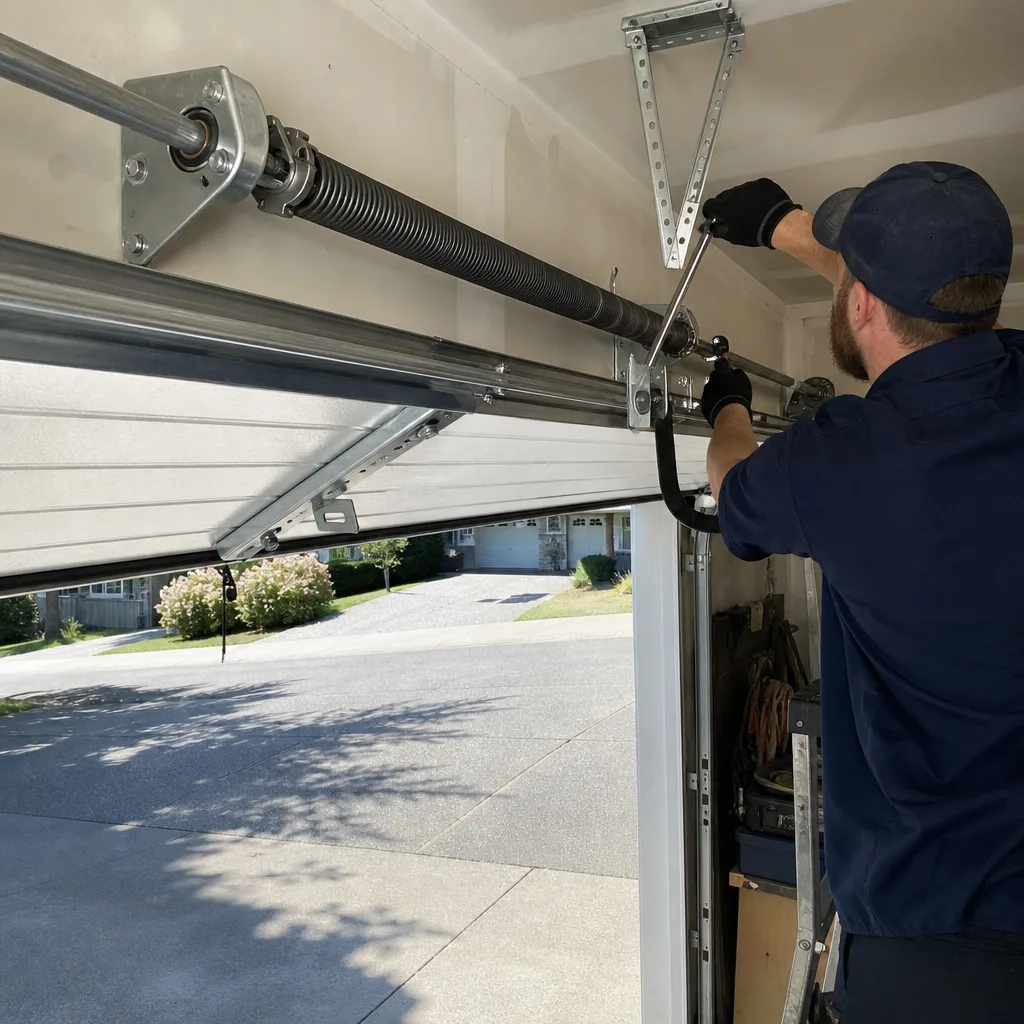
Some garage door tasks are homeowner-appropriate. Some are not. Torsion spring replacement is dangerous enough that we tell every Kent homeowner the same thing: this is not a DIY repair. The spring is under hundreds of pounds of stored tension, and when it releases unexpectedly, it can cause serious injury. The tools, the training, and the winding bars are specialized. If your torsion spring has failed or is showing rust dust and coil separation, call a professional. The same applies to any cable work, because a frayed cable indicates a deeper tension issue. And if your auto-reverse test fails, the force adjustment involves electrical components and a safety system that should not be improvised.
Servo Garage Doors Kent offers free estimates in Kent and the surrounding areas, with a flat, written price and written scope delivered before any work starts. Call (425) 906-3489 and we’ll walk you through what’s going on. For a complete overview of repair services in Kent, including emergency spring replacement and same-day service throughout the valley, see our repair page.
Frequently Asked Questions
A seasonal maintenance visit in Kent typically runs between $75 and $150 depending on what’s included. A full inspection with lubrication, auto-reverse testing, and seal measurement sits at the lower end of that range. If the technician finds a component that needs replacement, the parts and labor are quoted separately with a flat written price before that work starts. Servo Garage Doors Kent provides free estimates, so the inspection itself costs nothing if you decide not to proceed. Call (425) 906-3489 and we’ll give you a written price on paper before any work begins.
Twice per year is sufficient for most Kent garage doors. Once in October before the cold season and once in May before the summer heat. Doors that face directly onto a busy street where de-icer splashes up onto the door face may need a third application in January or February. Use a garage-door-specific silicone or lithium lubricant, not WD-40, and apply it to roller bearings, hinge pins, and torsion spring coils only.
Torsion springs don’t break because of winter itself. They break because the cold causes the steel wire to contract, which increases internal stress on coils that were already fatigued from years of use. The spring that fails in November was already compromised in August or September. The winter failure is just the moment when accumulated fatigue meets peak contraction stress. The visible warning sign is rust dust on the spring coils or the wall above the spring.
Heat causes the aluminum track to expand, which reduces the clearance between the track and the rollers. If the track was adjusted in cooler weather to tight tolerances, the summer expansion is enough to cause binding. The door isn’t broken, and the opener isn’t failing. A one-time track clearance adjustment fixes it. This is a known Kent pattern because of the valley’s July heat spikes.
Close the door and run a credit card along the seal where it meets the concrete floor. If the card slides freely under the seal anywhere, or if you can see daylight under the seal when standing inside the garage, the seal has lost compression. Two inches or more of continuous gap in any single location, or multiple separate gaps, means the seal should be replaced before the October rains start. Waiting until water appears on the garage floor means the seal has been failing for weeks.
Yes. Servo Garage Doors Kent covers the full Kent valley, including East Hill, Panther Lake, West Hill, and the downtown corridor. Our technicians arrive in uniform, perform the full seasonal inspection, and leave you with a documented photo record of what was found and what was done. Pricing is flat and written before any work starts, per Clause 1 of The Haven Standard. Call (425) 906-3489 to schedule a free estimate.
The Bottom Line
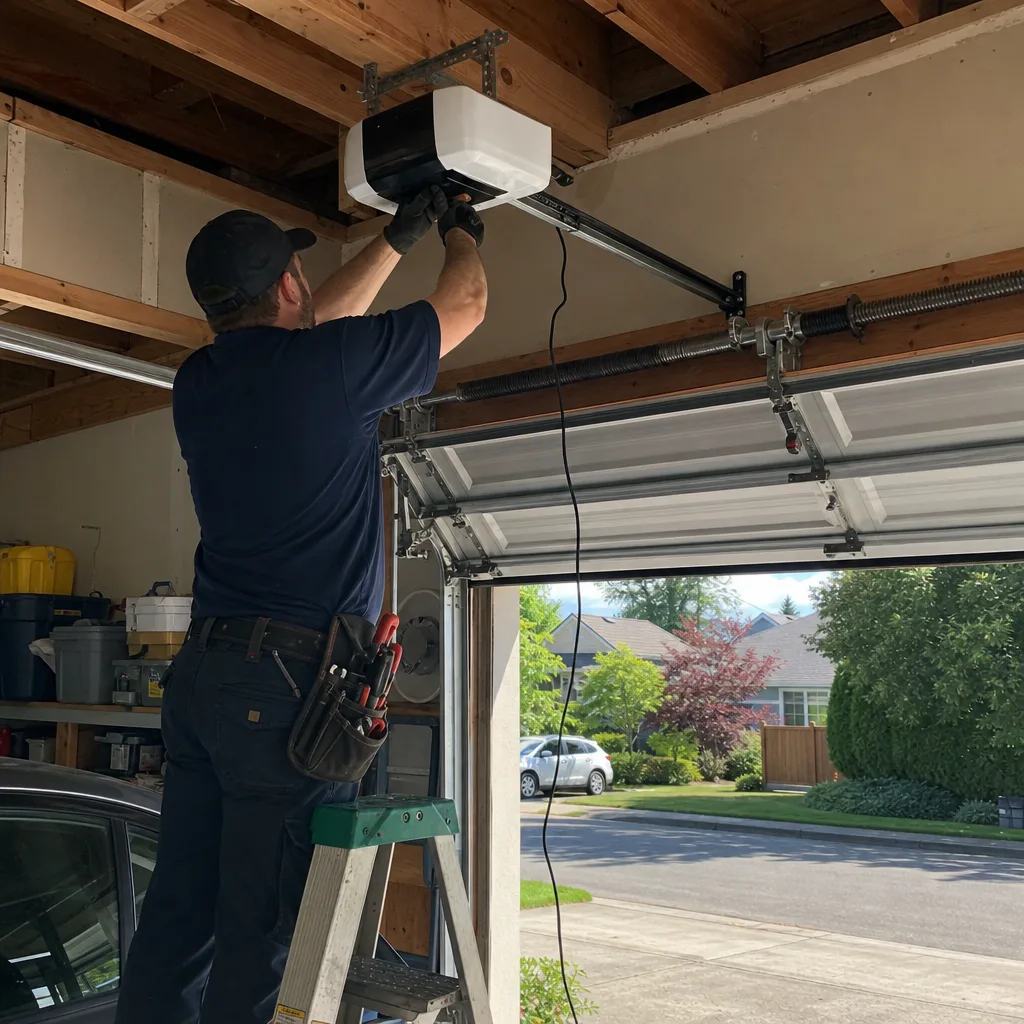
Kent’s climate concentrates garage door damage into two specific windows: late October, when cold contraction pushes marginal torsion springs past their failure point, and late July, when aluminum tracks expand and bind. A seasonal maintenance routine built around those two windows, with a five-item October checklist and a track clearance check in July, prevents the vast majority of emergency garage door failures in Kent. The rest of the year, the tasks are lighter: seal compression measurement before the wet season, auto-reverse testing in March and October, and lubrication twice a year. Most of this is homeowner-doable in under two hours total annually. The parts that aren’t, torsion spring work, cable work, and opener force adjustments, deserve a professional with the right tools and training.
If you’re in Kent and you’d rather have a technician handle the seasonal inspection, Servo Garage Doors Kent offers free estimates with a flat written price before any work starts. Call (425) 906-3489. For more on what we do, see our Servo Garage Doors Kent home page or review our garage door installation services in Kent. And if your opener is part of the seasonal concern, our garage door opener repair and installation page covers the full range of LiftMaster, Chamberlain, and Genie systems.
Written by Marcus Deller, Owner at Servo Garage Doors Kent, serving Kent since 2015.