
Last updated September 21, 2026
Full 25-point door and opener safety check with every visit - springs, cables, rollers, tracks, and your LiftMaster or Chamberlain opener included
You get a price before we start. It does not change when the truck arrives.
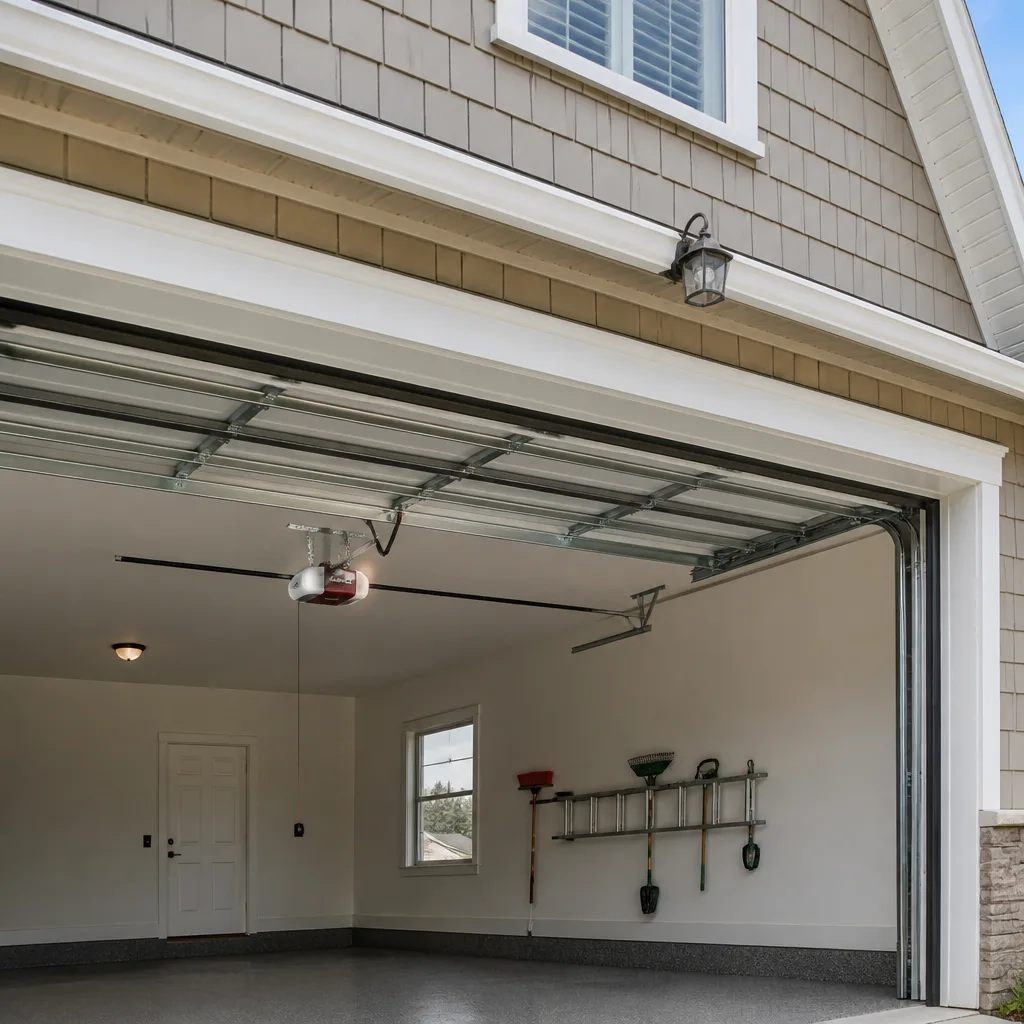
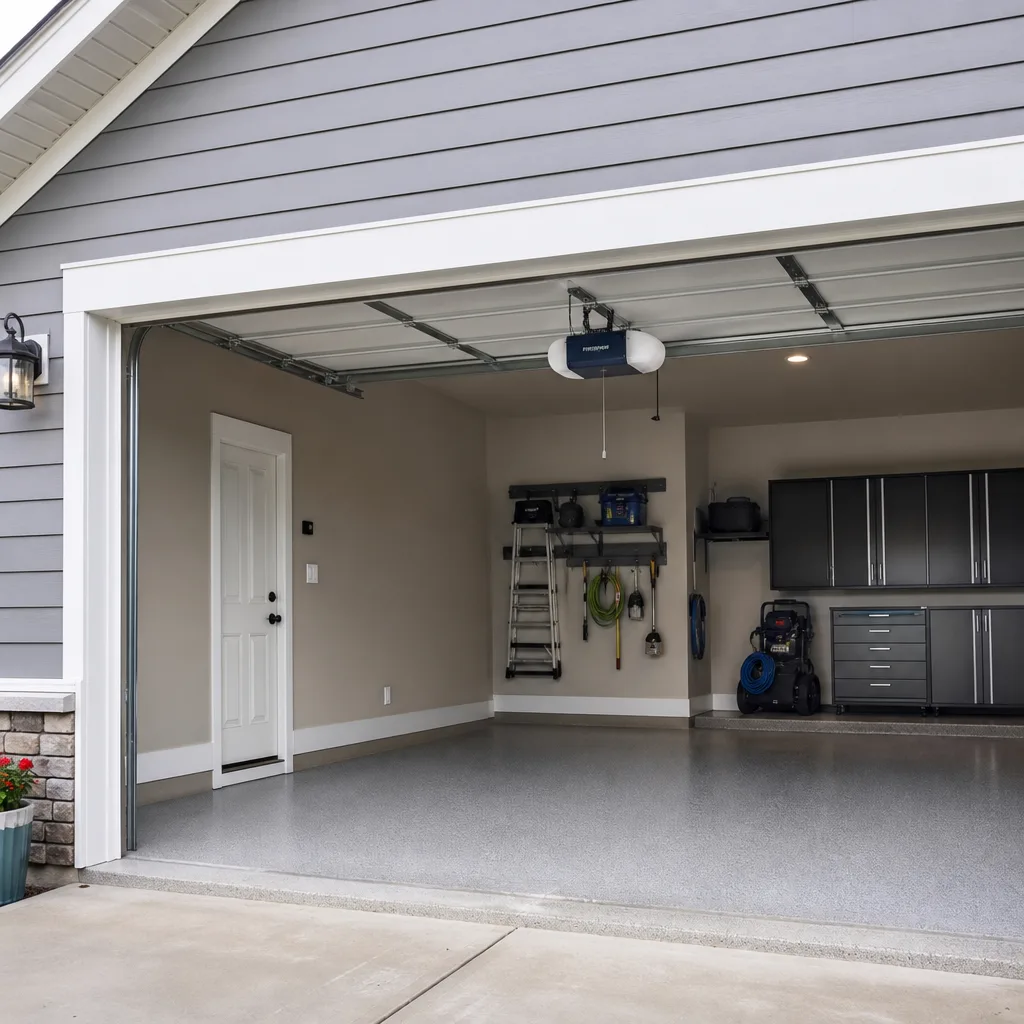
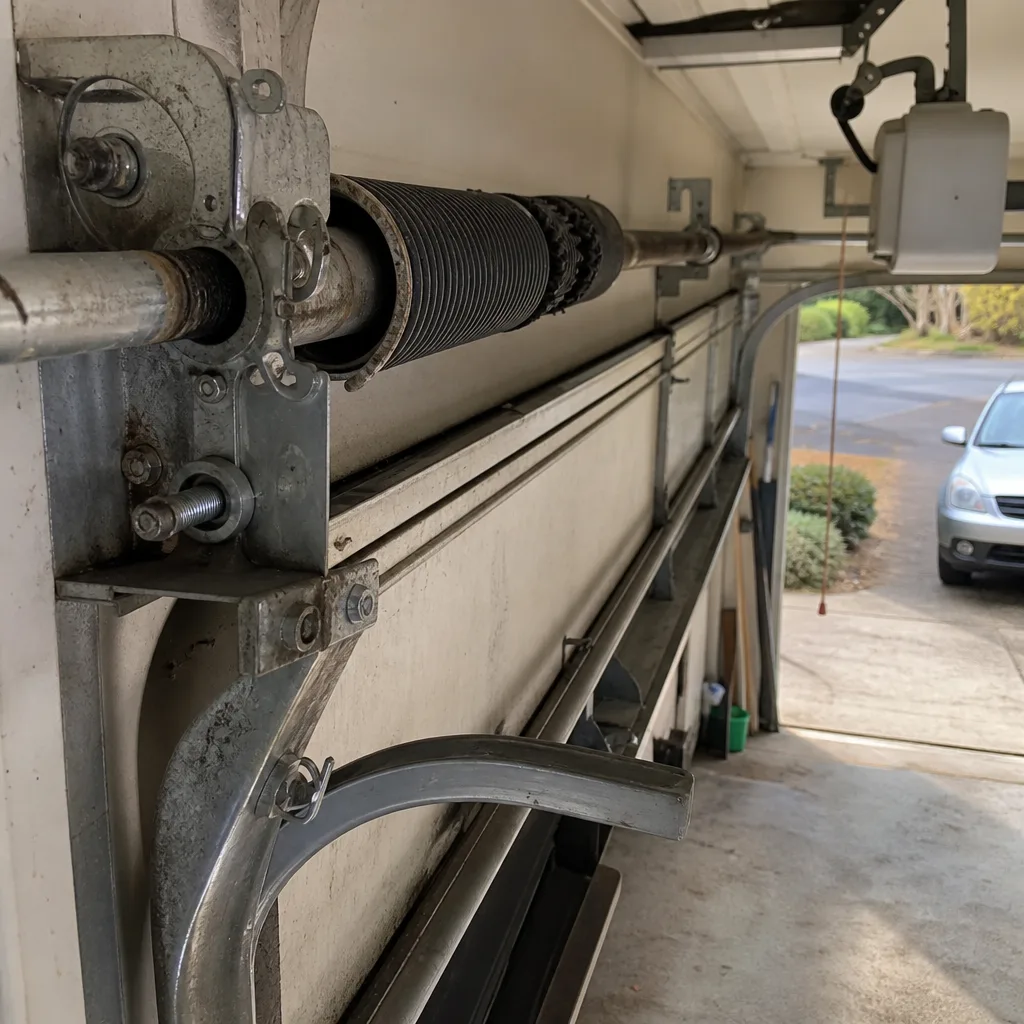 Before
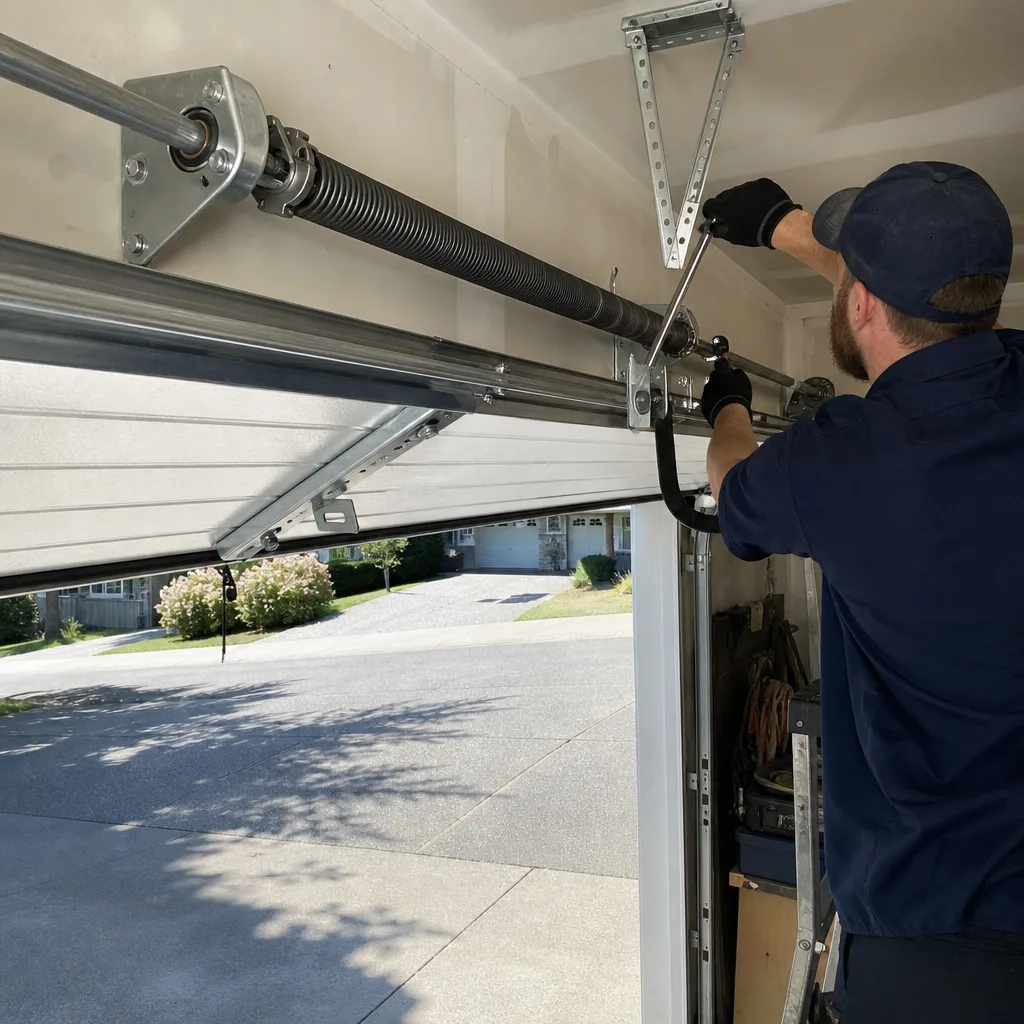 After
After Before
 After
After Before
 After
AfterGarage Door Permits, Codes & Inspections in WA: What You Need to Know
A $4,200 garage door replacement became a $14,000 problem at closing. The contractor had widened the rough opening to fit a larger door and never pulled a permit. The buyer’s inspector flagged it, the lender paused, and the sale collapsed. The seller paid for structural engineering, a retroactive permit, and a price reduction to salvage the deal. This guide explains what actually requires a permit in Washington State, what doesn’t, and how to check the permit history on any home you’re buying in Kent before you sign. For Garage Door Warning Signs: A Kent Homeowner’s Reference Guide, see our companion resource.
Quick Answer
In Washington State, replacing a garage door with a door of the same size in the existing rough opening is permit-exempt. A permit is required when you alter the rough opening, change or add a structural header, cut a new opening, or run a new dedicated electrical circuit for a garage door opener. Like-for-like swaps on existing circuits stay permit-free. Confirm prior work through the King County permit portal before buying any home in Kent.
Table of Contents
- When a Permit Is Required in Washington State
- When a Permit Is NOT Required
- Washington RCW and King County Code: The Legal Basis
- Electrical Permits for Garage Door Openers: The Circuit Distinction
- How to Check Permit History on a Kent Home Before Buying
- What an Inspector Actually Checks During a Permitted Installation
- Handling Unpermitted Prior Work: Disclosure, Retroactive Permits, and Sign-Offs
- Common Mistakes to Avoid
- When to Call a Professional
- Frequently Asked Questions
- The Bottom Line
 Before
 After
AfterWhen a Permit Is Required in Washington State
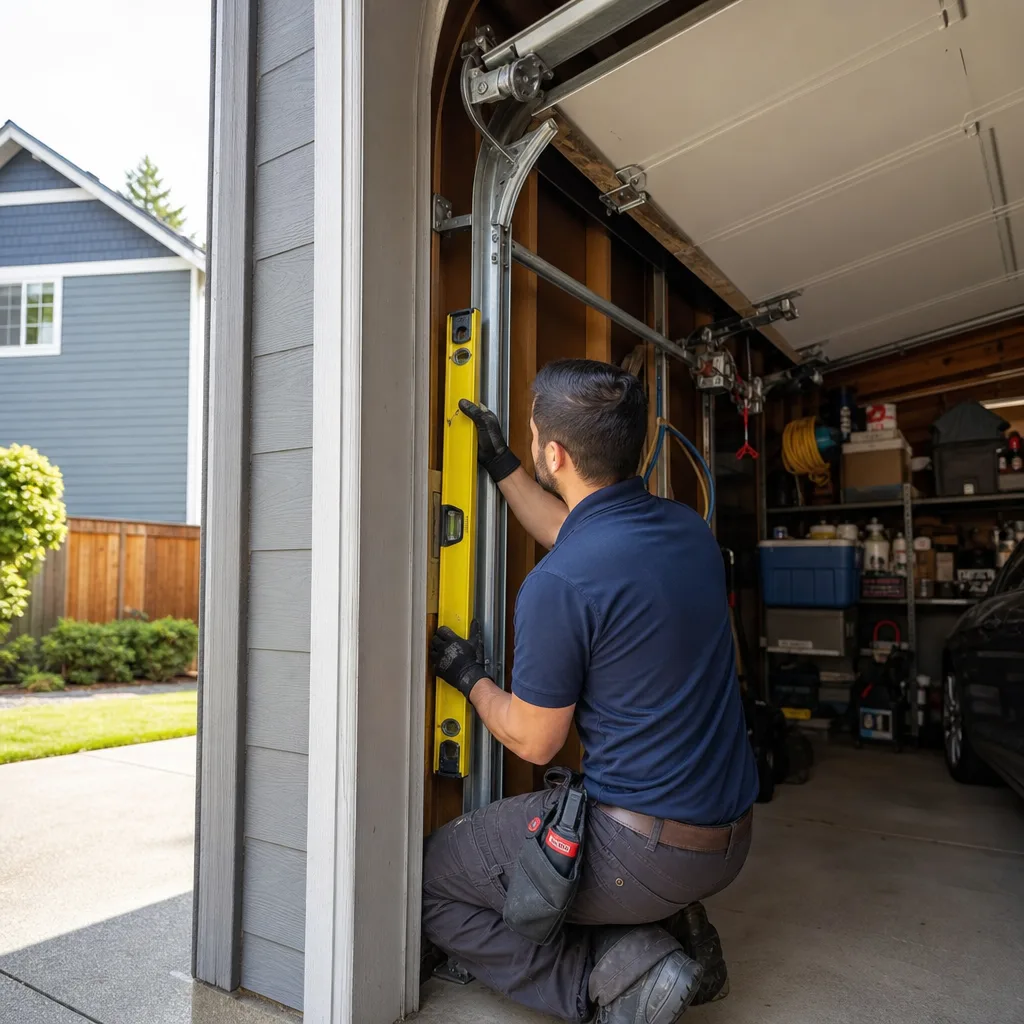
Washington building permits are governed by the State Building Code, adopted through RCW 19.27, and enforced locally by each city and county. In Kent, that means the King County permitting system and the City of Kent’s building department have jurisdiction over what gets approved and inspected. The rule that matters for garage doors is straightforward: permits attach to structural and electrical changes, not to the door itself.
A garage door is classified as a non-structural component when it fits the existing framed opening. The framing, the header, the load path, the foundation connection: none of that changes. You’re unbolting an old door and bolting in a new one. The State Building Code does not require a permit for that work.
Here’s what does trigger a permit:
- Widening or heightening the rough opening. This means cutting into a load-bearing wall. The moment you alter the framing around the garage door, you’re doing structural work. In Kent, most garage walls on attached garages are load-bearing along at least one side. A header carries the weight of the roof or second floor above the opening. Change the opening dimensions and the existing header no longer spans correctly. You need an engineer or a prescriptive code-compliant header design, and you need a permit.
- Cutting a new garage door opening where none existed. This is a structural alteration to an exterior wall. It requires plans, a permit, and an inspection of the header installation and load transfer.
- Replacing or modifying a structural header. Even if the opening dimensions stay the same, replacing a damaged header is structural work. A cracked or sagging header over a Kent garage door is common in homes built in the 1970s and 1980s, where undersized headers were sometimes used. The repair requires a permit to confirm the new header meets current code.
- Running a new dedicated electrical circuit for a garage door opener. This is electrical work and is covered separately under Washington’s electrical permitting rules. More on that below.
We’ve replaced doors in Kent where the homeowner assumed the job was fully unregulated. That assumption holds only while the opening stays untouched. The moment a saw hits the framing, the job changes classification from replacement to alteration. That change is exactly where unpermitted work gets born.
When a Permit Is NOT Required
The permit-exempt category covers the work most Kent homeowners actually need. Understanding this fully matters, because some contractors have been known to charge for permits that were never required, or to skip permits that were. Our How to Hire a Garage Door Contractor in Kent: A Step-by-Step Guide shows how to spot red flags before you sign.
You do not need a building permit for:
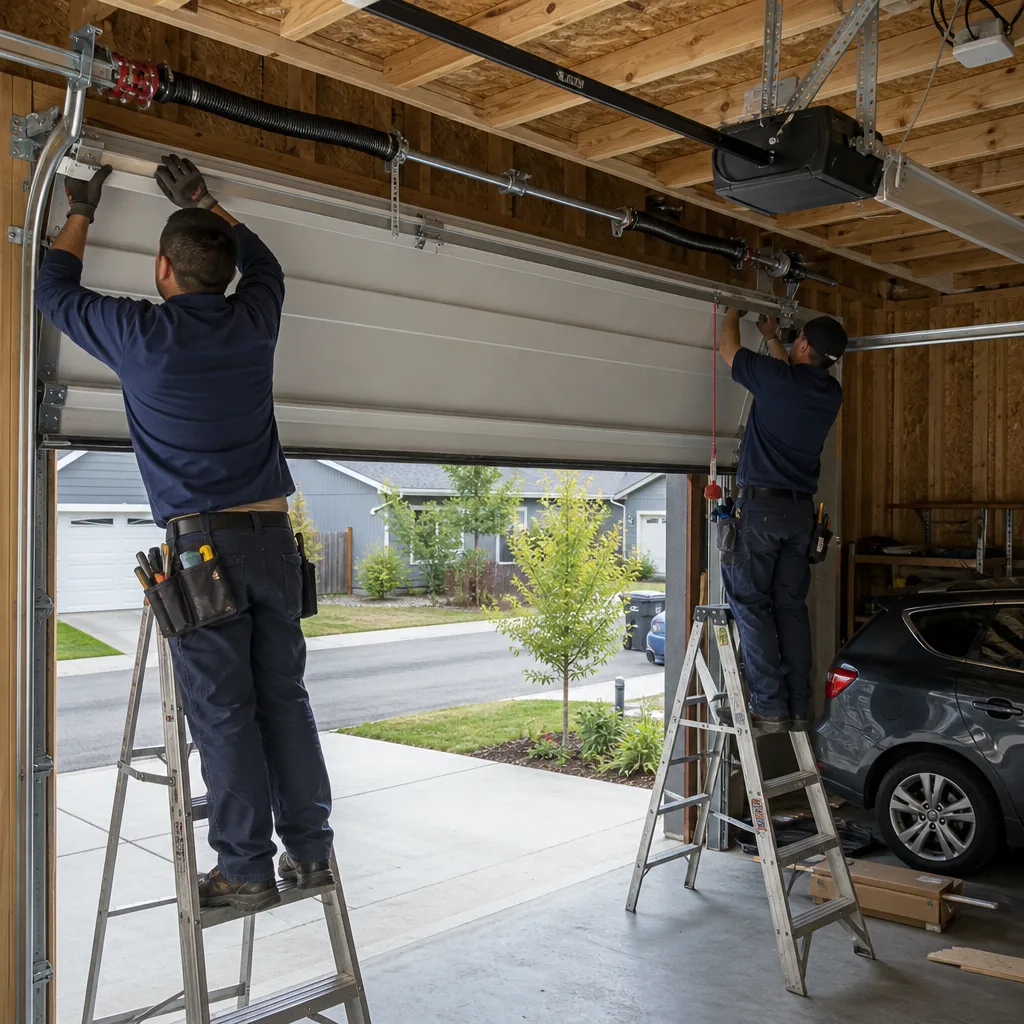
- Like-for-like garage door replacement. Same opening width, same opening height, new door installed within the existing frame. Whether you’re swapping a Wayne Dalton for a Clopay, changing from wood to steel, or upgrading from a standard panel door to an insulated Amarr, no permit attaches to the door itself.
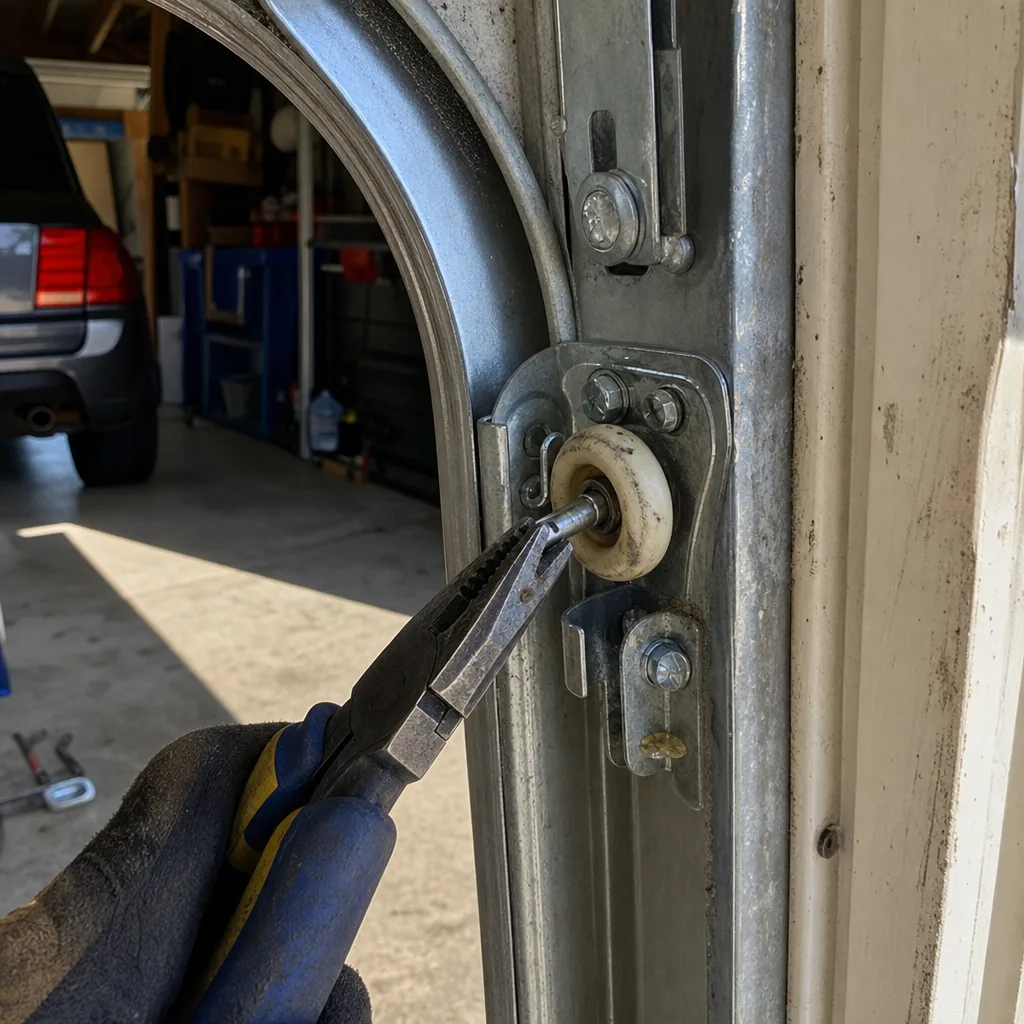
- Garage door repair. Replacing rollers, hinges, cables, tracks, springs, sensors, or panels falls outside building code permitting. Repair work does not change the structure or the electrical system. If you need garage door repair in Kent, the job is permitted only in the sense of being done correctly; no government inspection applies.
- Replacing a garage door opener on an existing circuit. Swapping an old opener for a new one using the same outlet does not require an electrical permit. The outlet, wiring, and breaker are already approved. You’re replacing a plug-in appliance, not modifying the circuit.
- Cosmetic or non-structural work. Painting, weatherstripping replacement, adding insulation panels to an existing door, or installing a keypad are all unregulated.
The cleanest way to think about it: if the framing doesn’t change and the wiring doesn’t change, the permit stays in the drawer. That’s true in Kent and it’s true under state law. For a full garage door installation in Kent, the permit question is decided entirely by whether the rough opening dimensions stay identical to the old door’s opening.
Washington RCW and King County Code: The Legal Basis
The authority for building permits in Washington comes from RCW 19.27, the State Building Code Act. That statute requires every city and county to enforce the State Building Code and to issue permits for work that falls within its scope. It also authorizes local jurisdictions to set their own permit thresholds, as long as the state code is the floor. Kent enforces the International Residential Code (IRC) and International Building Code (IBC) as adopted by the state, with local amendments on file at City Hall.
The relevant IRC sections for a garage door installation are R301 (design criteria), R602 (wall construction), and R603 (headers and load-bearing walls). The header tables in R602 specify the minimum header size for a given opening width and building width. When a contractor widens an 8-foot garage door opening to 9 feet, the header inside that wall might be a 4×10 on one side and two 2x10s with a steel flitch plate on the other, depending on the span, snow load, and floor loads above. King County’s snow load for residential roofs in Kent reads at 25 pounds per square foot for standard design. That load travels down through the walls and lands on the header over your garage door. This is why an inspector checks more than the door.
The practical takeaway: Washington treats unpermitted structural work as a violation, not a negotiation. When you sell a Kent home, the standard seller disclosure form asks directly about any work done without a permit. Failing to disclose exposes the seller to a fraud claim. The buyer’s inspector, lender, and title company all pull permit history. Unpermitted structural work shows up as a gap. That gap becomes a question. That question becomes a price concession or a dead deal.
Electrical Permits for Garage Door Openers: The Circuit Distinction
Garage door opener electrical work confuses more Kent homeowners than any other part of this topic. The distinction is between plug-in appliance replacement and circuit modification.
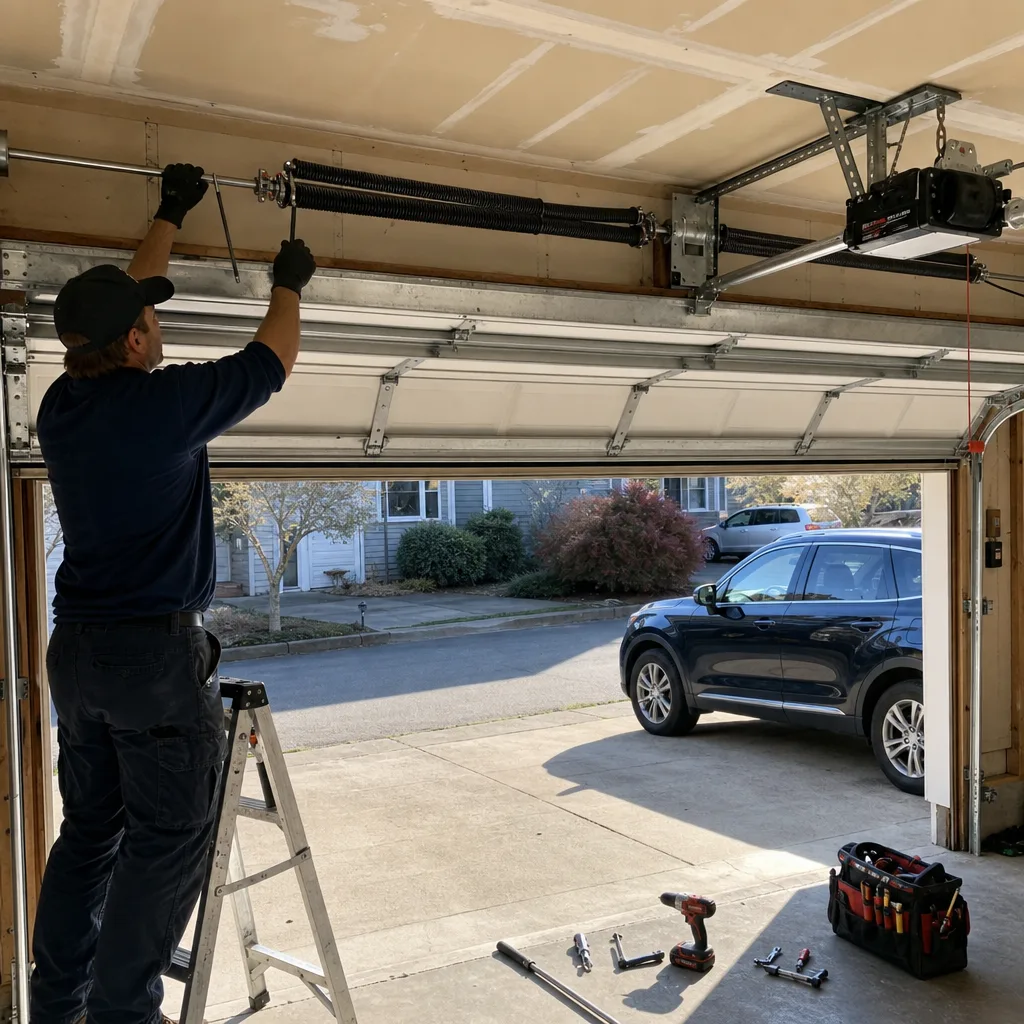
No permit needed: replacing a garage door opener that plugs into an existing 120-volt outlet. The outlet is already there, the circuit is already approved, and the opener is a listed appliance drawing standard current. Unplug the old one, plug in the new one. Done. This covers the vast majority of garage door opener repair and installation in Kent.
Permit needed: installing a new outlet where none exists, adding a dedicated circuit to the panel for a new opener, or relocating an existing outlet as part of the job. This is electrical work as defined by RCW 19.28 and enforced by the Washington State Department of Labor & Industries. A licensed electrician pulls the permit, does the work, and L&I inspects it. In Kent, L&I is the electrical inspection authority, separate from the City’s building permit department.
A Genie or LiftMaster opener on a standard 120-volt circuit pulls the same load as a garage refrigerator or a table saw. The residential electrical code in Washington does not require a dedicated circuit for a garage door opener, though some builders install one. If your Kent home was built in the last 20 years, the garage likely has a 20-amp GFCI-protected outlet near the opener location. That outlet is almost certainly sufficient for any modern opener on the market.
Where we see homeowners surprised: an older Kent home, built in the 1960s or 1970s, with a single ungrounded outlet in the garage, and the new opener keeps tripping the breaker. That situation is not “add an outlet.” That situation is a circuit capacity problem, and it requires an electrician with a permit. The garage door company can install the opener; the electrician makes the outlet legal.
How to Check Permit History on a Kent Home Before Buying
If you’re buying a Kent home, you can check the permit history on the garage before you sign anything. The process takes fifteen minutes and costs nothing. Here’s the step-by-step from our Garage Door Repair Maintenance Checklist for Kent Homeowners:
- Open the King County Parcel Viewer. Go to the King County parcel viewer tool online (or search “King County parcel viewer”). Enter the street address of the property you’re buying. Confirm the parcel number.
- Navigate to the permit records. Within the parcel record, look for the building permits, land use permits, and code enforcement tabs. These are sometimes under a “Permits” or “Applications” section depending on the current King County portal interface.
- Review the permit list. Look for any permits that reference the garage: garage addition, garage alteration, garage door header, structural repair, or electrical permit tied to the garage circuit. Note the permit number, date, and issued-to name.
- Open the permit detail. Confirm whether the permit was finaled. An issued permit that was never inspected and closed is a red flag equal to no permit at all. Finaled means the work was inspected and approved.
- Cross-check the disclosure. Compare the seller’s disclosure statement with the permit records. If the seller says “no unpermitted work” and the permit history shows a structural permit for a widened garage door opening that was never finaled, you have a negotiation point before closing, not after.
- Flag gaps. If the home has a 9-foot garage door but the permit history only shows the original 8-foot opening, and no permit appears for the widening, assume the work was unpermitted until proven otherwise. Request documentation from the seller.
This process applies to any King County property, including Kent, Auburn, Renton, and Covington. The tool is the same; the records are public; the time invested is minimal. At Servo Garage Doors, we’ve walked Kent buyers through this check and watched them negotiate a $6,000 credit from the seller for retroactive permitting costs. The information sits in a public database. Use it.
What an Inspector Actually Checks During a Permitted Installation
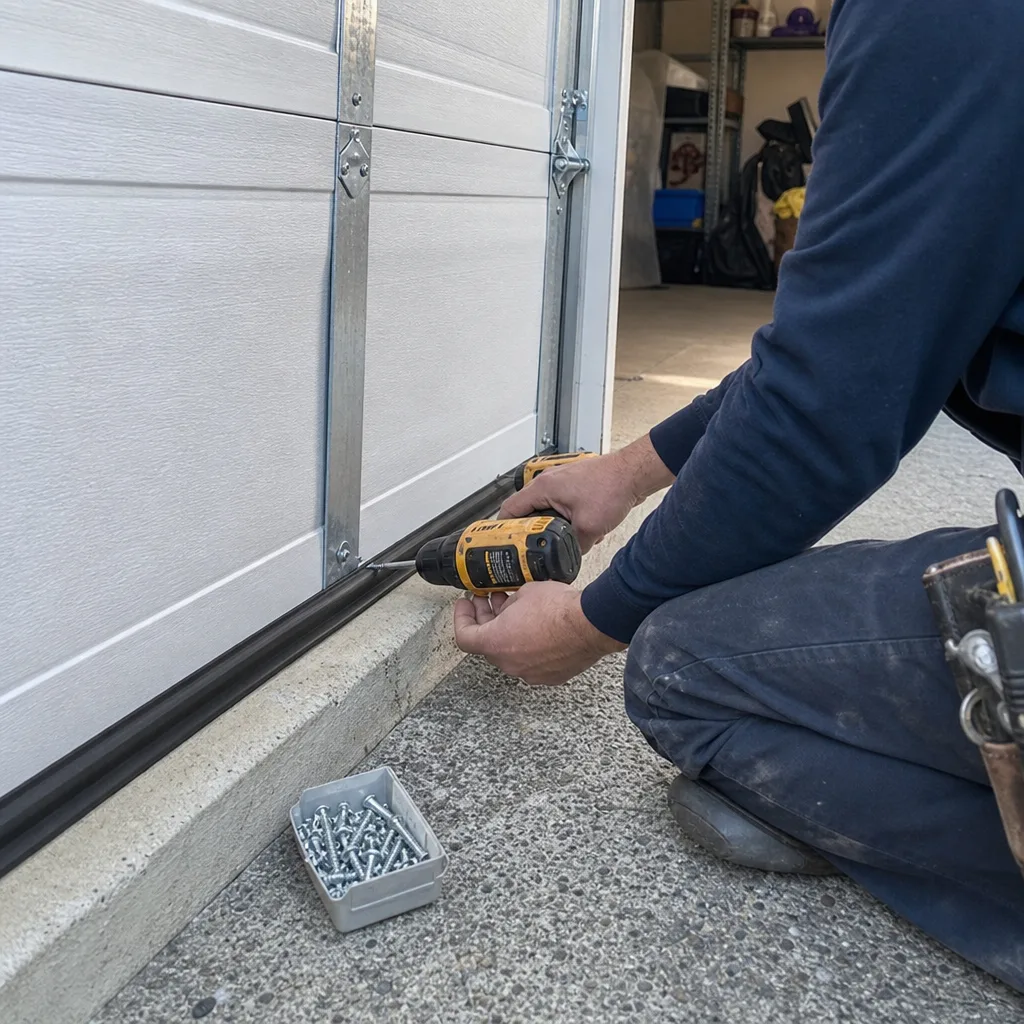
When a permit is required and a garage door installation goes through inspection, the inspector reviews three things: the structure, the electrical work, and the safety systems. This is not a rubber stamp.
Header and load path. The inspector verifies that the header over the new or widened opening matches the approved plan. For a widened opening, that means checking the header size, the number of plies, the fastening schedule, and the king studs and jack studs on both sides. The inspector confirms that the load from the framing above transfers down to the foundation without interruption. In Kent’s older homes, where framing lumber is sometimes a full 2×4 rather than nominal, the inspector checks for twisting, termite damage, and proper bearing.
Opener wiring to code. If the job included a new circuit, the L&I electrical inspector verifies the wire gauge, the breaker size, the GFCI protection, the box fill, the grounding, and the outlet location. The outlet must be within reach of the opener’s power cord, ceiling-mounted, and accessible. Extension cords and permanent wiring are not code-compliant alternatives.
Safety reverse compliance under UL 325. Every residential garage door opener sold in the U.S. must comply with UL 325, the standard that governs automatic garage door operator safety. The inspector checks that the photo-eye sensors are mounted no higher than 6 inches off the floor, that the door reverses on contact with an obstruction, and that the auto-reverse mechanism is functioning. This is the standard that prevents a closing garage door from crushing a child or a pet. A door that doesn’t reverse under pressure fails inspection. Period.
On a permitted installation, the issuer of the permit (the City of Kent) sends its own building inspector, while L&I sends an electrical inspector separately if electrical work was part of the permit. Both inspections must pass before the permit is finaled and the job is closed out.
Handling Unpermitted Prior Work: Disclosure, Retroactive Permits, and Sign-Offs
If you own a Kent home and you know the garage door opening was widened without a permit, you have three paths: disclose, retroactively permit, or repair. The worst option is silence. The standard Washington seller disclosure form makes withholding this information a legal liability. The buyer’s inspector will likely find it regardless. Front-running the problem is cheaper than defending it.
Voluntary disclosure. If you’re selling, disclose the unpermitted work on the seller form, in writing, before the buyer’s inspection. Attach whatever documentation you have: contractor invoices, photos, engineering letters if any. A buyer who knows about the issue before their inspector finds it is negotiating from a position of information, not surprise. The deal may still proceed with a credit or a condition that the work be permitted retroactively before closing.
Retroactive permit. The City of Kent issues retroactive permits for unpermitted structural work, but the process is more involved than pulling the original permit would have been. An engineer typically reviews the header, the framing, and the load path. The work may need to be opened up to expose the framing. If the structure is found sound, the permit path proceeds with an inspection. If it’s found non-compliant, the repair comes out of your pocket. Retroactive permitting on a widened garage door opening in Kent typically runs $800 to $2,500 for the engineering review and permit fees, plus any corrective framing work.
When a licensed contractor can sign off vs. when it goes to the inspector. A licensed contractor cannot “sign off” on unpermitted structural work in Washington. No contractor’s license substitutes for a government building inspection. A licensed structural engineer can evaluate the work and provide a stamped letter stating the framing meets code, which then forms the basis for a retroactive permit. But the final approval comes from the City of Kent inspector, or from L&I for electrical work. This distinction matters: when a contractor tells you they can “make it legal” without involving the city, they’re describing something that doesn’t exist.
Common Mistakes to Avoid
- Assuming a like-for-like swap always needs a permit. It doesn’t. A same-size replacement in the same opening is permit-exempt in Washington and King County. Paying a contractor for a permit on this job is paying for paperwork that was never required.
- Widening the opening without pulling a permit. This is the most expensive mistake we see in Kent. The header changes, the structure changes, and the permit gap follows the house into every future sale. Retroactive permitting costs more than the original permit would have.
- Treating a garage door opener swap as an electrical permit trigger. Swapping a plug-in opener on an existing outlet needs no electrical permit and no L&I inspection. Adding a new outlet or a new circuit does. Don’t let anyone charge you for an electrical permit on a plug-in swap.
- Believing a contractor’s license replaces an inspection. A license means the contractor is registered and bonded. It does not give them authority to approve structural work. Only the City of Kent and L&I have that authority.
- Skipping the permit check when buying a Kent home. The King County parcel viewer is free and public. Fifteen minutes of review can reveal a permit gap that saves you thousands at closing.
- Letting a contractor “fix” unpermitted work without documenting it. The fix itself may become unpermitted work. Any structural correction to a widened garage door opening should go through the retroactive permit process, not just a quiet Saturday repair.
- Ignoring the safety reverse requirement. Whether the job is permitted or not, a garage door opener that doesn’t reverse under pressure violates UL 325 and creates a life-safety hazard. Get it fixed before the next cycle.
When to Call a Professional
You don’t need a professional to replace weatherstripping or tighten a bolt. You need one when the framing gets touched, the electrical system gets involved, or the door stops reversing safely. If you’re planning a replacement that changes the opening size, get a structural evaluation before the saw comes out. If your opener trips the breaker repeatedly, call an electrician before you call a garage door company. If the door closes on an obstruction and doesn’t reverse, stop using it and call a technician. Servo Garage Doors Kent offers free estimates in Kent, including a review of the permit implications of any garage door work you’re considering. Call (425) 906-3489.
Frequently Asked Questions
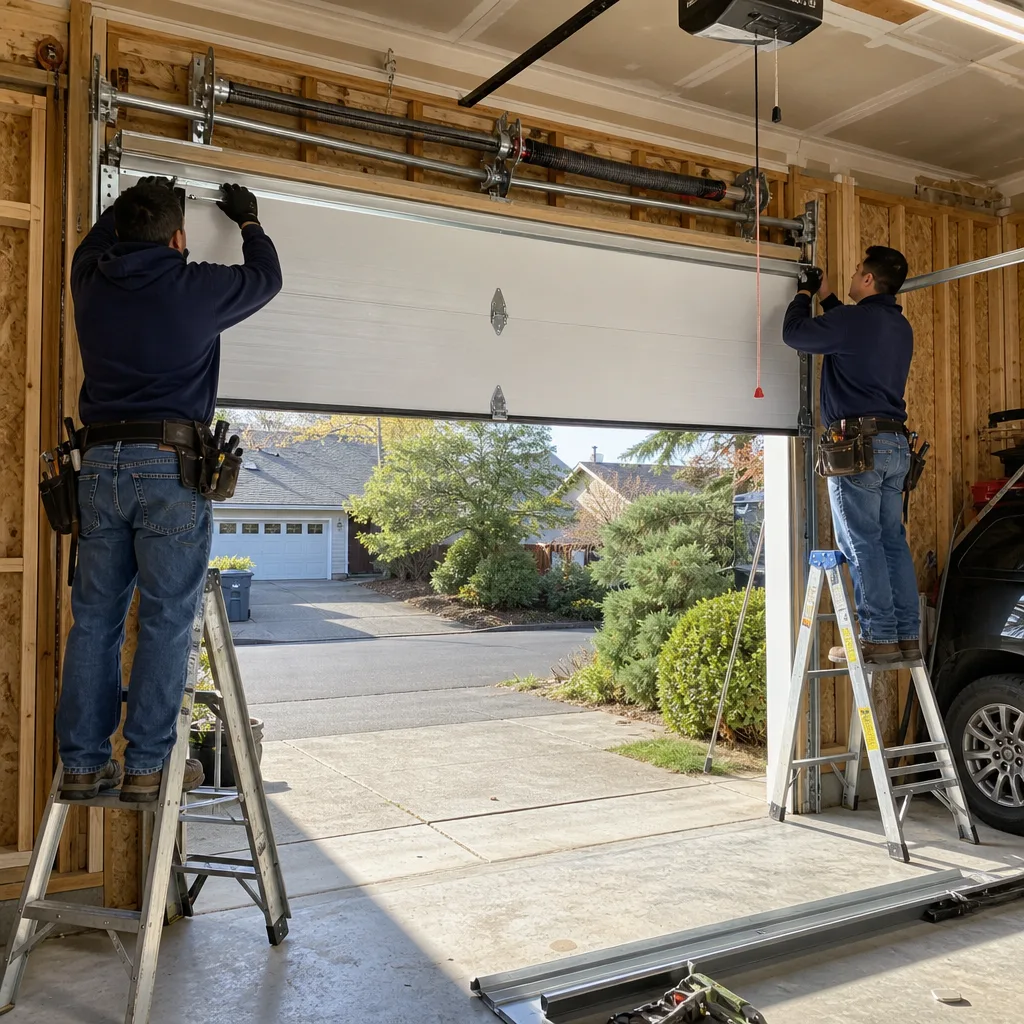
No permit is required to replace a garage door with a door of the same size in the existing rough opening. The work is classified as non-structural repair and falls outside the State Building Code permit scope. If the opening dimensions change, a permit is required. Call (425) 906-3489 for a free assessment of your specific job.
Building permit fees in Kent for a residential garage door structural alteration typically range from $200 to $600, plus any engineering review fees if an engineer’s letter is required. Electrical permits for a new opener circuit run separately through L&I and typically cost $100 to $300. A like-for-like swap with no opening change has no permit fee at all.
No. Widening or heightening a garage door rough opening is structural work on a load-bearing wall and requires a building permit under Washington State law and Kent municipal code. Unpermitted widening creates a disclosure problem at sale and typically costs more to retroactively permit than the original permit would have.
Open the King County parcel viewer, enter the property address, and review the permits tab for the parcel. Look for garage-related permits and check whether each one is marked as finaled. Compare what the permit history shows with the physical dimensions of your garage door opening. A 9-foot opening with only an 8-foot permit history indicates unpermitted work.
No. The Washington State electrical code does not require a dedicated circuit for a residential garage door opener. A standard 120-volt, 15-amp or 20-amp branch circuit with a GFCI-protected outlet serves most openers correctly. A dedicated circuit is needed only if the existing circuit is overloaded, which requires an electrical permit.
It can. A buyer’s inspector who finds unpermitted structural work, such as a widened garage door opening, will flag it in the inspection report. Lenders may require retroactive permitting before funding. Sellers who don’t disclose the work expose themselves to fraud liability. Disclosing upfront and negotiating a credit is the standard resolution. Contact Servo Garage Doors Kent at (425) 906-3489 for guidance on what retroactive permitting involves for your property.
The Bottom Line
Garage door permits in Washington come down to one question: did the framing change? If the rough opening stays the same size, a replacement door needs no permit. If the opening gets wider, taller, or relocated, you’re in structural territory and the City of Kent wants to inspect it. Electrical work follows the same logic: plug-in opener swaps are permit-free, new circuits are not. The King County parcel viewer lets any buyer check the permit history on a Kent home in minutes, and unpermitted work is cheaper to resolve proactively than at closing. Know the distinction, check the records, and get the work done with a documented, written-price contractor who tells you when a permit applies and when it doesn’t. Browse more guides & resources from Servo Garage Doors Kent.
Written by Marcus Deller, Owner at Servo Garage Doors Kent, serving Kent since 2015.