
Last updated September 20, 2026
Full 25-point door and opener safety check with every visit - springs, cables, rollers, tracks, and your LiftMaster or Chamberlain opener included
You get a price before we start. It does not change when the truck arrives.
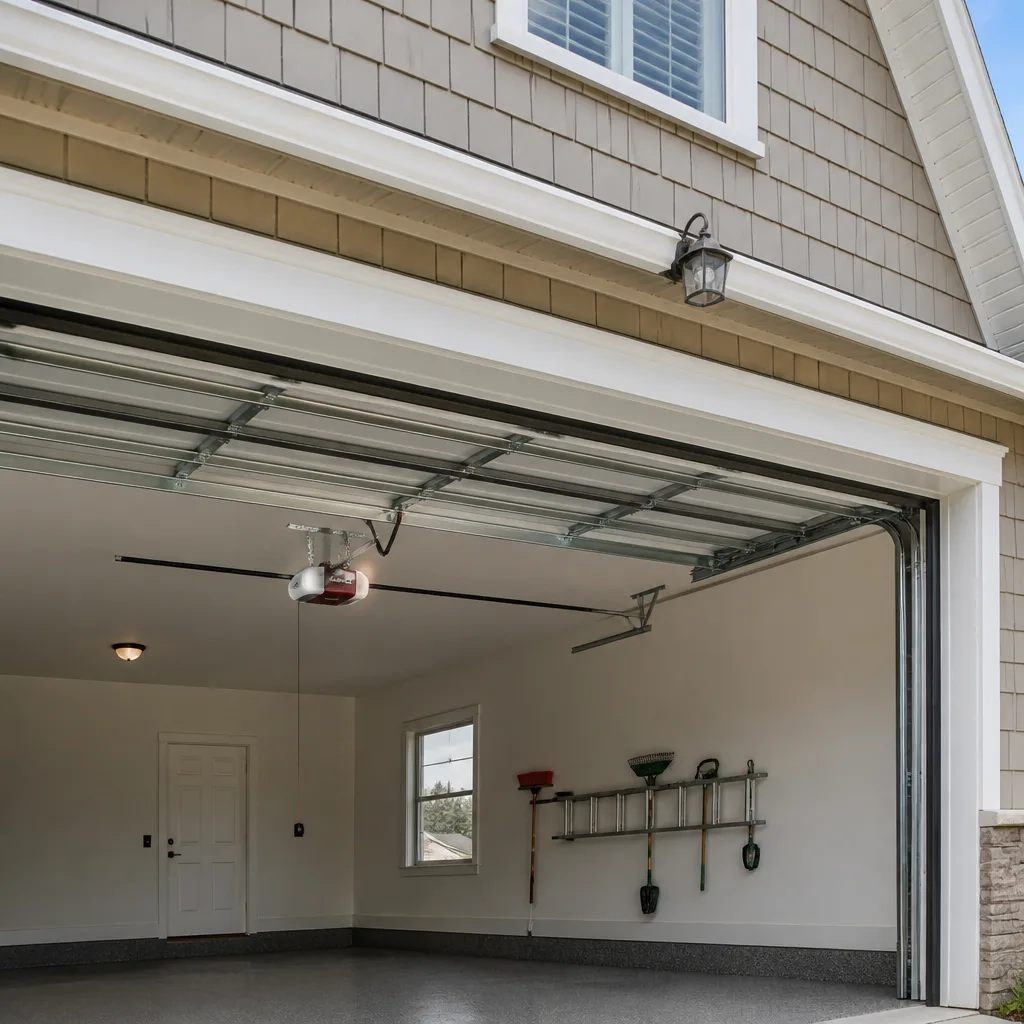
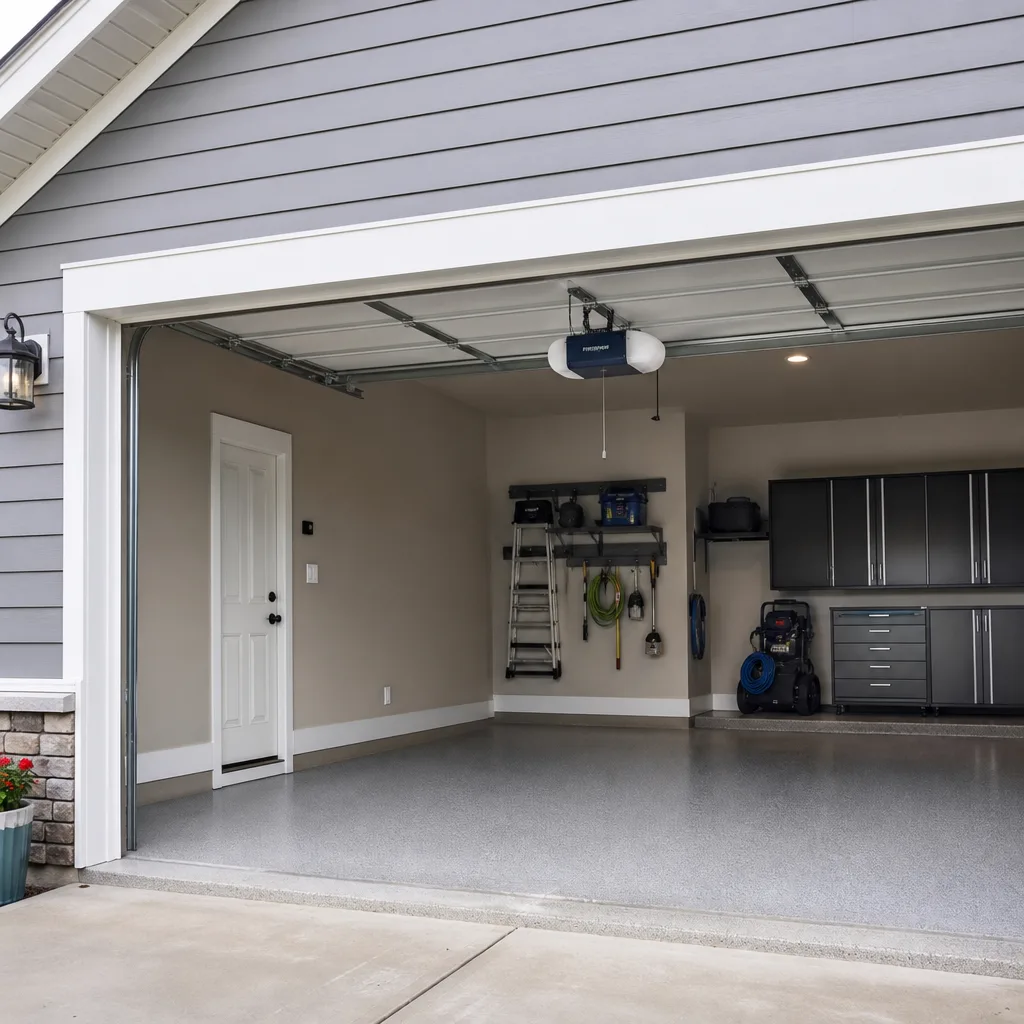
 Before
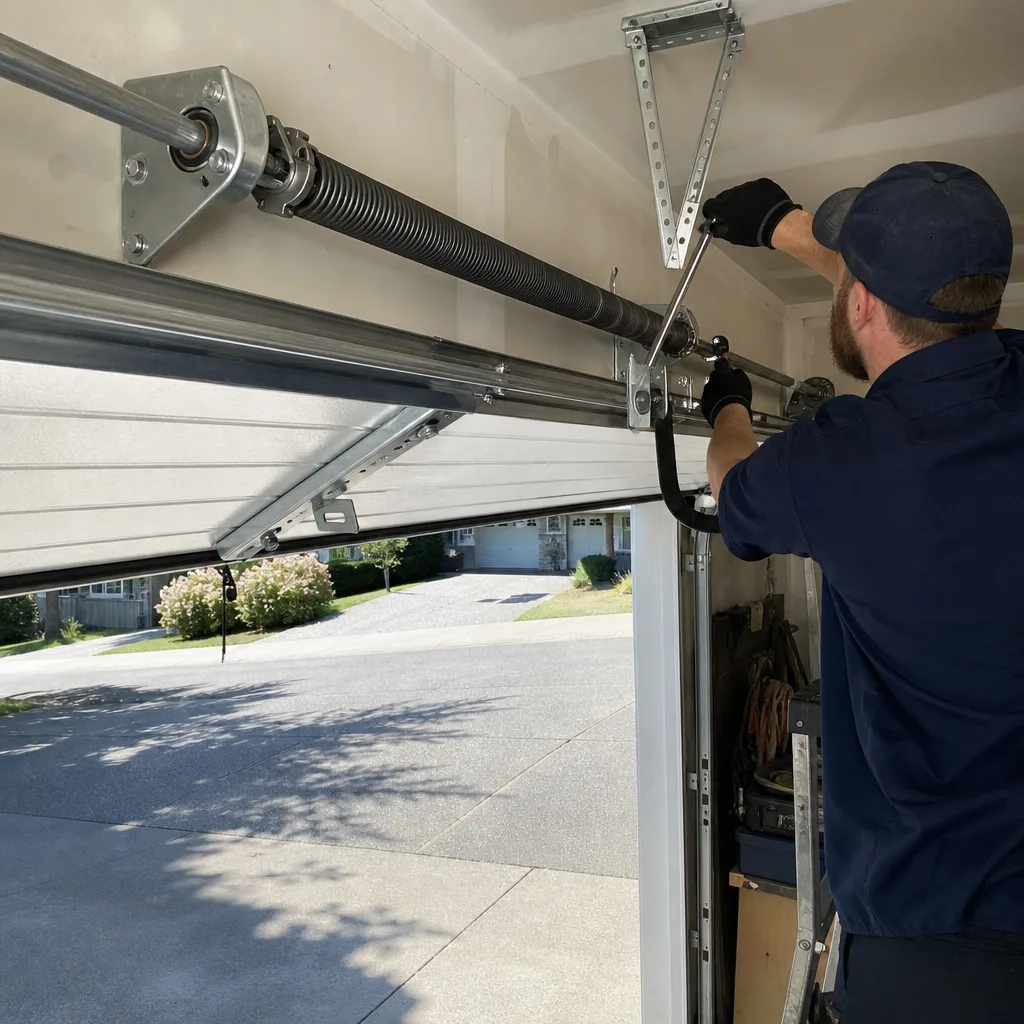 After
After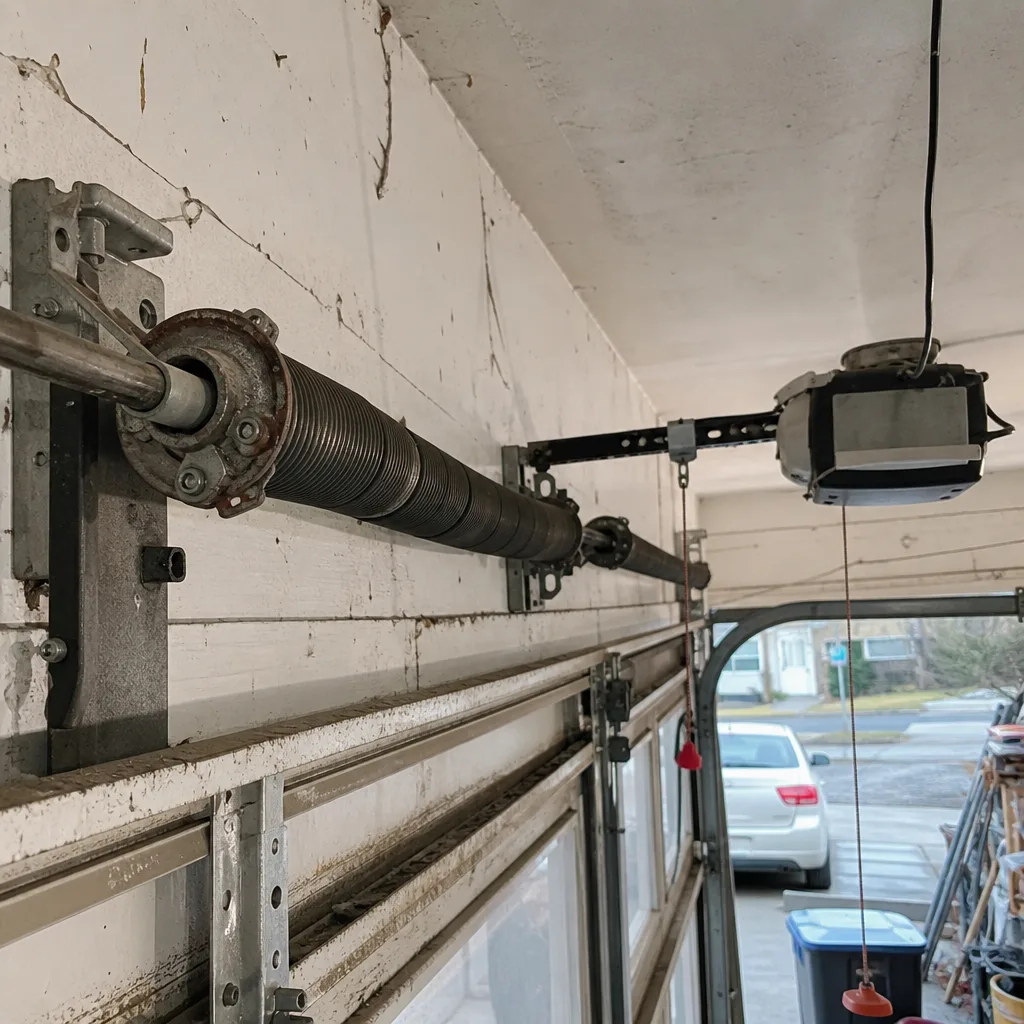 Before
 After
After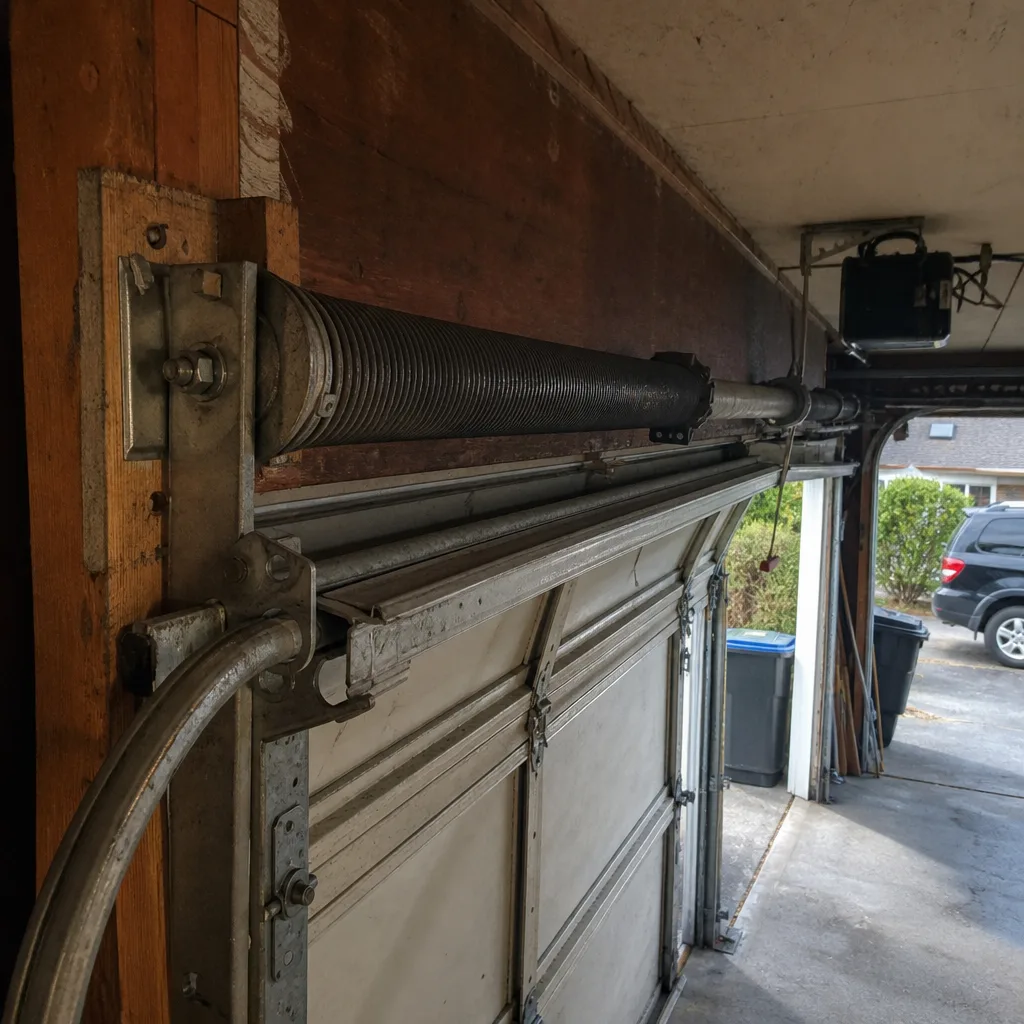 Before
 After
AfterGarage Door Repair Maintenance Checklist for Kent Homeowners
WD-40 on nylon rollers causes them to swell and bind within six months. It’s the most commonly recommended garage door lubricant and one of the fastest ways to add $180 to your next service call. This guide is the checklist we wish every Kent homeowner had before they touched a can of anything. You’ll learn exactly which lubricant goes on which part, which tasks are safe for a Saturday morning and which ones need a licensed technician, and how to time your maintenance around Kent’s specific weather pattern so the work actually holds.
Quick Answer
A proper garage door maintenance routine for Kent homeowners runs on two schedules: a 15-minute monthly visual and sound check you do yourself, and a 45-minute seasonal lubrication and torque inspection every six months. The non-negotiable rules are simple: silicone spray on nylon rollers, white lithium grease on metal-to-metal contact points, and never touch the torsion spring yourself. If the door is loud, slow, or shaking, stop using it and get a written diagnosis before anyone quotes a repair.
Table of Contents
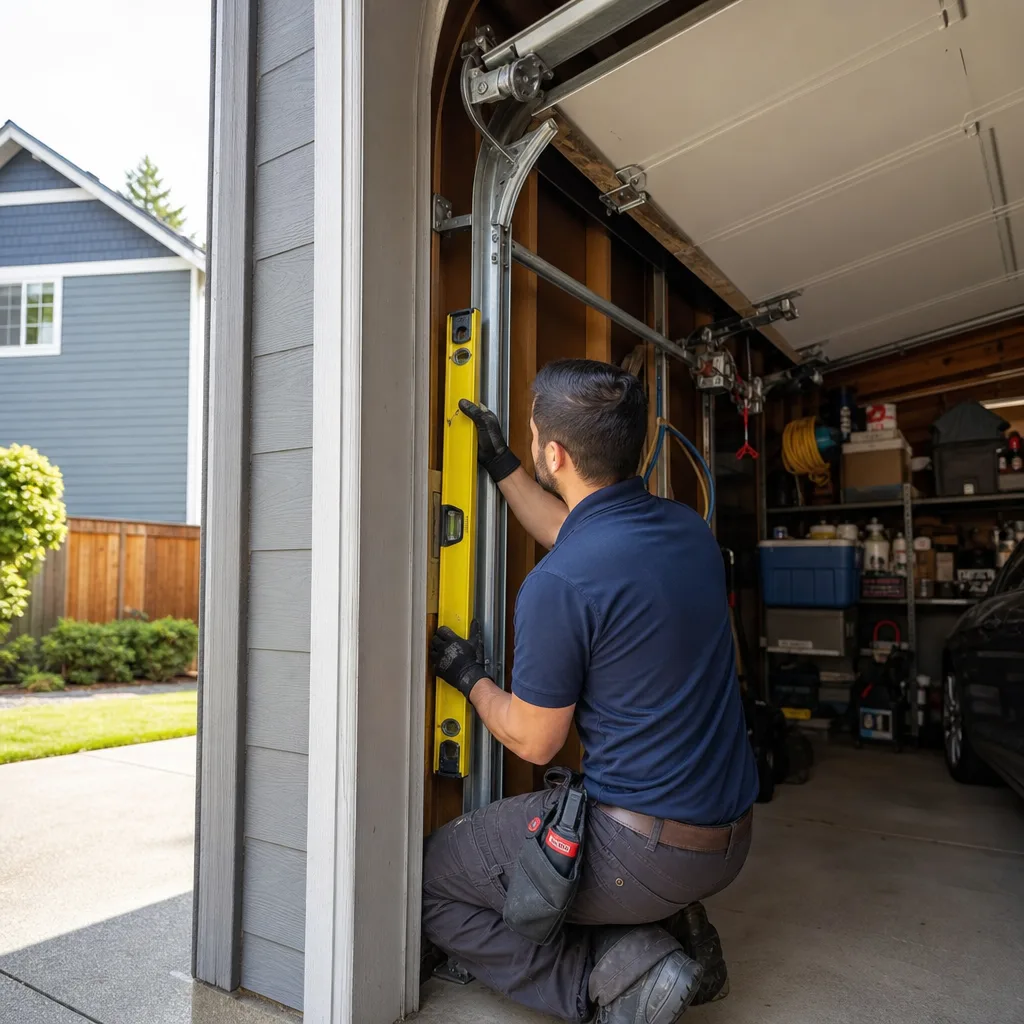
- The 15-Minute Monthly Check You Can Do Yourself
- Seasonal Lubrication: Which Product on Which Part
- Springs and Cables: What to Look For, What Never to Touch
- Rollers, Tracks, and Drums: Kent-Specific Wear Patterns
- Bottom Seal and Weatherstripping: The Kent Moisture Problem
- Opener Chain, Belt, and Safety Sensors: The Monthly Reset
- Kent Maintenance Calendar: What to Do in Each Season
- Documenting Your Maintenance: Why It Saves Real Money
- Common Mistakes to Avoid
- When to Call a Professional
- Frequently Asked Questions
- The Bottom Line
 Before
 After
AfterThe 15-Minute Monthly Check You Can Do Yourself
Most garage door failures announce themselves weeks before they happen. The trick is knowing what you’re listening for. In Kent, where winter mornings are wet and summer afternoons push 85 degrees, doors cycle through more expansion and contraction than most other climates in the Pacific Northwest. That means the signs show up earlier here if you know where to look.
Here’s the monthly routine we recommend to every Kent homeowner. It takes fifteen minutes and requires no tools beyond your eyes and ears.
- Close the door and watch the full cycle. Stand inside the garage, about eight feet back. The door should move at a constant speed from start to finish. Any hesitation, jerk, or speed change in the middle of the cycle is a signal that something is wearing unevenly.
- Listen for new sounds. A garage door should make a low, consistent hum. Grinding means metal-on-metal contact somewhere. Squealing usually points to dry rollers. A sharp pop on startup or shutdown is often a cable seating improperly in the drum.
- Check the balance manually. Pull the red emergency release cord with the door closed, then lift the door by hand to waist height. A properly balanced door stays where you put it. If it drops or climbs on its own, the spring tension is off. Note it and stop using the automatic opener until a tech checks it.
- Look at the cables on both sides. They should be taut and wrapping evenly around the drums at the top of the track. Fraying, gaps between wraps, or slack on one side are all red flags.
- Scan the track bolts. The vertical and horizontal tracks are bolted to the wall and ceiling. When bolts loosen, the track shifts, and the rollers bind against the rail. A quick visual check for gaps between the track and the wall catches this early.
- Test the safety sensors. With the door closing, wave your foot through the sensor beam at the bottom of the track. The door should reverse immediately. Do this once a month. It’s the single most important safety feature on the system.
If everything checks out, you’re done. If something seems off, write it down. A dated note like “door hesitates at midpoint, worse in cold weather” is genuinely useful diagnostic information when you call someone. It shortens the visit and reduces the time spent finding the problem.
Seasonal Lubrication: Which Product on Which Part
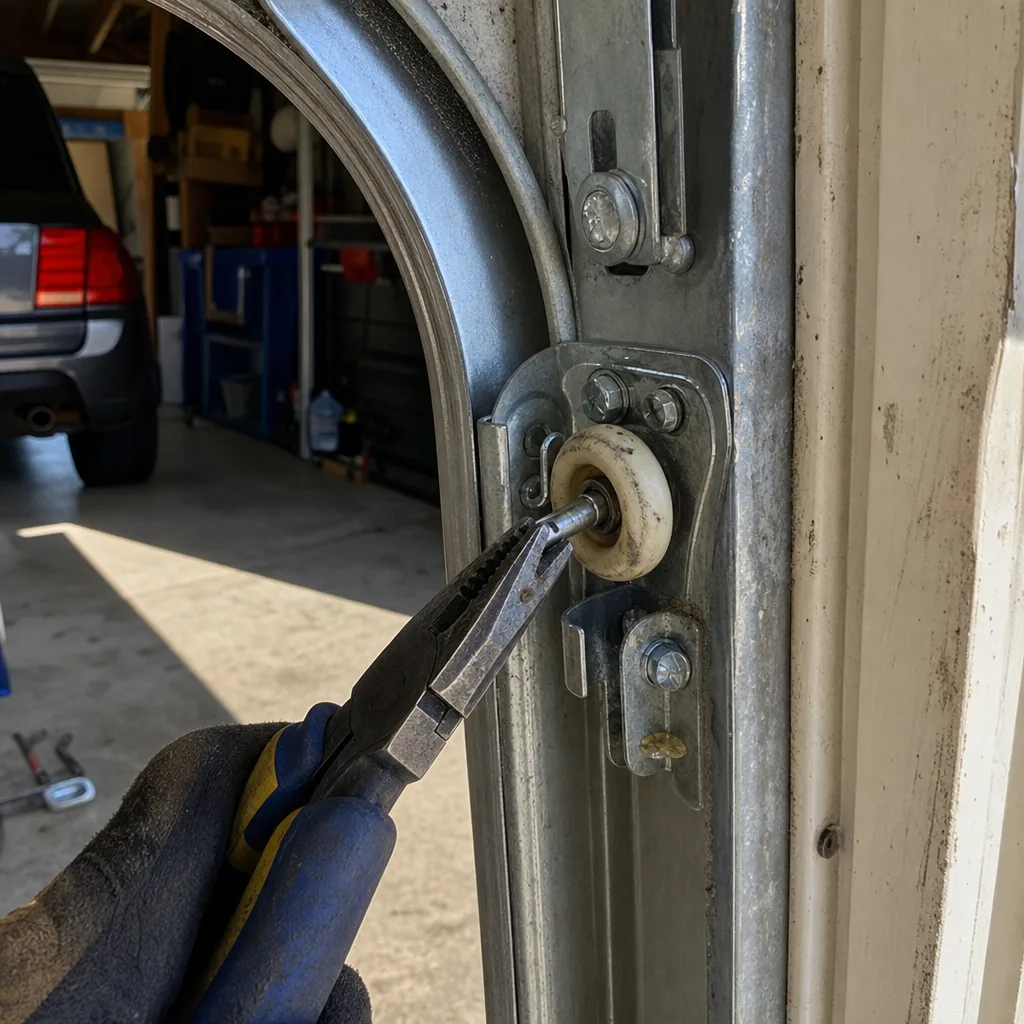
This is where most generic checklists fail. “Lubricate moving parts” is not a maintenance plan. It’s a recipe for a swollen nylon roller and a door that binds in the track. Different components need different products, and using the wrong one causes damage that looks like normal wear but isn’t.
Here is the exact breakdown we use on Servo Garage Doors Kent home service calls, and it’s the same breakdown you should use at home.
- Nylon rollers: silicone spray only. The roller itself spins on a sealed bearing. The bearing is what needs lubrication. Silicone spray penetrates the seal and coats the bearing without degrading the nylon. WD-40 and petroleum-based sprays cause nylon to absorb the solvent, swell, and bind in the track. We’ve replaced rollers in Kent homes that were six months old and already seized because of this.
- Steel rollers: white lithium grease. If you still have steel rollers, the bearings are unsealed and need a heavier lubricant. White lithium grease is the right choice. It stays in place and resists the moisture that comes with Kent winters.
- Hinges and pivot points: white lithium grease. Every hinge along the door’s sections has a pivot pin. A small dab of white lithium grease on each pin, applied twice a year, keeps the door flexing evenly as it rounds the track curve.
- Torsion spring: a light coat of silicone spray. The spring coils against itself as it winds. A light spray of silicone reduces friction between coils and slows corrosion. Do not saturate it. Do not use grease. Grease traps dust and grit, which grinds against the spring wire.
- Track rails: nothing. This is the counterintuitive one. The rollers ride inside the track on bearings, not on the track surface itself. Greasing the track collects dirt and creates a paste that bogs the roller down. If the track feels rough, clean it with a dry rag and check the roller bearings instead.
- Opener chain: white lithium grease on a LiftMaster chain drive. If your opener uses a chain (common on LiftMaster and Craftsman chain-drive models), a thin coat of white lithium grease along the length of the chain once a year keeps it quiet and smooth. Belt drives need nothing. Lubricating a belt causes it to slip on the gear and wear prematurely. Raynor and Wayne Dalton belt-drive openers should be left dry.
- Bottom seal: silicone spray on the rubber. A light coat of silicone spray on the bottom seal keeps it flexible through Kent’s wet winter. Frozen or cracked seals are typically dry rot from eight months of rain and two months of sun, and silicone is cheap insurance.
Timing matters too. We recommend lubricating in April and October in Kent. April is after the last heavy rain, when you want to displace any moisture that worked into the bearings over winter. October is before the rain settles in again, when you want a protective film in place for the wet months.
Springs and Cables: What to Look For, What Never to Touch
The torsion spring is the single most dangerous component on a garage door. It holds the entire weight of the door under tension, and when it fails, it releases that tension instantly. A snapping torsion spring has broken fingers, shattered tool handles, and put homeowners in the emergency room. This is the hard line: you inspect it by looking. You never, ever touch it with a tool.
Here’s what you’re looking for on a monthly basis.
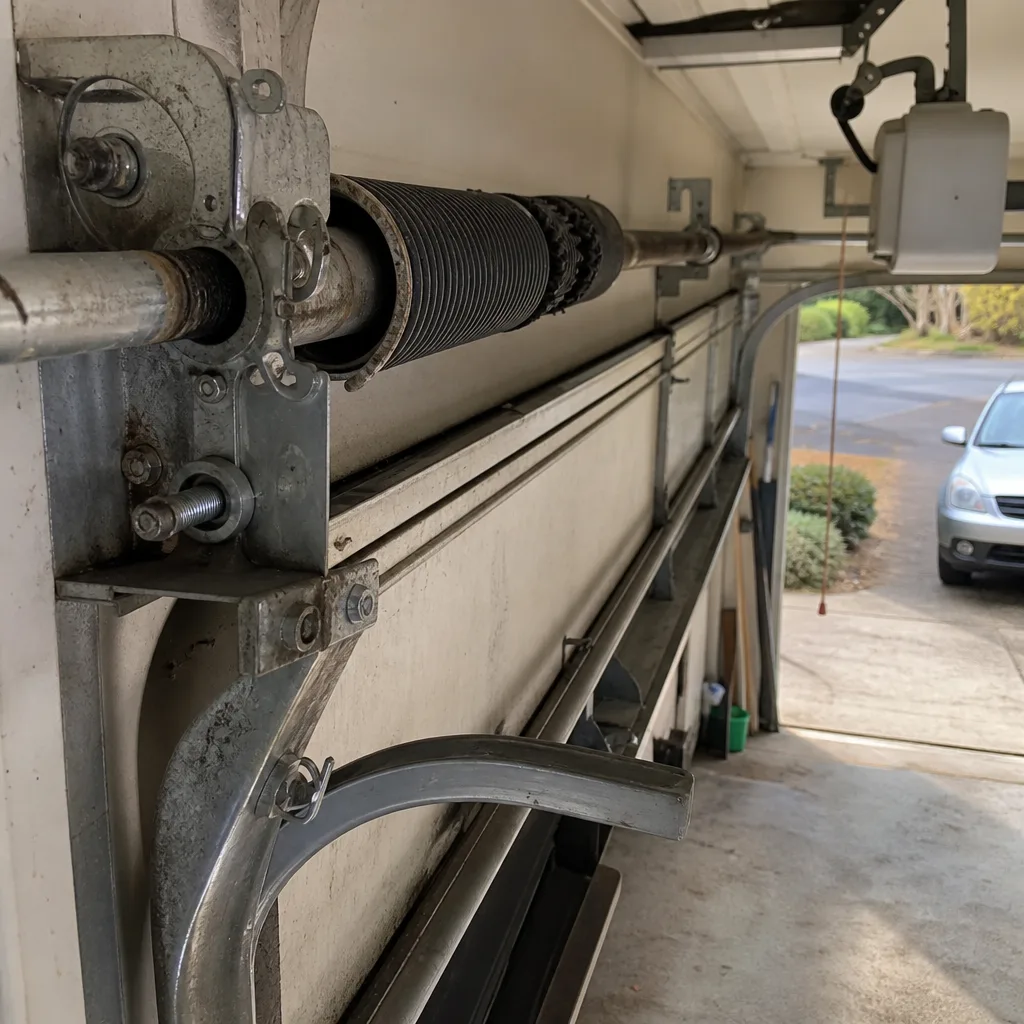
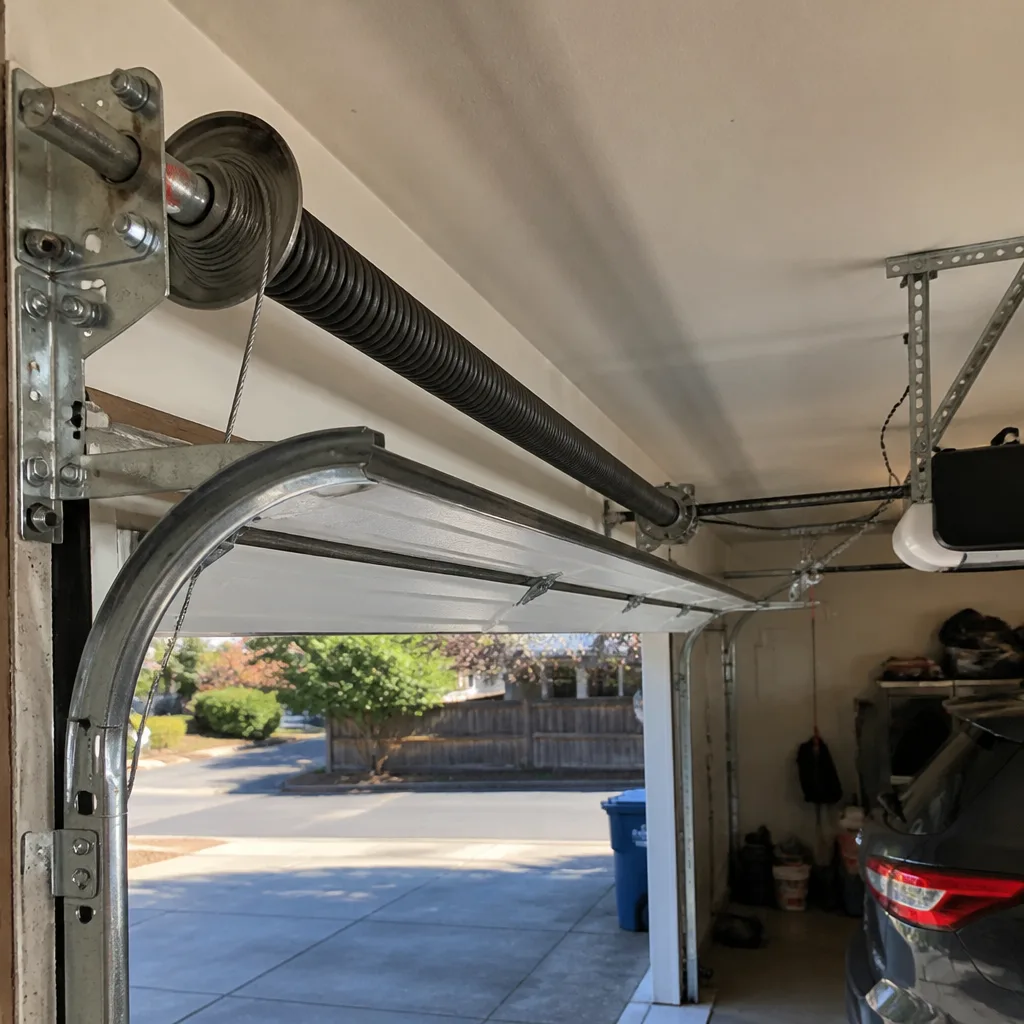
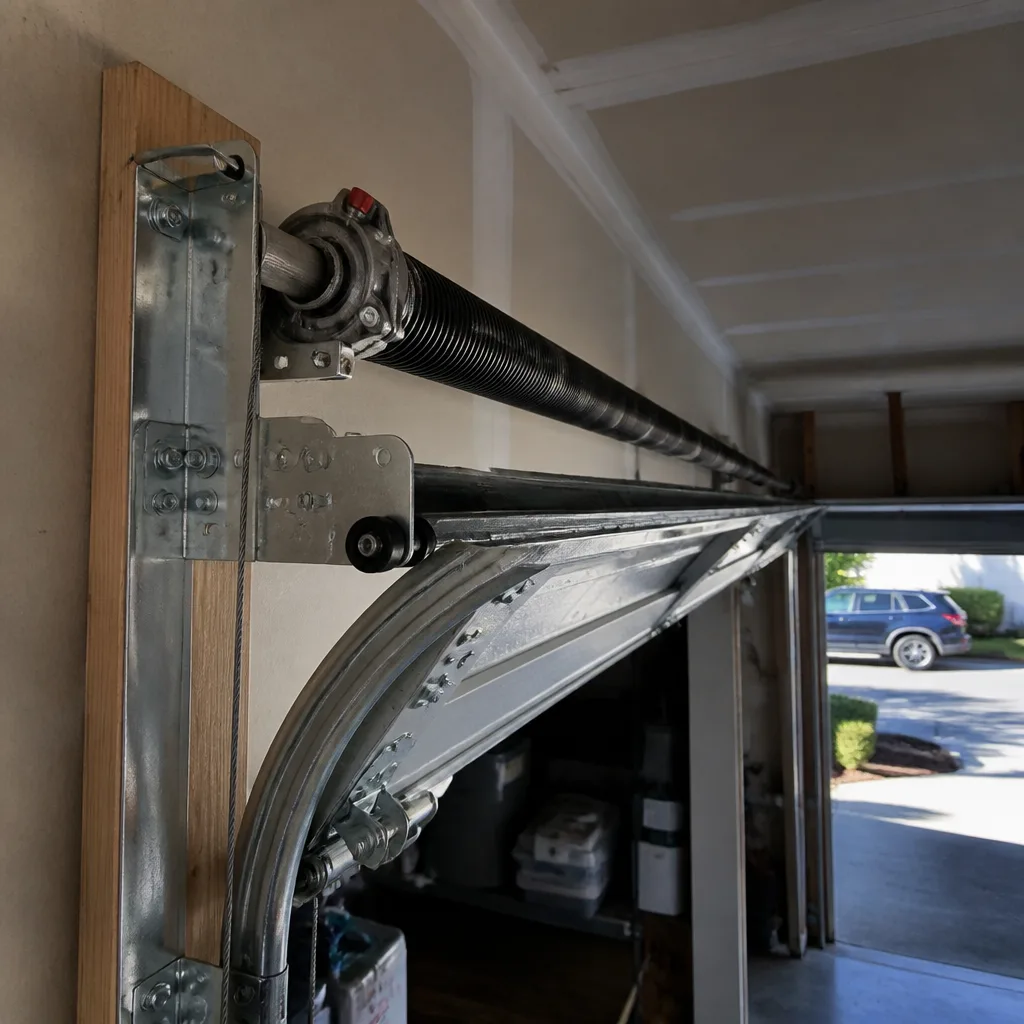
On the torsion spring: A healthy spring has a uniform coil gap along its entire length. If you see a gap in the middle that’s wider than the gaps on either side, that’s a break. It may not be a complete separation yet, but it’s failing. Rust is also a concern with Kent’s winter moisture. Surface rust is normal after a few years. Pitting or flaking rust means the wire diameter is thinning and the spring is nearing the end of its cycle life.
On the extension springs (if your door uses them instead of a torsion spring, common on older Wayne Dalton and some Raynor installs): look for a safety cable running through the center of the spring. If the cable is missing or broken, the spring can fly across the garage when it snaps. That’s not a minor issue. That’s a hazard that needs attention in the same week you notice it.
On the cables: Cables carry the lifting force from the spring to the bottom of the door. They fail two ways. The first is fraying, which looks like a wire brush, usually near the bottom bracket where the most movement happens. The second is drum slip, where the cable lifts off its groove and wraps unevenly at the top. Both mean the door is out of balance, and running it in that condition chews up rollers and hinges fast.
Any of these findings is a call to a licensed technician. We know Kent homeowners who have reset their own breaker panels and patched their own drywall. This is not that category of work. The spring is under enough tension to do permanent damage, and there is no visual way to confirm a spring is fully unwound before you touch it. Our techs treat every spring as loaded until proven otherwise, and that proof takes specialized bars and a process that only looks easy on video.
For a full breakdown of what spring replacement involves and what it costs in Kent, read our Garage Door Repair in Kent page. The pricing is written, not “call for a quote.”
Rollers, Tracks, and Drums: Kent-Specific Wear Patterns
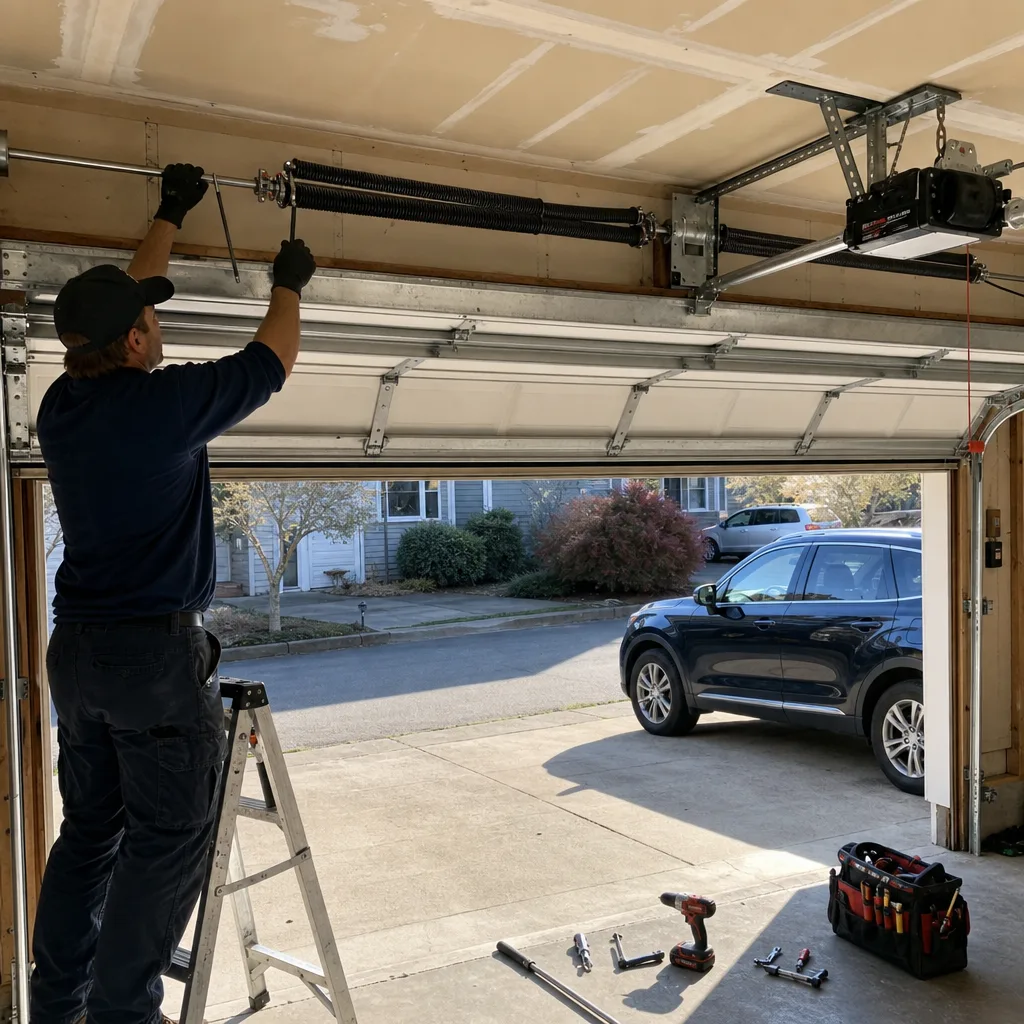
Kent’s climate does two things to garage door hardware that other regions don’t have to think about. First, the winter moisture means track rust and roller corrosion show up as a maintenance item, not an afterthought. Second, the summer heat expansion means a door that runs perfectly in January can bind against the track in July if the track gap is set too tight.
Here’s what we see in Kent specifically.
Track rust. The tracks on most residential doors are galvanized steel. Galvanization eventually wears through at the stress points: the curve where the track bends from vertical to horizontal, and the bolt holes where the installer secured it to the wall. In Kent, with our consistent winter rain and high humidity, those stress points start showing rust around year four or five. Rust on the rail surface means friction, and friction means the door works harder every cycle. Early rust can be cleaned with a wire brush and sealed with a rust-inhibiting spray, but if the rail itself is pitting, it’s a replacement, not a repair.
Roller wear. Nylon rollers typically last seven to ten years. Steel rollers last three to five. If your door has steel rollers and it’s been more than four years since they were replaced, they’re on borrowed time, and the rough ride is already wearing the hinges. One of the most common calls we run in Kent is a seized roller that caused a section of the door to jump the track. The repair is usually straightforward when caught early: replace the roller set, reset the track, and you’re done.
Drum wear. The drums at the top of the track guide the cables as they spool. When a drum wears unevenly, the cable rides up the side of the groove and the door twists slightly as it cycles. You can spot this by watching the top of the door as it opens. If one corner leads the other by an inch or more, the drums need attention.
The maintenance step here is simple: look at your tracks and rollers once a month. Nobody needs to touch them apart from lubrication as described above, but visual wear is how you catch a problem before it takes the door down mid-cycle.
Bottom Seal and Weatherstripping: The Kent Moisture Problem
The bottom seal on a garage door is the difference between a dry garage in February and water pooling along the inside of the door every time it rains. Kent’s winter is long and wet. A failed seal doesn’t just let water in; it lets in cold air, leaves, and every small animal looking for a dry space. And water against a steel door panel means rust at the seam, which is a slow-moving structural problem.
The bottom seal is a rubber strip that runs along the length of the door bottom and compresses against the concrete when the door closes. Over time, the rubber hardens, cracks, and loses its compression. The lifespan in Kent is typically three to five years, shorter if the door faces south and gets full summer sun.
How to check it: Close the door and look along the bottom from inside the garage. If you can see daylight anywhere along the seam, the seal is no longer sealing. Run your hand along the inside edge after a rain. If it’s wet, the seal is failing at the concrete contact point.
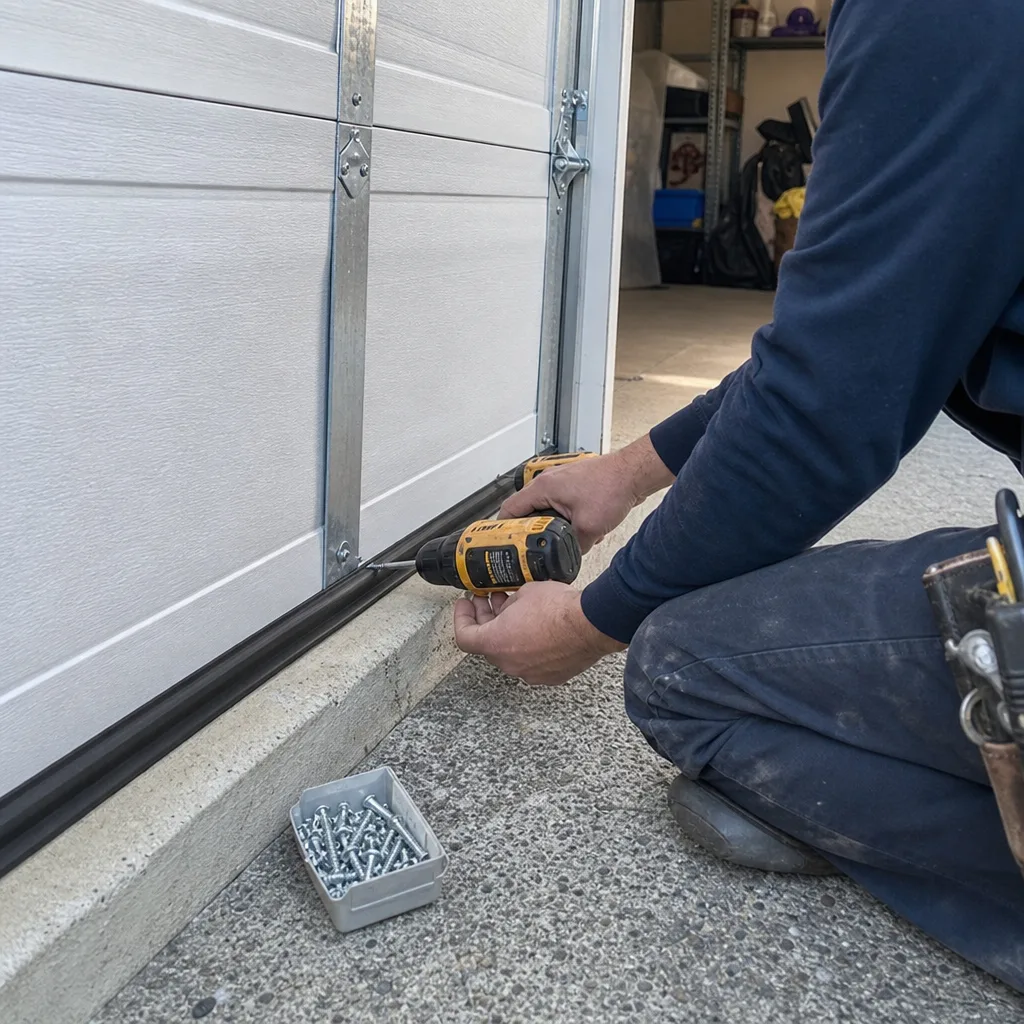
Replacing a bottom seal on most doors is a homeowner-level task if you have the patience for it. The old seal pulls out of the retaining channel on the bottom of the door, and the new one slides in. Where we see Kent homeowners get it wrong is ordering the wrong seal profile. Clopay, Amarr, and Wayne Dalton all use slightly different channel shapes, and a seal from one won’t seat properly in another’s channel. If you’re going to do it yourself, pull the old seal and match the profile, not just the length.
The side weatherstripping is a different problem. It’s attached to the door frame, not the door, and it wears at the corners where the door passes closest. In Kent, the windward side of the garage tends to wear faster because the seal is flexing in storms. If the side stripping is cracked or pulling away from the frame, it’s a straightforward replacement, and any insulation value in your garage door depends on it being intact.
Opener Chain, Belt, and Safety Sensors: The Monthly Reset
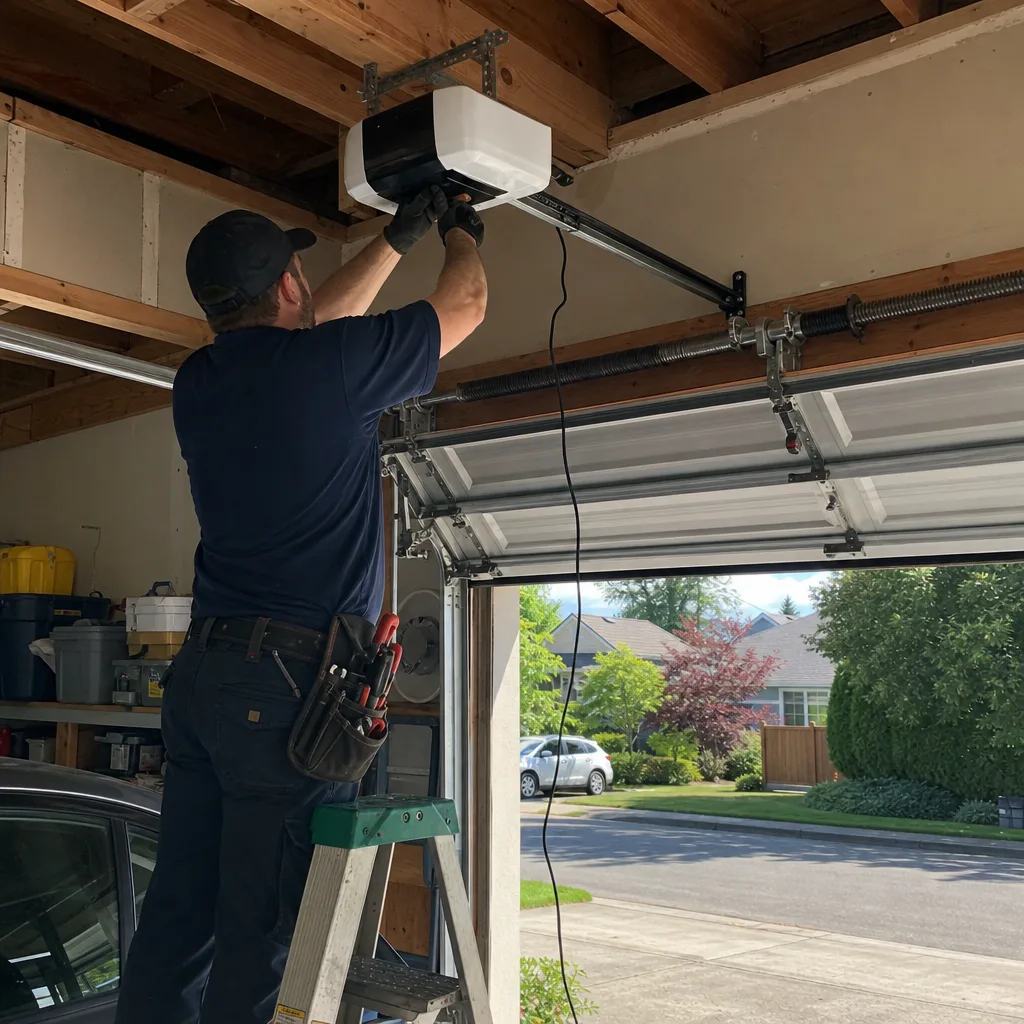
The garage door opener is the most misunderstood part of the system. It’s not the thing that lifts the door; that’s the spring. The opener is the thing that moves the door the spring has already balanced. When the spring fails, the opener works against the full weight of the door, and that’s what burns out motors and strips gears. In Kent, where doors see more cycles in winter as people avoid the rain by ducking through the garage, opener failures track with unaddressed spring problems more than anything else.
But the opener has its own maintenance needs too.
- Test the auto-reverse every month. The auto-reverse has two settings: mechanical and photoelectric. The mechanical sensor detects resistance when the door hits something. The photoelectric sensors are the pair at the bottom of the track. Both should reverse the door. Most homes only test the photoelectric. Test both: place a two-by-four under the door and check that the door reverses on contact, then wave your foot through the beam with the door closing.
- Check the force settings twice a year. The force setting controls how much resistance the opener tolerates before it reverses. Over time, as springs lose tension and rollers wear, the door requires more force to move, and the opener strains to deliver it. If the door is still balanced but the opener sounds labored, the force setting may need a small adjustment. Our techs check this line-item on every tune-up because it’s invisible to most homeowners and it’s the difference between an opener that lasts twelve years and one that strips a gear in five.
- Inspect the chain or belt for sag. On a chain-drive opener, which is what most LiftMaster and Craftsman units in Kent are, the chain slackens over time. You should see about half an inch of play at the midpoint. More than that, and the chain can skip on the gear and make a clunking sound at the start of each cycle. On a belt drive, which is more common on newer Raynor and Wayne Dalton installs, tension is largely self-maintaining, but the belt itself should be checked for cracks or fraying.
- Keep the opener rail clean. The rail the trolley rides on collects dust and grease, especially in garages where the door is the main point of entry. A dirty rail makes the trolley work harder and adds wear to the chain or belt. A dry cloth is enough. No lubricant on the rail.
One thing specific to Kent: the opener logic board is vulnerable to power surges during our fall and winter windstorms. If your opener starts behaving intermittently after a storm, that’s the first place to look. It’s rarely the motor. It’s usually the board. If you need opener service, the Garage Door Opener Repair & Installation in Kent page has our written pricing policy and what to expect on a service call.
Kent Maintenance Calendar: What to Do in Each Season
Timing maintenance around Kent’s actual weather pattern is the difference between gear that lasts and gear that fails early. Here’s the calendar we recommend.
January through March (wet season)
This is when moisture does its work. Check the bottom seal after every heavy rain. Look for track rust starting at the curve. Watch for the door moving slower than it did in November; cold contracts metal, and a door that’s borderline in balance will show it now. If your garage is unheated, expect the opener’s safety sensors to fog on cold mornings. A wipe with a dry cloth fixes it.
April (spring maintenance)
This is the first major lubrication window. Full silicone spray on rollers and springs, white lithium grease on hinges and chain. Clean any rust you found during the winter. Test the balance. This is also the time to inspect the cables thoroughly, because winter is when cable wear accelerates.
May through August (dry season)
Summer in Kent means expansion. A door that was slightly tight in January can bind against the track in July. Watch for scraping on the track rails, and listen for a change in pitch when the door runs. If the door hesitates at the same point every cycle, that’s a track or drum issue getting worse with the heat. Test the auto-reverse monthly, especially if your garage door faces west and the opener sits in late afternoon sun. Heat degrades the sensor wiring faster than any other season.
September and October (pre-wet season)
Second lubrication window. The goal is to get a protective film in place before the rain returns. Replace the bottom seal now if it’s showing cracks, not in January when it’s raining and you’re working on a wet floor. Check the weatherstripping on the sides and top. Make sure the opener force settings are right for the door as it’s currently balanced.
November and December (early winter)
Watch the cables. Cold temperatures make steel cable less flexible, and any fraying that started over summer will spread faster now. Keep the track clean of wet leaves; they break down into a paste that sticks to the track and works its way into the rollers.
If you follow this calendar, you’ll catch most problems in the earliest, cheapest stage. If you don’t have the time or the inclination, Garage Door Installation in Kent includes information about our maintenance approach on newer doors, and we’re always available for a scheduled tune-up with a written inspection report.
Documenting Your Maintenance: Why It Saves Real Money
This is the step almost no homeowner does, and it’s the one that most directly reduces the cost of a future repair call. A simple maintenance log, kept in a note on your phone or a notebook in the garage, does something valuable for the technician: it tells them what’s already been tried and when, so they don’t check things that were checked last month.
Here’s what to write down.
- The date of every lubrication. Oil changes on your car have mileage; garage door lubrication has dates. A tech seeing “torsion spring sprayed with silicone, April 12” knows the spring was serviced recently and doesn’t need re-lubricating.
- The date of every balance check and what you found. “Door balanced, held at waist height, April 12” tells us the spring was within spec eight months ago. If it’s out of balance now, that’s useful timing information.
- Any new sound or hesitation and when it started. “Grinding sound started around October 3, worse in the morning.” That kind of note narrows the diagnosis down to a handful of possibilities instead of a half-dozen.
- Any parts you’ve replaced and the brand you used. If you replaced the rollers yourself in March with a set from a hardware store, the tech needs to know that. It changes what they’re looking for.
The financial benefit is straightforward: diagnostic time is billable time. Every minute a technician spends finding the problem is a minute you’re paying for. A one-page log can cut fifteen or twenty minutes off a repair visit, and on a service call that’s real money.
This connects to something we’ve done since 2015, which is Clause 4 of The Haven Standard: the technician photographs the failed component before quoting a replacement. You see the evidence. The reasoning is the same in both directions: documentation makes the work verifiable. Our technicians leave every visit with a documented photo record of what was found and what was done. Your maintenance log is the homeowner’s side of that same transaction.
Common Mistakes to Avoid
- Using WD-40 on nylon rollers. This is the big one. WD-40 is a solvent, not a lubricant, and the propellant causes nylon to absorb moisture and swell. The roller binds in the track within six months, and you’re into a roller replacement because of a product that was supposed to be maintenance.
- Greasing the track rails. The rails are not a lubrication surface. Grease on the rails collects dust and grit, forms a paste, and increases friction. The rollers move on their own bearings, not on the rail surface. Keep the rails dry and clean.
- Ignoring a door that’s slightly out of balance. A door that doesn’t hold at waist height is asking the opener to lift more than it should. The opener compensates until it can’t, and then you’re replacing both the spring and the opener instead of just the spring.
- Skipping the sensor test. The photoelectric sensors are the main safety feature on modern openers, and they fail quietly. A lens can be knocked out of alignment by a broom handle and never get noticed until something is under the door. Test it monthly.
- Lubricating on a schedule instead of by condition. Twice a year is a good baseline in Kent, but if your garage faces a busy street and collects dust faster, or if you’re in a wet area near the Green River and the humidity runs high, you may need to lubricate more often. Let the condition of the hardware, not the calendar, be the deciding factor.
- Attempting spring adjustment after watching one video. The torsion spring is not a homeowner repair. It’s not a matter of skill; it’s a matter of stored energy. If the spring needs adjustment or replacement, that’s a licensed technician’s job, full stop.
- Buying replacement parts by price instead of by fit. A bottom seal that’s the wrong profile, a roller that’s the wrong diameter, a rail that’s the wrong gauge. This is where we see DIY maintenance go wrong most often in Kent. The part has to match the door, not just the budget.
When to Call a Professional
Some maintenance is inspection. Some is hands-on. And some is beyond the line. Here’s where the line is.
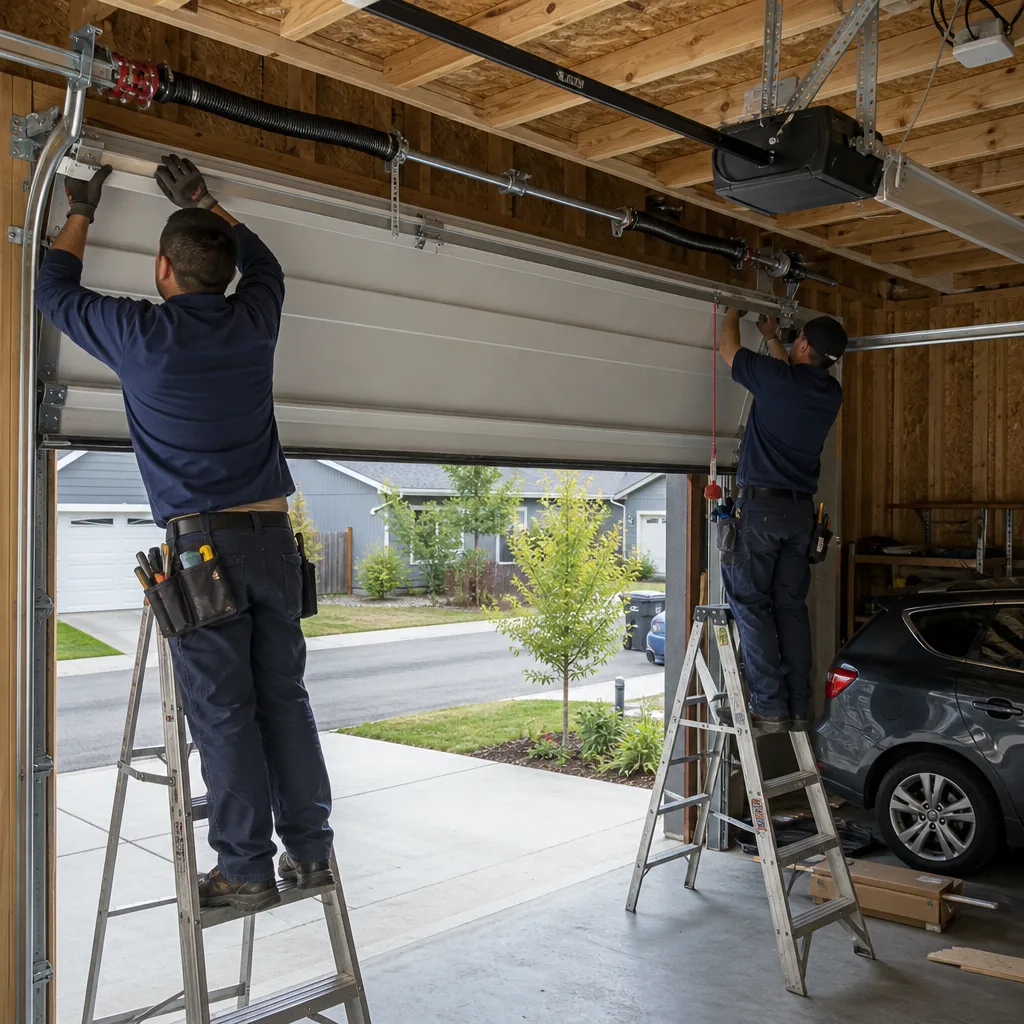
Call a licensed technician if you see a spring gap, fraying cables, a door that drops when released, a drum that’s unwinding unevenly, or any sign that the door is working against its own hardware. Call if the door has jumped the track, if the opener is making a grinding noise that sounds internal, or if the auto-reverse fails. These are all safety issues, and they’re all cheaper to fix the day you find them than the week the door stops working entirely.
Servo Garage Doors Kent offers free estimates in Kent, and per Clause 1 of The Haven Standard, every quote is a flat, written price with a written scope before any work begins. You’ll never hear “call for a quote” from us because the quote exists in writing before we touch the door. Call (425) 906-3489 for a free estimate.
Frequently Asked Questions
A standard garage door tune-up in Kent typically runs between $89 and $150 depending on the door’s age and the amount of work needed. The price is quoted and agreed in writing before any work starts. Call (425) 906-3489 for an exact quote, which is free.
Twice a year is the baseline for Kent’s climate: once in April after the wet season ends and once in October before it begins again. If your garage faces a busy street or sits in a damp area, you may need to lubricate every three to four months. Let the sound and feel of the door guide you.
No. WD-40 on nylon rollers causes the nylon to swell and bind in the track. It is a solvent, not a lubricant, and it does more harm than good on garage door hardware. Use silicone spray on nylon rollers and white lithium grease on metal pivot points.
Look for a gap in the coil spacing, rust that’s pitting the surface of the wire, or a door that won’t hold position when you release it at waist height. A spring that fails usually gives at least a few weeks of warning. Never attempt to adjust or replace the spring yourself; the stored tension can cause serious injury.
Cold contracts metal, which tightens clearances and makes any existing wear more audible. Winter moisture also causes surface rust on tracks and hardware. The noise usually indicates that a part needs attention, not that the cold itself is causing the problem. If it’s new, it’s worth a check.
We offer scheduled tune-ups with a written inspection report and documented photo record on every visit. Every service is quoted with a flat, written price before work starts. Call (425) 906-3489 and ask about a maintenance visit; we’ll tell you exactly what it costs before we schedule the appointment.
The Bottom Line
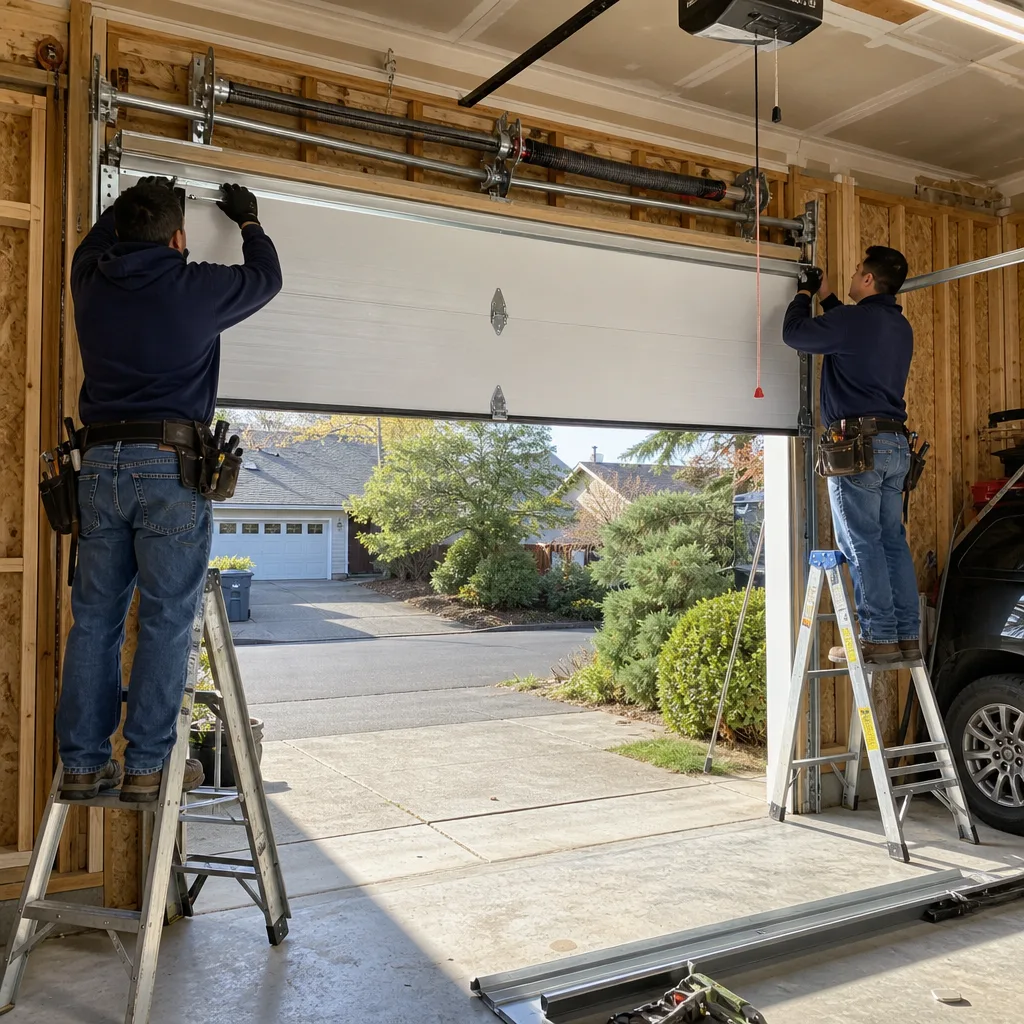
The garage door is the largest moving part in your home, and in Kent it cycles through rain, heat, and humidity that wear hardware faster than most homeowners expect. A 15-minute monthly check and a seasonal lubrication routine catch most problems before they become repairs. The rules are simple: silicone on nylon, lithium grease on metal, nothing on the tracks, and never touch the spring without a license in your wallet. Document what you do, because documentation is the difference between a guess and a diagnosis. And when something is beyond the line, get a written price before the work starts. That’s how we’ve operated in Kent since 2015, and it’s why our customers know exactly what they’re paying for before anyone picks up a tool.
Written by Marcus Deller, Owner at Servo Garage Doors Kent, serving Kent since 2015.